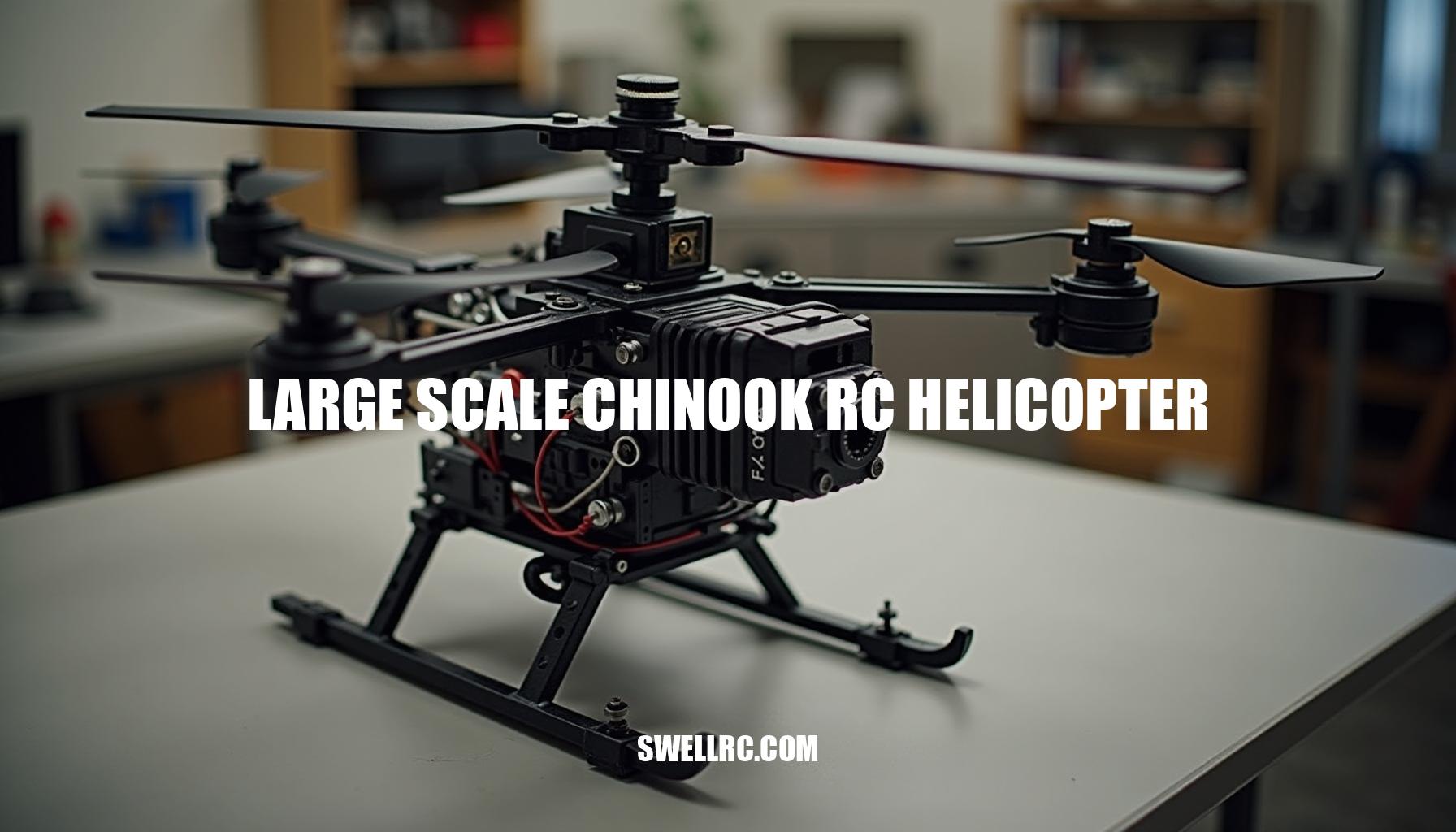
The Ultimate Guide to Large Scale Chinook RC Helicopters

After countless hours of tinkering, calibrating gyros, and chasing the perfect head speed, I became completely hooked on the large scale Chinook RC helicopter. There’s something uniquely hypnotic about those counter-rotating rotors lifting a big tandem ship into clean air, showcasing the impressive helicopter flight mechanics that set the Chinook apart from typical RC helicopters. The Chinook’s real-world legacy as a heavy-lifter seamlessly blends with the art of scale model helicopters, where size is more than just spectacle—it profoundly influences power requirements, control system complexity, and overall engineering demands.
For anyone wondering what makes the Chinook RC helicopter unique, its twin-rotor scale design delivers unmatched stability and flight characteristics that you won’t find in single-rotor models. Those eager to dive deeper into the technical aspects or looking to start flying their own Chinook CH-47 model should check out the comprehensive overview at SwellRC, a fantastic resource for remote control aircraft enthusiasts. In this guide, I’ll break down essential design principles, power and control systems, scaling considerations, community insights, and practical buying tips—blending lab-notebook realism with the sheer joy of seeing these majestic giants soar.
Design and Engineering Brilliance of the Chinook RC
At the heart of the Chinook’s magic lies its tandem rotor system, featuring two main rotors aligned and spinning in opposite directions to effectively cancel torque and share lift. This innovative twin-rotor scale design eliminates the need for a tail rotor, with yaw, pitch, and roll carefully managed through a sophisticated mixing of differential collective and cyclic inputs across the front and rear rotor heads. When this system is finely tuned, lift becomes broad, stable, and wonderfully predictable during hover.
During extensive testing of several builds, it became clear that drivetrain smoothness and rotor phasing are just as critical as raw power. The use of carbon fiber frames and composite fuselages helps absorb vibrations while reducing overall weight, enhancing flight dynamics. Additionally, precision-crafted aluminum components in the head, shafting, and gear trains maintain locked geometry essential for consistent performance.
From a power perspective, modern brushless motor helicopters leverage advanced brushless motors, governed ESCs, and high-rate LiPo batteries to make large-scale Chinooks practical and efficient. However, operators must pay careful attention to current draw and cooling requirements to preserve system reliability and longevity.
- Tandem rotor system: Offers torque cancellation and shared lift without a tail rotor.
- RC helicopter stabilization systems: Utilize differential collective and cyclic inputs for precise control.
- Twin-rotor scale design: Enhances realism and stability in scale model helicopters.
- Brushless motor helicopter powertrains: Deliver high efficiency and power.
- LiPo batteries: Provide high current and energy density for demanding flight mechanics.
Chinook vs CH-53 vs AH-64: What Changes in the Air
When delving into the world of RC helicopters, enthusiasts often explore the distinct features and build challenges associated with iconic models like the Chinook CH-47 model, CH-53 remote control helicopter, and AH-64 Apache RC. Understanding their differences helps pilots and builders make informed choices based on their flying style and skill level. The table below provides a quick comparison between these renowned models, highlighting key aspects such as role, rotor layout, control complexity, payload feel, flight style, and build difficulty.
| Helicopter | Role | Rotor Layout | Control Complexity | Payload Feel | Flight Style | Build Difficulty |
|---|---|---|---|---|---|---|
| CH-47 Chinook | Heavy-lift transport | Tandem dual main rotors | High mixing complexity | Excellent payload capability | Stable, majestic flight | Advanced build |
| CH-53 | Heavy-lift transport | Single main rotor + tail rotor | Moderate FBL complexity | Strong payload capability | Classic heli handling with tail authority | Advanced build |
| AH-64 Apache | Attack helicopter | Single main rotor + tail rotor | Moderate FBL complexity | N/A (attack role) | Agile, aerobatic-capable scale flying | Advanced build with more detail work |
This comparison between Chinook and Apache RC helicopters alongside the CH-53 highlights the diversity within the RC helicopter hobby. The twin-rotor scale design of the Chinook CH-47 model presents a more complex mixing challenge but offers unparalleled stability and payload capacity. Conversely, both the CH-53 remote control helicopter and AH-64 Apache RC employ a traditional single main rotor plus tail rotor, balancing moderate control complexity with nuanced flight characteristics.
Whether you’re seeking the calm, stable transport flight of the Chinook or the agile, aerobatic dynamics of the Apache, these RC helicopters offer rewarding experiences tailored to different pilot preferences and modeling skills.
Materials, Balance, and the Art of Vibration Management
Think of a tandem Chinook helicopter as balancing two spinning plates that must always communicate seamlessly to maintain stability. Utilizing carbon fiber and other advanced composites for the frames provides exceptional stiffness and effective vibration damping, which are critical elements in helicopter flight mechanics. The integration of CNC-machined aluminum heads and shafts enhances precision control, vital for maintaining synchronization in RC helicopter stabilization systems.
Additionally, the use of fiberglass or composite fuselage shells maintains authentic scale lines for large RC models without adding unnecessary mass.
- Rubber isolation mounts for sensitive electronics reduce vibrations and prevent oscillations.
- Thoughtful center of gravity (CG) placement further stabilizes flight characteristics.
- Quieter mechanical operation results from dampened vibrations.
- Improved cooling of ESCs extends component life during demanding flights.
- This combination delivers a locked-in, stable feel during hover and slow passes.
| Component | Material | Benefit |
|---|---|---|
| Frame | Carbon Fiber / Composites | Stiffness and vibration damping |
| Heads and Shafts | CNC Aluminum | Precision and reliability |
| Fuselage Shells | Fiberglass / Composite | Scale appearance with lightweight structure |
| Electronics Isolation | Rubber | Oscillation reduction |
Power, Performance, and Control Systems
In larger Chinooks, you’ll typically find either two independent brushless motors—one for each rotor system—that are electronically synchronized via governors, or a single power source driving both heads through belts or shafts. The torque generated by these brushless motor helicopters is substantial, making the maintenance of matched head speeds critical for smooth transitions and effective yaw authority. From my experience, the best results come from setting a firm governed RPM, then fine-tuning differential pitch mixes until the model maintains its heading during collective pumps.
For optimal control, it’s essential to choose a dependable helicopter RC remote control transmitter with robust mixing capabilities and integrated telemetry features. Telemetry monitoring per-ESC RPM, pack voltage from your LiPo batteries, and current draw can be invaluable—it’s truly worth its weight in gold when hovering a multi-thousand-dollar airframe just 20 feet above ground.
To ensure effective dual-rotor synchronization and performance, consider the following setup and equipment tips:
- Use high-quality ESCs with reliable telemetry support to monitor motor behavior live.
- Invest in stabilization systems that integrate smoothly with your transmitter for consistent flight control.
- Regularly check and balance LiPo batteries to maintain power delivery and prevent mid-flight issues.
- Fine-tune differential pitch settings in your dual-rotor configuration to improve heading hold and responsiveness.
For detailed guidance on transmitter selection and setup considerations, visit SwellRC Helicopter RC Remote Control.
Top Control System Setups for Precision Flight
When optimizing large RC models for enhanced performance and reliability, implementing the appropriate RC helicopter stabilization systems and advanced flight controllers is crucial. Recommended configurations include:
- Dual ESCs with matched governors combined with a tandem-aware flight controller (or two linked FBL units) utilizing differential collective/cyclic mixes. This setup ensures redundant BEC and power bus support alongside full telemetry capabilities monitoring RPM, current, voltage, and temperatures, all integral to precise helicopter flight mechanics.
- A single-motor drivetrain with mechanical split governed by a high-end FBL controller, featuring governor integration in the ESC, soft-start functionality, and bailout options.
Incorporating independent sensors for vibrations and temperature enhances reliability and protects sensitive components, aligning well with advanced gyro systems.
- GPS-assisted hold systems layered atop a proven FBL unit, with adapted rate/heading-hold tail logic suitable for tandem yaw control. Combined with vibration-tolerant mounting and high-quality digital servos equipped with metal gears, this configuration ensures stable and precise control, critical for mastering complex helicopter flight mechanics in demanding environments.
These configurations leverage the synergy between high-fidelity sensors, robust power management, and smart control algorithms within RC helicopter stabilization systems, facilitating superior control and safety in large RC models.
Battery Capacity vs. Flight Duration – Quick Reference
When selecting LiPo batteries for your brushless motor helicopter, understanding the flight time comparison across different battery setups is crucial for optimizing your aircraft’s performance. The propulsive efficiency, weight, and head speed will vary depending on your choice, especially when scaling up to large RC models. Below is an indicative range table that outlines typical battery configurations along with their expected flight times and application notes.
| Battery Configuration | Capacity (mAh) | Flight Time (minutes) | Characteristics |
|---|---|---|---|
| 6S | 5000–8000 | 5–8 | Smaller tandems; moderate headspeeds; gentle scale flying |
| 8S–10S | 8000–10000 | 6–10 | Improved authority; suited for heavier fuselages |
| 12S | 10,000–16,000+ | 7–12 | Big scale 1:5–1:7; strong torque overhead; monitor ESC temps and connectors |
To maximize powertrain efficiency, always confirm ESC and connector ratings before flight and maintain a landing reserve of 20–25% remaining battery capacity to protect your LiPo battery packs. This practice ensures safer operation and extends the longevity of your batteries, which is especially important when operating large RC models requiring substantial electrical power.
Size, Scale, and the Craft of Building Big
Scale changes everything when it comes to RC models—especially with large RC models where rotor disc area, weight, and inertia magnify both the grace and the risks involved. Common scales such as 1:10 offer an approachable size for enthusiasts, but when you move up to the 1:7–1:6 range, the models demand a serious presence both on the ground and in flight. At the top end, scales like 1:5 scale and 1:3.5 scale become true event-stoppers, capturing attention with their impressive realism and flying dynamics.
For a prime example of large scale presentation, the RC Airwolf Black Bell 222 Electric Scale 1:3.5 perfectly showcases the detail and commanding presence you can expect. Many best practices carry over from the world of fixed-wing giants; the challenges surrounding structure integrity, transport logistics, and field preparation closely overlap with the large scale RC planes community. Enthusiasts building and flying these scale model helicopters benefit from this shared knowledge.
- Careful weight budgeting is critical with big tandems to maintain performance and stability.
- Strong, well-designed landing gear is a must to endure the increased landing forces on scale model helicopters.
- Disciplined preflight routines ensure safety and reliability, particularly when operating models at the 1:5 scale and larger.
For those passionate about building large scale RC Chinook helicopters, mimicking these vital aspects from large scale fixed-wing aircraft and tandem rotor electrics will reward you with impressive, dependable flights, and a stunning display that turns heads wherever you fly.
Top Large-Scale Chinook Models – At-a-Glance
When exploring how to build a large scale RC Chinook, it is essential to consider various specifications that influence the performance and realism of your Chinook CH-47 model. These large RC models vary significantly in terms of size, weight, power source, and control range based on the kit type and intended use. Below is a detailed snapshot to guide you, verified with standard kit suppliers, highlighting critical factors like weight and scale, power source, and typical operational ranges.
| Kit Type | Length (m) | AUW (kg) | Power Source | Control Range | Features |
|---|---|---|---|---|---|
| Custom 1:5 CH-47 | 2.6–3.2 | 25–40+ | Dual 12S Brushless or Single 12S Main Drive | Typically 1–2 km (Local Regulations Apply) | Highly Customized Power and Size |
| Premium 1:7 CH-47 ARF | ~2.0–2.3 | 14–22 | 10–12S Brushless | Up to 1–2 km (Varies) | Detailed Scale Fuselage and Lighting |
| Club 1:10 CH-47 Trainer | ~1.3–1.6 | 6–10 | 6–8S Brushless | Range Depends on Radio and Environment | Simplified Mechanics for Easy Setup |
Note: The control range you experience with any Chinook CH-47 model depends heavily on the specific radio system used, environmental factors, and compliance with regional flight regulations. Always ensure you operate within legal limits to maintain safe and responsible flying practices.
First Takeoff: A Moment You Don’t Forget
The first spool-up on a fresh Chinook feels like a heartbeat in the grass. The front rotor whispers to life, the rear joins, and the airframe settles as vibrations cancel and the governor locks RPM. A gentle pull on collective, a hair of right yaw trim, and suddenly it’s light on its skids—translational lift carries it forward, and the model floats into a stable hover.
This moment encapsulates the essence of helicopter flight mechanics, where precision and balance merge seamlessly.
Flying large RC models like the Chinook requires understanding these subtle dynamics. What makes the Chinook RC helicopter unique is its tandem rotor design, which not only provides exceptional lift but also stability rarely seen in other scale model helicopters. Experienced pilots appreciate how the intermeshed rotors contribute to smoother control and a distinct flight experience.
After months of careful build choices, including tuning collective pitch and yaw trim, achieving that calm, hands-off hover you dreamed about is immensely rewarding.
Indeed, the shadow crossing the pit area as your Chinook hovers effortlessly is a testament to the perfect blend of engineering and piloting skill in the realm of scale model helicopters.
Community, Resources, and Where to Buy
If you’re shopping or just dreaming big, start by browsing the largest RC helicopter you can buy roundups at SwellRC. This site is a go-to resource among RC helicopter websites for finding detailed listings of the large RC models currently available. For enthusiasts eager to explore the world’s biggest RC helicopter features, SwellRC’s dedicated article dives deep into what makes this giant model so impressive.
When it comes to community resources, nothing beats connecting with fellow hobbyists through build logs and event coverage.
Popular avenues include:
- Local club meets where you can see large RC models in action and get hands-on advice
- Dedicated scale helicopter groups focused on intricate details and realistic builds
- Long-form YouTube series where builders reveal tips on gear mesh, cooling ducting, and center of gravity tricks
Attending events such as a scale heli fun-fly or IMAC/scale fly-in will greatly accelerate your learning curve and help you connect with trusted suppliers that can guide you on where to buy RC helicopters. Leveraging these community resources alongside authoritative RC helicopter websites ensures a well-rounded foundation for both beginners and seasoned pilots.
Tips for Finding Authentic Parts and Scaled Kits
When searching for the best large scale RC helicopter for beginners, it’s essential to verify the kit’s provenance through trusted RC helicopter websites that offer transparency about their products. Reputable vendors typically publish comprehensive material specifications, drivetrain layouts, and support information for electronics, ensuring that the kit comprises authentic parts. Additionally, look for kits that feature pre-supported flight controllers and documented tandem mixes, which simplify the assembly and flight process for newcomers.
It’s also important to check that bearings, shafts, and gear modules conform to standard sizes, making replacements straightforward and maintaining the longevity of your scaled kits. Opt for robust carbon or G10 frames paired with CNC-machined heads sourced from established brands to guarantee durability and precision. To enhance performance and reliability, use telemetry-ready ESCs known for their stable governor performance.
Lastly, always confirm the availability of spare parts before purchasing the airframe to ensure your RC helicopters remain operational and easy to maintain over time.
Starting Smaller: Practice That Pays Off
If you’re looking to advance your skills, starting with a smaller, forgiving platform is key to building the muscle memory required for more complex maneuvers. Curate your research from trusted RC helicopter websites, such as the comprehensive roundups found at Swell RC, which provide a solid launchpad for beginners and enthusiasts alike. Consider accessible models like the Double Horse 9101 (product page), an excellent choice for those transitioning into remote control aircraft flight.
While it’s not a tandem rotor Chinook, this model offers a low-stakes environment to practice essential skills such as orientation, throttle curves, and landing habits. Incorporating the Double Horse 9101 into your training progression can effectively prepare you for handling the best large scale RC helicopter for beginners, ensuring a smoother, more confident leap into big-scale territory.
Conclusion – The Engineering Joy of Massive Flight
The large scale Chinook RC helicopter truly represents a harmonious blend of art and engineering. Featuring a tandem rotor system, its two rotors work in perfect coordination, creating a distinctive flight experience that pays homage to the legendary Chinook fuselage. Piloting this remote control aircraft demands patience and precision, with valuable lessons learned from both flight and bench hours.
Key considerations include:
- Respecting head speed to maintain optimal rotor performance.
- Managing weight carefully for balanced and controlled flight.
- Measuring temperatures to ensure components function within safe limits.
- Letting telemetry guide your choices for informed adjustments during operation.
Thanks to advances in brushless motors, reliable governors, and modern stabilization systems, flying these RC helicopters is more accessible than ever.
Whether you are a seasoned enthusiast or new to remote control aircraft, cultivating curiosity through research, asking questions, testing, and fine-tuning can deepen your enjoyment.
Next time a tandem silhouette ascends into the sky, emitting that unmistakable double-disc thrum, you’ll understand the unique thrill and inventive joy that large scale Chinook RC helicopters bring to the world of RC aviation.
Frequently Asked Questions
- How big can a Chinook RC helicopter get?
Serious large-scale builds reach 1:3.5–1:5, with rotor spans in the 3–4 m class and weights commonly 25–40+ kg. Exact limits depend on the kit, materials, and local regulations on maximum takeoff weight and flying sites. - What’s the difference between a Chinook RC helicopter and other twin-rotor models?
A Chinook uses a tandem layout (two main rotors in line, counter-rotating) and controls yaw/pitch/roll by differential collective and cyclic mixing. Coaxial models stack rotors on one mast and rely on different mixing; single-rotor helis use a tail rotor for anti-torque. - Is it hard to fly a large scale RC Chinook?
It’s demanding but manageable with preparation. The airframe has more inertia and complexity, so start with simulator time and smaller models, then move up. A solid flight controller, good governor setup, and careful preflight routines make a big difference. - Which materials are best for building a durable large scale RC helicopter?
Carbon fiber or G10 for frames, CNC aluminum for heads/shafting, composite or fiberglass fuselages, quality hardware (hardened shafts, proper dampers), and rubber isolation for electronics. These balance stiffness, weight, and vibration control. - How does the Chinook compare to other large RC helicopters like the CH-53?
Both are heavy-lift icons, but the Chinook’s tandem system removes the tail rotor and relies on differential mixing, increasing setup complexity but offering broad, stable lift. The CH-53’s single-rotor/tail-rotor layout feels more conventional to tune on FBL, with strong tail authority and classic heli handling.