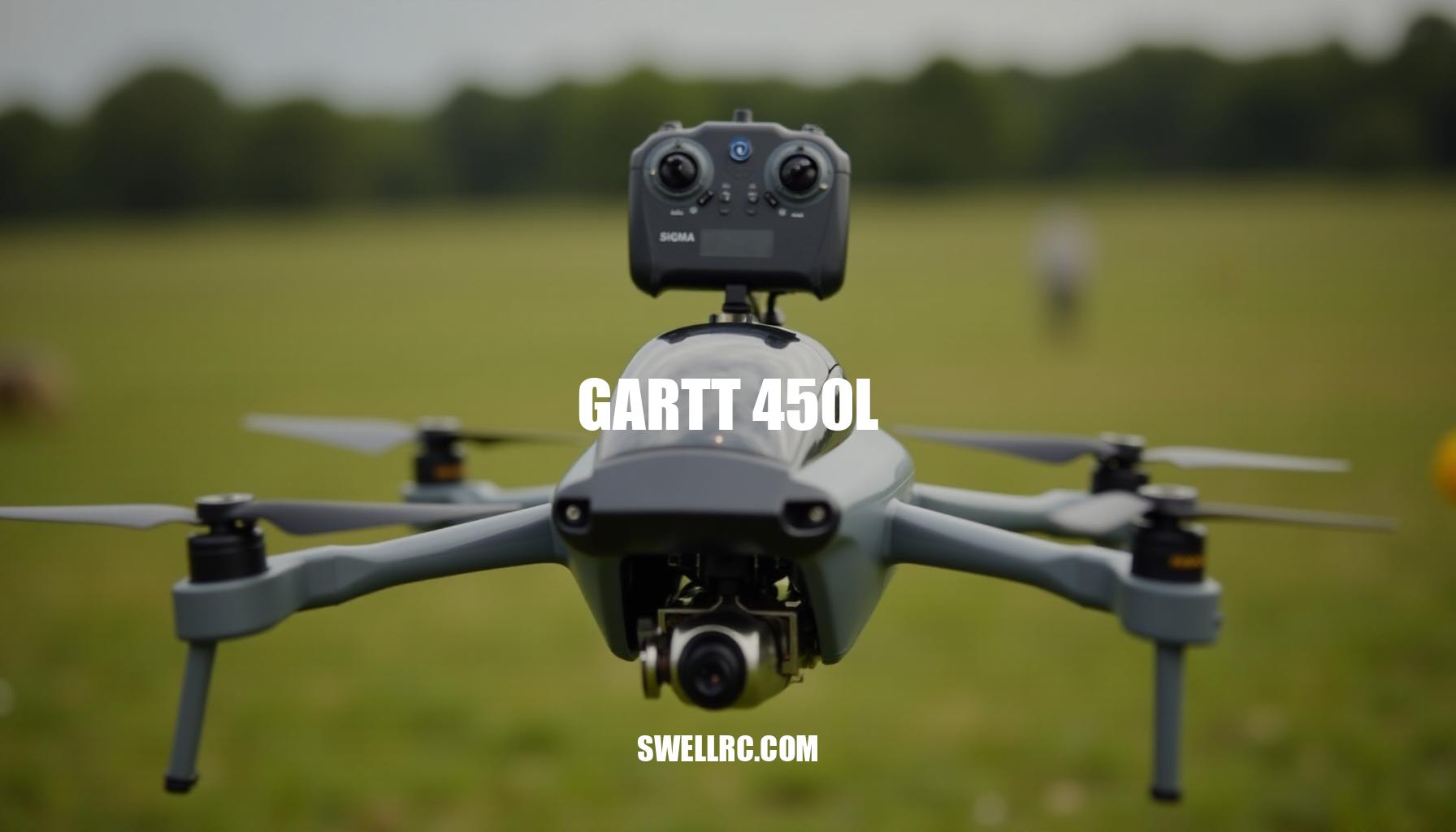
Gartt 450L Review: A Comprehensive Guide for RC Helicopter Enthusiasts

After countless hours tuning different 450-class helicopters, I kept hearing the same whisper on the flight line: “Try the Gartt 450L.” My curiosity turned into a full-on project, and it didn’t take long to see why this platform earns loyal praise. The Gartt 450L Dominator is a 450-size helicopter with flybarless rotor systems designed for precision and performance. Its design DNA is clearly inspired by Align’s celebrated Align T-Rex 450 series, meaning excellent parts availability, modification potential, and a familiar layout for anyone who has experience building a T-Rex.
This connection makes it a top choice among enthusiasts looking for reliable and high-performing RC helicopter kits.
This airframe truly speaks to modders and intermediate-to-advanced pilots who enjoy chasing that last 2% of smoothness, balance, and precision in their remote control aircraft. On the workbench, the Gartt 450L Dominator invites tinkering with clean cable runs, ample room for quality electronics, and a head design that rewards meticulous setup. Flying this hobby-grade RC model offers a satisfying sense of mastery: crisp cyclic control, locked-in tail authority, and a power curve that can be tailored to your style using a 6-channel helicopter setup.
If you love the craft of building as much as the art of flying, the Gartt 450L is a sweet spot where both worlds meet, making it an exceptional option in the realm of flybarless rotor systems and advanced 450-size helicopters.
Design and Engineering: Airframe, Head, and Tail
The Gartt 450L exemplifies superior RC helicopter engineering with its choice of robust frame materials and precision components. Its carbon-fiber side frames paired with CNC aluminum rotor head bearing blocks, motor mount, main rotor head, and tail case deliver a rigid yet serviceable chassis that minimizes flex, even under high head speed conditions. This thoughtful material selection ensures enhanced weight distribution and contributes to the platform’s acclaimed hobby-grade build quality.
The advanced flybarless system features a compact FBL head with dampers, providing smooth and precise feathering action alongside predictable pitch response. Supporting modern FBL controllers with standard 120° eCCPM swash geometry, the setup allows for superior flight control. For the tail assemblies, the 450L-style kits predominantly use a torque tube tail design, delivering crisp and direct tail response.
However, some variants incorporate a belt tail mechanism prioritizing easier maintenance without compromising performance. These meticulously engineered components maintain tight tolerances essential for consistent gyro performance and optimal flight stability.
In comparison to smaller micro helicopters such as the Esky 150 V3 (link), the Gartt 450L’s longer boom and accommodation for 360 mm blades substantially increase disc authority, improving wind handling and fine-tuning capabilities. Against budget-friendly 450-class competitors like the WLtoys V950 (link), the 450L platform distinguishes itself with higher-quality components, greater power overhead, and promising pathways for long-term upgrades.
Maintenance accessibility is another highlight, thanks to its modular frame design. This facilitates straightforward servo swaps, tail service, and main gear changes, making upkeep user-friendly. Achieving motor balance that mitigates vibrations, coupled with clean flight log data on the flybarless system, exemplifies why this category is so rewarding to assemble and tune right.
Gartt 450L Typical Specifications (for planning and parts selection)
When configuring your RC helicopter, it’s essential to understand the specifications that align with your model, especially for a Class 450L (long boom) setup. Essential parameters such as blade length, motor specs, and electronics play a critical role in performance and stability. Below is a comprehensive table summarizing key values to help you verify your specific kit and electronics, ensuring compatibility with brushless motor systems and effective RC helicopter gyro stabilization.
| Component | Specifications |
|---|---|
| Class | 450L (long boom) |
| Main blade length | Approximately 360 mm (pair) |
| Main rotor diameter | ~800–820 mm (with 360 mm blades) |
| Tail blade length | ~60–70 mm |
| Empty weight (sans battery) | ~550–650 g |
| All-Up Weight (AUW) with battery | ~800–900 g |
| Motor | ~1600–2000 KV outrunner (commonly 1800 KV on 6S) |
| Pinion/Main gear | 11–13T pinion typical; slant gears recommended for smoothness |
| ESC | 35–50 A with robust BEC (5–6 V or HV depending on servos) |
| Servos | 3x micro cyclic (9–12 g metal gear, fast transit), 1x fast tail servo |
| FBL controller | Any modern unit (iKON/Brain, MicroBeast, Spirit, AR7200BX, etc.) |
| Battery | 6S 1300–1500 mAh (recommended battery for 360 mm blades) |
| Headspeed range | ~2500–3200 RPM depending on flying style |
| Radio | 6+ channel with heli mixing and governor support (6-channel helicopter setup) |
Adhering to these values will provide an optimal balance of power, control, and stability for your RC helicopter. The choice of brushless motor systems with KV ratings within the suggested range ensures efficient energy use and adequate thrust. Additionally, selecting a recommended battery like the 6S 1300–1500 mAh pack complements your setup for sustained flight durations.
Combining these components with a high-quality RC helicopter gyro stabilization system and a 6-channel helicopter setup radio will elevate your flying experience, allowing for precise maneuvering and consistent performance.
Powertrain and Control: Motor, ESC, and Pitch Mechanics
When selecting brushless motor systems, pairing a quality 1800 KV motor on 6S with a 45–50 A ESC setup delivers a strong and efficient power curve ideal for sport flying to light 3D maneuvers. It is crucial to prioritize ESCs equipped with reliable internal BECs or alternatively add an external BEC to ensure ample servo headroom, enhancing overall system reliability.
Pitch and cyclic control are fundamental for precise flight performance, especially with modern Flybarless (FBL) units that reward accurate linkage lengths and a level swashplate setup. As a baseline, aim for ±12° collective pitch combined with approximately 8–10° cyclic pitch, then fine-tune these settings according to your flying style and servo capabilities. Maintaining neutral tail geometry at mid-stick positions optimizes gyro authority and tail responsiveness within governor mode.
Regarding vibration damping and balance, only soft-mount your gyro if specifically advised by your FBL system manual. Carefully balance the main blades and confirm proper motor-can alignment to achieve a smooth drivetrain. This attention to detail not only enhances the cyclic response and overall flight feel but also significantly prolongs component lifespan.
Flight Testing: Setup, Conditions, and First Impressions
During the RC flight testing, the flight performance under calm to breezy afternoon conditions showcased remarkable hover stability and precise handling. Equipped with 6S 1300 mAh packs, an 1800 KV motor featuring slant gears, and a modern FBL unit, the rotorcraft responded beautifully across a 3-bank tuning approach:
- Bank 1 (Sport): Smooth and controlled flight characteristics.
- Bank 2 (Aerobatic): Enhanced responsiveness for dynamic maneuvers.
- Bank 3 (Aggressive 3D): Maximized agility for advanced 3D flying.
With 15–25% expo applied on cyclic and tail controls, the stick centers felt notably smooth, increasing pilot confidence during precision control inputs. Initial flights revealed a rock-solid hover with minimal trim adjustments needed, and a linear collective response that contributed to effortless altitude management.
The spool-up was drama-free, and the airframe exhibited a reassuringly quiet head, lending a sense of stability in the air. Mid headspeed translations were accurate, allowing the model to cut through gusty conditions with less twitchiness typically experienced in smaller micros, highlighting its superior agility and power delivery.
| Headspeed (RPM) | Flight Characteristics |
|---|---|
| 2600 | Favors longer flight times and graceful aerobatics, balancing power and efficiency. |
| 2800–3000 | Unlocks punchy pop and fast stops, enhancing aggressive 3D maneuvers. |
The tail remained locked in during reversals, maintaining precise tracking through large air lines. This combination of stable hovering, agile responsiveness, and finely tuned power delivery through optimized headspeed tuning exemplifies outstanding RC flight performance.
Handling Character and Tuning Tips (with VTOL comparison)
When it comes to control response in fast pitch pumps and four-point rolls, the Gartt 450L impresses with exact precision—offering no mush and zero lag—provided the gyro gain is properly set. This precise RC helicopter tuning ensures that pitch management remains predictable and that flips close cleanly, enhancing overall flight performance.
For optimal flight characteristics, consider these tuning tips:
- Begin with moderate gyro gains.
- Gradually increase cyclic and tail gains until you detect the onset of oscillation, then back off by 3–5 points.
- Set throttle curves appropriately:
| Mode | Throttle Curve (%) |
|---|---|
| Non-Governed (Sport) | 0 – 40 – 70 – 85 – 100 |
| Non-Governed (Acro) | 0 – 60 – 80 – 90 – 100 |
| Governed Mode | 2600 / 2850 / 3000 RPM Banks |
When comparing the 450L to the XK X450 VTOL, it’s clear that the 450L remains a true heli without any transition or tri-mode compromises. This means all tuning efforts can be concentrated on rotor balance, full flybarless (FBL) gains, and mechanical geometry, resulting in superior handling and responsiveness.
For those interested in the heritage and performance-focused perspective on brands, exploring Gaui helicopters provides valuable insight into reliable airframes that prioritize precise control and advanced tuning capabilities.
Upgrades, Mods, and Compatibility Overview
When considering Gartt 450L upgrades, pilots often focus on both performance and durability enhancements to elevate their flying experience. A popular choice is to install a Hobbywing 50 A ESC upgrade paired with a high-quality 1800 KV motor, delivering smoother throttle response and better power management. Complementing the powertrain, many enthusiasts opt for fast metal-gear cyclic servos alongside a high-speed tail servo, providing exceptional control precision during aggressive maneuvers.
Enhancing the drivetrain is also crucial. Implementing a slant main gear in combination with a matching pinion gear helps reduce operational noise and improves the gear mesh alignment. For rotor effectiveness, carbon 360 mm blades are favored as they sharpen flight tracking and add rigidity under stress.
Stiffer dampers are recommended to maintain stable performance at higher head speeds, making the helicopter more responsive and reliable in dynamic conditions.
In terms of the frame and aesthetics, upgrading to carbon-reinforced frames strengthens the structure without adding excessive weight. Paired with stiffer landing gear, these changes significantly boost durability during hard landings or field crashes. For scale modeling enthusiasts, inspired bodies such as the Airwolf/Bell 222 style or the classic RC Bell 47 fuselage provide authentic looks and an immersive flying experience.
If you’re newer to the hobby or want a compact trainer to practice orientations before advancing to the 450L platform, the RC helicopter C186 offers a gentle and versatile stepping stone.
When integrating these upgrades, note that many components from the Align 450L era—including blades, gears, booms, and some shafts—are compatible with Gartt 450L upgrades. However, always verify exact measurements and tolerances to ensure seamless installation and optimal performance. For valuable sourcing tips and community-driven insights, bookmark reputable RC helicopter websites such as SwellRC.
Top Upgrade Tips (quick wins)
When optimizing your RC helicopter, following essential upgrade tips can significantly enhance performance and reliability. Start with a battery recommendation of a 6S 1300–1500 mAh pack that boasts a healthy C rating to ensure consistent punch throughout your flights. To address vibration and gear noise, upgrade to a slant main gear and pinion, which effectively reduces these issues, contributing to smoother operation.
Servo selection is critical; choose fast, metal-gear servos with response times between 0.06 and 0.10 seconds per 60 degrees to achieve crisp cyclic authority.
Setting up three headspeed banks—such as 2600, 2850, and 3000 RPM—and diligently logging pack temperatures after flights allows for precise tuning and monitoring of performance under varying conditions.
Don’t overlook mechanical balancing: carefully balance your blades and check the motor can runout, as improved smoothness unlocks the full potential of your flybarless (FBL) system. Tail performance can be hardened by using quality tail blades and ensuring precise linkage geometry, which are crucial for stability and responsiveness.
For electronics, ensure your ESC has adequate airflow to prevent overheating, and consider installing an external BEC especially if you’re running high-torque servos, providing reliable and clean power delivery. Applying thread locker on all metal-to-metal screw connections and rechecking them after the maiden flight prevents loosening due to vibrations.
Finally, verify shaft sizes and tolerances carefully before mixing parts from different brands to avoid incompatibility issues. If you plan to build a scale body, make sure to test-fly the mechanical setup thoroughly first to confirm optimal function before adding the body.
Common Issues and Troubleshooting (field-tested fixes)
Before diving into complex troubleshooting like gyro drift or tail wag issues, it’s essential to start with a thorough mechanical check. Key areas to inspect include the swash level, blade balance, gear mesh, and the tail belt/TT alignment. I personally battled persistent tail drift for days, only to discover that a single slightly bent tail shaft was the root cause.
This highlights how crucial it is to have your mechanics flawless before tuning your electronics. For beginners, gaining experience on simpler models can significantly ease the learning curve. For instance, spending time with a fixed-pitch helicopter such as the Double Horse 9101 helps build confidence quickly and reduces complications related to motor vibration or servo noise.
Addressing setup issues at this stage prevents frustration later when handling more advanced collective pitch helicopters like the 450L. Remember, effective beginner training involves mastering the basics mechanically first, which makes resolving electronic glitches like gyro drift much more straightforward.
Quick-Fix Matrix: Problems, Causes, Solutions
When it comes to RC helicopter maintenance, having a handy troubleshooting table can be invaluable for diagnosing and resolving common flight issues quickly. The table below outlines frequent problems, their likely causes, and easy solutions to get your heli back in the air with minimal downtime.
| Problem | Likely Cause | Solution |
|---|---|---|
| Tail wag at hover | Tail gain too high, sloppy tail linkage | Lower tail gyro gain 3–5 pts; tighten linkage and check horn geometry |
| Persistent tail drift | Bent tail shaft, bad tail bearings | Replace shaft/bearings; re-lube and re-check belt/TT alignment |
| Cyclic oscillation | Cyclic gain too high, unbalanced blades | Reduce cyclic gain; balance blades and check head dampers |
| Motor vibration | Unbalanced motor can, poor gear mesh | Balance motor; set proper slant gear mesh with paper method |
| Throttle surging | ESC governor hunting | Increase governor gain filter or switch to fixed throttle curve and test |
| Brownouts/resets | Weak BEC, high servo load | Use higher-current BEC or external BEC; reduce binding in linkages |
| Short flight time | Overgeared, high headspeed | Drop pinion or headspeed; use fresh, higher-C batteries |
| Tracking off | Unequal blade pitch, bent feathering shaft | Re-zero pitch, replace feathering shaft, verify FBL setup |
| Hot ESC | Poor airflow, overcurrent | Improve cooling, right-size prop/pinion and headspeed |
| Noisy tail | Dry bearings, misaligned tail case | Lubricate/replace bearings; square the tail case to boom |
By using this quick fixes guide, you can troubleshoot common faults such as BEC issues, improper gear mesh, or the need for precise governor tuning. Keeping your heli well-maintained with proper setup checks and preventative care ensures longer flight times and more reliable performance. Pay special attention to components like the tail shaft and bearings, flight control gains, and power system setup to mitigate frequent problems early.
For enthusiasts, this table becomes part of essential RC helicopter maintenance routines.
Gartt 450L vs Competitors – Where It Stands
This comparison of the Gartt 450L against popular models like the Align T-Rex 450, Gaui X3, and WLtoys V950 highlights crucial factors such as price value, build quality, and ease of assembly. Whether you’re embarking on your first helicopter build or considering an upgrade, understanding these aspects can guide your decision effectively.
| Model | Price Value | Build Quality | Ease of Assembly |
|---|---|---|---|
| Gartt 450L | Highly competitive, offering excellent components at a budget-friendly cost | Robust with quality materials suitable for both beginners and pros | Designed for straightforward assembly with clear instructions |
| Align T-Rex 450 | Premium pricing reflecting top-notch craftsmanship | Exceptional build quality renowned in the RC community | Moderate complexity requiring some prior experience |
| Gaui X3 | Mid-range pricing balancing cost and features | Good quality frame and components | Relatively easy to assemble with user-friendly design |
| WLtoys V950 | Budget-friendly, ideal for beginners or casual flyers | Basic build quality suitable for light use | Simple assembly, perfect for new hobbyists |
By weighing these options in this comparison, you can better align your choice with your flying goals, ensuring your investment in the Gartt 450L or its peers matches your expectations in price value, durability, and assembly ease.
Head-to-Head Snapshot (Model | Stability | Power | Assembly | Value)
When choosing the ideal RC helicopter, several factors come into play, including flight stability, power comparison, ease of assembly, and overall price value. Below is a comparison table that highlights key characteristics of popular models, helping hobbyists make informed decisions based on their needs and budget.
| Model | Flight Stability | Power | Ease of Assembly | Price Value |
|---|---|---|---|---|
| Gartt 450L | Excellent with proper FBL tune | Strong on 6S 1800 KV | Moderate (kit-build) | High (mod-friendly, parts access) |
| Align T-Rex 450/450L | Benchmark stable | Strong with Align motor/ESC | Moderate (premium kit tolerances) | High (premium pricing, premium finish) |
| Gaui X3 (360 class) | Very stable, robust frame | Strong; takes power well | Moderate (premium kit) | High (durable, performance-focused) |
| WLtoys V950 | Good for budget sport | Moderate | Easy (RTF) | Very High (low cost, fewer upgrades) |
| RC helicopter C186 (trainer) | Stable for learning basics | Low | Easy (micro) | High for beginners (orientation practice) |
This budget vs premium comparison clearly shows that models like the Align T-Rex 450/450L and Gaui X3 offer superior flight stability and power but come at higher prices and involve moderate assembly difficulty. In contrast, options such as the WLtoys V950 and RC helicopter C186 cater to beginners or hobbyists seeking easier assembly and affordable pricing, albeit with lower power ratings. Understanding these trade-offs is crucial for selecting an RC helicopter that matches your skill level and performance expectations.
Narrative Takeaway After Back-to-Back Flights
After a week of thorough comparison flying, the Gartt 450L stood out as the most satisfying tuner’s platform within this group. Its value proposition lies in the perfect balance of cost and performance, offering pilots a reliable and engaging experience. This model rewards careful setup with a “locked-in” feel that cheaper RTFs rarely match, making it an excellent choice for those serious about their flight dynamics.
One of the key advantages of the 450L is its excellent upgrade path.
It allows enthusiasts to progressively enhance their setup, making it ideal for pilot progression from intermediate to advanced levels. The platform’s robust design supports significant mod potential, enabling long-term customization and improvements.
For anyone seeking a durable workbench project that can evolve over time, the 450L excels in terms of long-term ownership. Pilots who enjoy selecting their own electronics will find it a rewarding platform that grows alongside their skills and ambitions.
- Value proposition: Exceptional balance of cost and locked-in performance.
- Upgrade path: Supports gradual enhancements matching pilot progression.
- Long-term ownership: Durable, reliable platform designed for years of use.
- Mod potential: High flexibility for electronic and structural upgrades.
- Pilot progression: Ideal for growing skills from tuner to advanced flyer.
Conclusion – Why the Gartt 450L Still Earns Respect
The Gartt 450L continues to captivate enthusiasts, blending exceptional design quality with a versatile blank-canvas mod path. Its longer boom and precise 360 mm blades provide unparalleled flight authority, while the carbon/CNC structure ensures a crisp, responsive feel. Complemented by the advanced FBL ecosystem, pilots can tailor the helicopter’s response to their exact preferences until it seamlessly becomes an extension of their controls.
For those who value flight satisfaction, the Gartt 450L offers an ideal platform to balance learning, tinkering, and flying on your own terms and within your budget. The model’s impressive upgrade flexibility means you can enhance performance as your skills grow.
When researching adjacent models, part upgrades, or seeking comprehensive RC helicopter resources, SwellRC‘s detailed guides and product pages are invaluable. They provide reliable information that supports both your purchasing decisions and deeper understanding of the hobby.
- Gartt 450L review: Insightful evaluations for informed decisions
- Design quality: Robust materials and engineering for durability
- Flight satisfaction: Responsive controls and smooth performance
- Upgrade flexibility: Easily modifiable for customized setups
- RC helicopter resources: Comprehensive tutorials and parts directories
- SwellRC: Trusted source for reviews and product information
Remember, the journey toward mastery in RC helicopter flying is as rewarding as the destination. Fly safe, tune patiently, and enjoy every moment of the process with your Gartt 450L.
Frequently Asked Questions
- What makes the Gartt 450L a popular choice among RC helicopter enthusiasts?
It combines a proven 450L layout (360 mm blades, long boom) with hobby-grade parts compatibility, strong 6S power options, and an open-ended upgrade path. Builders appreciate the carbon/CNC construction, FBL-friendly geometry, and the ability to tailor electronics to style and budget. - How does the Gartt 450L compare to the Align T-Rex 450 series?
Align remains the benchmark for premium fit and finish, while the Gartt 450L offers a cost-effective, mod-friendly path with broad parts compatibility. With careful setup and quality electronics, the 450L can approach the crisp, locked-in performance many associate with Align’s 450L Dominator era. - What upgrades can improve the performance of the Gartt 450L?
Top gains come from a reliable ESC with strong BEC, a smooth 1800 KV motor on 6S, slant main gear/pinion, fast metal-gear servos, and quality 360 mm carbon blades. Dialed FBL tuning and solid tail geometry are equally important. - How difficult is it to assemble and tune the Gartt 450L?
Assembly is moderate for anyone with prior kit experience. The key is meticulous mechanics—true shafts, proper gear mesh, smooth linkages—followed by patient FBL setup. Expect a few hours to build and another session or two to fine-tune gains, throttle curves, and headspeeds. - Which replacement parts are compatible with the Gartt 450L?
Many Align 450L-style parts (booms, blades, gears, some shafts and bearings) are compatible, but always confirm dimensions and tolerances. Electronics (servos, ESCs, motors, and FBL units) are broadly interchangeable within the 450/360 mm class. - Is the Gartt 450L suitable for beginners or advanced pilots?
It’s best for committed beginners with simulator time or for intermediate-to-advanced pilots. Absolute beginners may prefer practicing on a micro trainer first (e.g., C186 or simpler fixed-pitch models) before stepping into a powerful collective-pitch 450L. - How long does a typical flight last with a Gartt 450L setup?
On 6S 1300–1500 mAh packs, expect about 4–7 minutes depending on headspeed, flying style, and gearing. Lower headspeeds and smooth sport flying extend time; aggressive 3D shortens it.