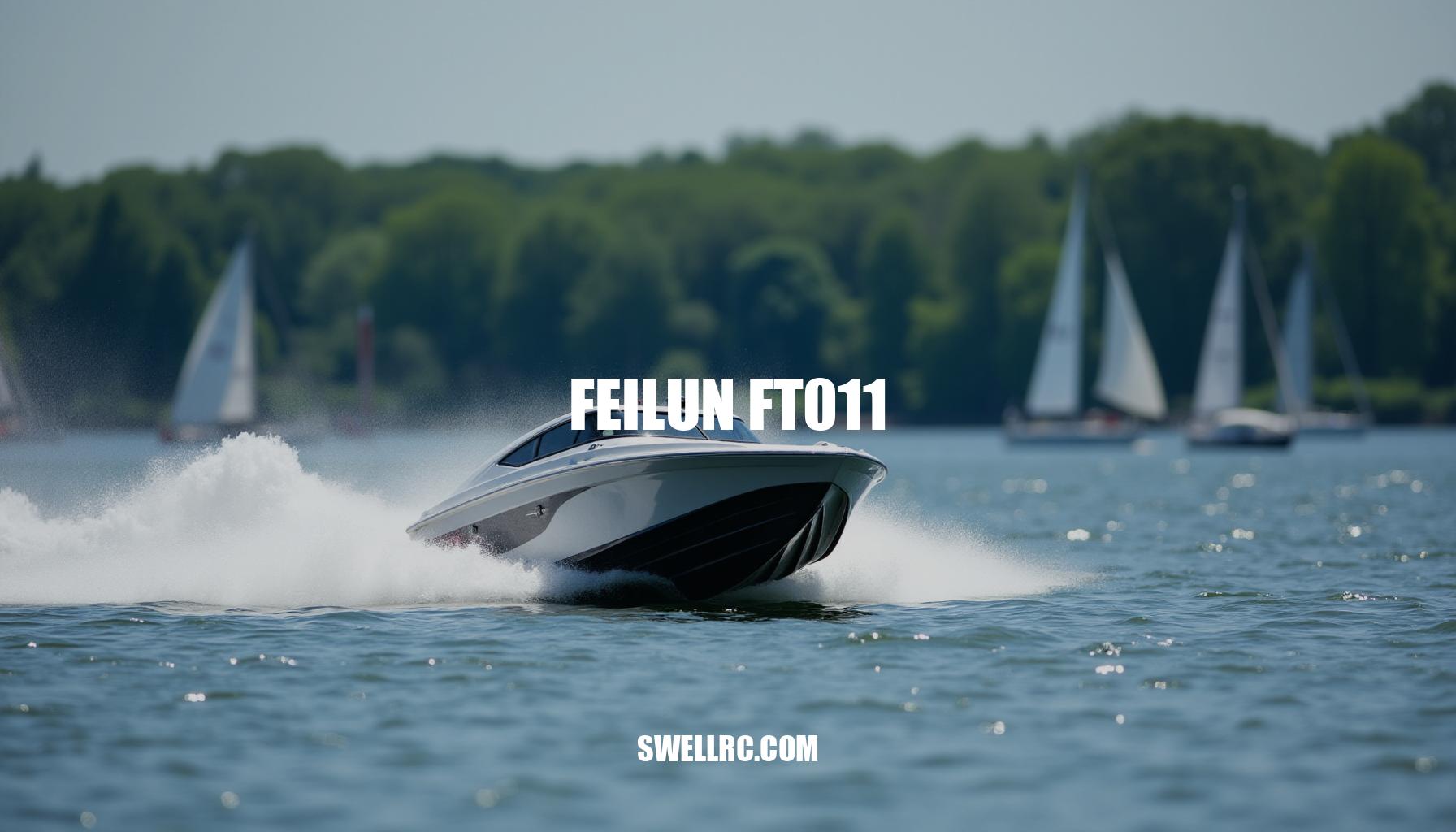
Feilun FT011 Review: A Thrilling Brushless RC Boat for Intermediates

One calm morning, I found myself captivated by the sharp, electric whine emanating from the Feilun FT011 as it sliced through the water, GPS-confirmed speed numbers climbing steadily on my screen. This 65 cm class, electric brushless motor RC boat with water-cooling and a self-righting hull design really packs a punch. Powered via a 2.4GHz RC transmitter for precise control, the Feilun FT011 isn’t just any remote control boat—it’s a high-speed electric RC boat built for thrill-seekers who crave speed and performance.
If you’re also into speedy rotorcraft, check out the rotorcraft for speed seekers like the Yuxiang F09 Black Hawk, which delivers excitements on the air. In this exhaustive review and enthusiast’s guide, I’ll break down the Feilun FT011’s real top speed and acceleration, how it handles in choppy conditions, battery life and runtime, build quality, and essential maintenance tips. Plus, I’ll compare it to other popular radio-controlled racing boats to help you decide if it’s the right brushless motor RC boat for your collection.
Get ready for an in-depth journey covering specs, performance testing, upkeep guidance, and head-to-head comparisons across the world of high-speed electric RC boats.
Design and Build — “Built for Speed, Balanced for Control”
The Feilun FT011 sets itself apart with engineering details that deliver a premium experience well beyond its price point. Central to its appeal is the deep-V hydrodynamic hull design, measuring approximately 65 cm in length, expertly molded from durable ABS plastic. This deep-V hull shape, known as the deadrise, provides superior slicing through water, enhancing the boat’s ability to track straight and maintain stability even at high speeds.
Careful placement of the boat’s center of gravity lowers the profile for improved balance, while turn-fins and strakes carved into the hull increase cornering bite and responsiveness during fast maneuvers.
The build quality extends further with a reinforced canopy featuring a rubber sealing strip that helps prevent water ingress, safeguarding the waterproof electronics tray beneath. This kind of thoughtful waterproofing alongside a water-cooled brushless motor and ESC setup not only reduces maintenance demands but dramatically increases the boat’s reliability and lifespan. Brushless motors are celebrated for their efficiency and significant thermal headroom, which means they run cooler and last longer compared to brushed counterparts.
The clean driveline also underscores quality engineering—featuring a greaseable flex shaft for smooth, consistent power delivery and straightforward upkeep. Overall, the FT011’s integration of features like brushless power, a water-cooled ESC, and a waterproof RC hull design typify a well-rounded package aimed at serious hobbyists.
For context, the following comparison table highlights how the Feilun FT011 stacks against two popular alternatives:
| Model | Length | Motor Type | Claimed Top Speed | Hull Material | Skill Level | Standout Trait |
|---|---|---|---|---|---|---|
| FT011 | ~65 cm | Brushless | ~55 km/h | ABS deep-V | Intermediate | Hydrodynamic deep-V hull, build quality |
| TFL Hobby Zonda | Compact catamaran | Brushless (supports 6S–8S) | Extreme speed potential | Fiberglass/carbon composite | Advanced | Premium catamaran platform with extreme speed |
| Gizmovine RC Boat T03 | Smaller size | Brushed | Lower speed | Plastic | Beginner | Budget-friendly, easy to use |
Materials play a crucial role in the performance and maintenance of RC boats. ABS plastic, as used in the FT011, offers a balanced trifecta of rigidity, reasonable weight, and excellent impact resistance, making it less prone to damage than fiberglass or carbon composites in rough handling. However, fiberglass and carbon provide superior stiffness and lightweight characteristics, contributing to higher speed capabilities as evidenced by the TFL Hobby Zonda’s performance potential.
Additionally, ABS hulls are easier and more affordable to repair, a consideration for users valuing long-term ownership cost-effectiveness.
Another key factor in durability is the water-sealing design and ease of access to internals, which Feilun engineers have prioritized. Effective waterproofing of components like the ESC and motor reduces corrosion risk and frequent maintenance cycles, crucial for consistent operation. The thoughtfully designed canopy with rubber sealing and a dedicated waterproof electronics tray ensures sensitive parts remain dry, while the ability to service the greasy flex shaft and other driveline components encourages users to perform preventive care.
This meticulous attention to waterproof RC hull construction and internal access ultimately extends the lifespan of the boat and enhances user confidence.
Performance and Handling — “Where the Feilun FT011 Truly Shines”
The Feilun FT011 top speed is impressively brisk, reaching about 50–55 km/h (31–34 mph) when powered by a healthy 4S LiPo battery in calm water. This rapid acceleration takes the boat from 0 to 30 km/h in roughly a couple of seconds, showcasing its dynamic RC boat handling capabilities. Practical control range using the reliable 2.4GHz control system spans approximately 120–150 meters, maintaining a stable signal well beyond average pond or lake sizes.
Throttle linearity is smooth and predictable, allowing for precise modulation that is especially appreciated when negotiating tight turns or reacting to chop. Steering precision is excellent; the boat holds its line admirably in turns, responding crisply to inputs without excessive oversteer or understeer. Trim adjustments play a crucial role: careful tuning minimizes porpoising and enhances the deep-V hull’s ability to cut through light chop with confidence and minimal spray.
| Performance Aspect | Details |
|---|---|
| Runtime at full throttle | 6–8 minutes |
| Runtime with mixed throttle | 8–12 minutes |
| Factors affecting runtime | Battery condition, prop load, water conditions |
| Wave handling | Excellent on ponds and lakes; handles moderate chop well |
| Handling larger wakes | Requires judicious throttle to avoid blowouts |
In terms of wave handling and wind response, the FT011’s deep-V hull excels in calm to moderately choppy water, providing a stable ride that inspires confidence. However, larger wakes should be approached with caution, as aggressive throttle can lead to blowouts or loss of control. Notably, the boat benefits from a self-righting recovery if flipped, an invaluable feature for maintaining uninterrupted sessions.
For those prioritizing either ease of use or different operational goals, it’s worth considering alternative models: the HJ808 RC Boat offers a slower, more beginner-friendly experience suited for younger operators or confined pond spaces. Conversely, the Flytec 2011-5 Fishing Bait Boat sacrifices speed for utility and payload capacity, catering to enthusiasts focused on fishing and bait delivery rather than outright performance.
Overall, real-world performance metrics and user impressions underscore the FT011’s status as a high-performance model in its class, delivering exhilarating speed, refined control, and dependable runtime, making it a compelling choice for serious RC boating enthusiasts.
Battery, Maintenance, and Durability — “Making the FT011 Last Beyond the Waves”
The Feilun FT011 typically runs on a 14.8V 4S LiPo battery, commonly around 2200 mAh with a 25–35C discharge rate, connected via reliable Deans or XT60-style connectors to power its efficient brushless system. To maximize Feilun FT011 battery life and ensure safety, use a quality balance charger and always charge in a LiPo-safe charging bag.
Here is a concise, step-by-step checklist to maintain your RC boat’s performance and durability through smart LiPo maintenance, waterproofing, and corrosion prevention:
- Pre-run: Inspect the hatch seal carefully and tape the seam if you expect rough water conditions. Verify that cooling lines remain clear for optimal brushless durability and check that prop and rudder hardware are tight and secure.
- Charging: Balance charge your LiPo packs at 1C speed.
Never leave batteries unattended during charging and avoid charging a battery that is still hot. If not running the boat within 24 hours, bring packs down to storage voltage (~3.8 V/cell) to enhance battery longevity.
- On-water habits: Use short wide-open throttle (WOT) bursts especially in choppy water. If you notice performance sagging due to low voltage, bring the boat in and swap to a fresh pack rather than risking over-discharge.
- Post-run fresh water maintenance: Open the canopy and allow the interior and electronics to dry and cool.
Wipe down the hull to remove dirt and salt residue. Apply marine grease to the flex shaft every 2–3 packs to keep the driveline smooth.
- Saltwater protocol: If operating in saltwater, flush the entire boat thoroughly with fresh water afterward. Blow-dry all components, re-grease the driveline, and apply a light corrosion inhibitor to metal parts to prevent damage from salt exposure.
- Periodic checks: Regularly inspect coupler set screws for tightness, check for rudder linkage slop, and ensure cooling jackets are functioning.
Replace worn flex shafts and couplers promptly before failure occurs.
- Storage and safety: Store LiPo batteries at a proper storage voltage between 3.75–3.85 V/cell and maintain them at 10–50% state of charge inside fire-resistant containers. Keep the boat hull slightly ajar to allow residual moisture to evaporate, a simple but effective waterproofing strategy.
The FT011’s advanced brushless, water-cooled system combined with a sealed hull typically offers greater longevity compared to brushed entry-level boats when following these care guidelines. For perspective, the durability and electronics care align with best practices observed in RC helicopter platforms like the Double Horse 9101 and Hero RC H911, which are simple yet robust systems that welcome attentive maintenance.
Moreover, reliable electronics and proper radio setup are crucial for long-term enjoyment—just as with the Wltoys V950.
Proper LiPo care and solid 2.4GHz binding practices in that helicopter platform deliver dependable performance, a principle equally valuable for your Feilun FT011.
Keep these friendly, confidence-building tips in mind for enhanced RC boat care and to safeguard your investment while enjoying every thrilling run on the water.
Comparisons and Alternatives — “How It Stacks Against Other RC Speed Boats”
The Feilun FT011 delivers exceptional speed-per-dollar for intermediate hobbyists seeking thrilling performance without breaking the bank, while premium boats push higher speeds and refinement at a premium cost. When weighing options in the competitive RC boating scene, understanding the key differences helps identify the ideal choice for your skill level and budget.
| Model / Category | Speed Range (km/h) | Price Band | Hull Type | Skill Level | Best For | Notable Trade-off |
|---|---|---|---|---|---|---|
| Feilun FT011 (brushless deep-V) | ~50–55 | Mid-budget | Deep-V Monohull | Intermediate Hobbyists | High speed thrills with manageable cost and maintenance | Less refined handling compared to premium catamarans |
| TFL Hobby RC Boats (premium catamarans & monohulls) | 60+ | High-end | Catamaran / Advanced Mono | Advanced Users | Elite top speeds with refined control and 6S–8S battery capability | Higher price and complex maintenance |
| Gizmovine T03 (brushed) | 20–25 | Budget | Simple Mono | Beginners / Kids | Entry-level fun and durability, ideal for learning | Modest speeds and less power |
For those exploring alternatives beyond high-speed racing, utility-focused bait boats are popular among anglers wanting precision delivery on the water, while kid-friendly trainers prioritize ease of use and safety—though these categories sacrifice speed and agility. This Freewing Planes reference links to other high-speed RC options interested parties may find exciting.
In summary, if you seek the best price-to-performance balance and manageable maintenance, the Feilun FT011 stands out as the best beginner high-speed RC boat for intermediates. Choose TFL Hobby for top-tier performance and cutting-edge features but be prepared for a serious investment and a steeper learning curve. Entry models like the Gizmovine T03 remain the ideal gateway for absolute beginners or young pilots starting their RC boating journey.
Conclusion — “Why the Feilun FT011 Became My Go-To RC Boat”
Reflecting on this Feilun FT011 review, it’s clear the boat delivers thrilling speed and handling—hitting close to 55 km/h and showing confident tracking and cornering that truly impress for the price point. Its straightforward maintenance paired with reliable waterproofing makes it a standout choice in terms of long-term reliability. For anyone stepping into brushless RC boats without wanting to overspend, the FT011 comes highly recommended as an RC boat recommendation that balances performance and accessibility.
When choosing your next RC craft, consider your local water conditions and skill level carefully—these factors will influence how you enjoy the FT011’s capabilities.
With consistent care and the tips highlighted earlier, you can keep your FT011 running fast and trouble-free season after season.
For enthusiasts looking beyond this model, there’s a rich landscape to explore. Utility-minded users might find the Flytec 2011-5 a worthy contender, while speed purists could set their sights on premium TFL platforms. These options expand your RC horizons and offer valuable perspectives in your RC boat journey.
All in all, I’m excited to keep pushing the limits of the FT011 by testing different props and battery packs, while also diving deeper into more offerings from Feilun’s lineup.
This enthusiast guide stands as a testament to what budget-friendly, well-engineered brushless boats can offer—and there’s much more to discover ahead!
Frequently Asked Questions
- How fast does the Feilun FT011 go on water?
In stock form on a healthy 4S LiPo, most users see about 50–55 km/h (31–34 mph) in calm conditions. GPS-verified runs in the low-to-mid 50s are typical. - Is the Feilun FT011 good for beginners?
It’s a great step-up boat. Self-righting and 2.4GHz control help, but the speed can overwhelm first-timers. True novices may prefer a slower trainer first, then move to the FT011. - What battery does the Feilun FT011 use?
A 14.8V 4S LiPo, commonly around 2200 mAh with a 25–35C rating. Expect roughly 6–8 minutes at high throttle or 8–12 minutes with mixed throttle. - Can the FT011 handle saltwater?
It can, but salt accelerates corrosion. If you run saltwater, flush with fresh water immediately, dry thoroughly, re‑grease the driveline, and apply a light corrosion inhibitor. - How does the Feilun FT011 compare to other RC boats?
It offers outstanding speed-per-dollar versus brushed beginner boats and many midrange options, though premium models like TFL Hobby boats surpass it in refinement and extreme speed. - What maintenance does the FT011 require?
Balance-charge LiPos, keep the hull dry, grease the flex shaft every few runs, check couplers and hardware, and verify hatch seals. Store LiPos at 3.8 V/cell. - Are Feilun RC boats reliable?
Yes, when maintained. The FT011’s brushless, water-cooled design is robust; common issues are preventable—seal the hatch, keep water out, and service the driveline regularly.