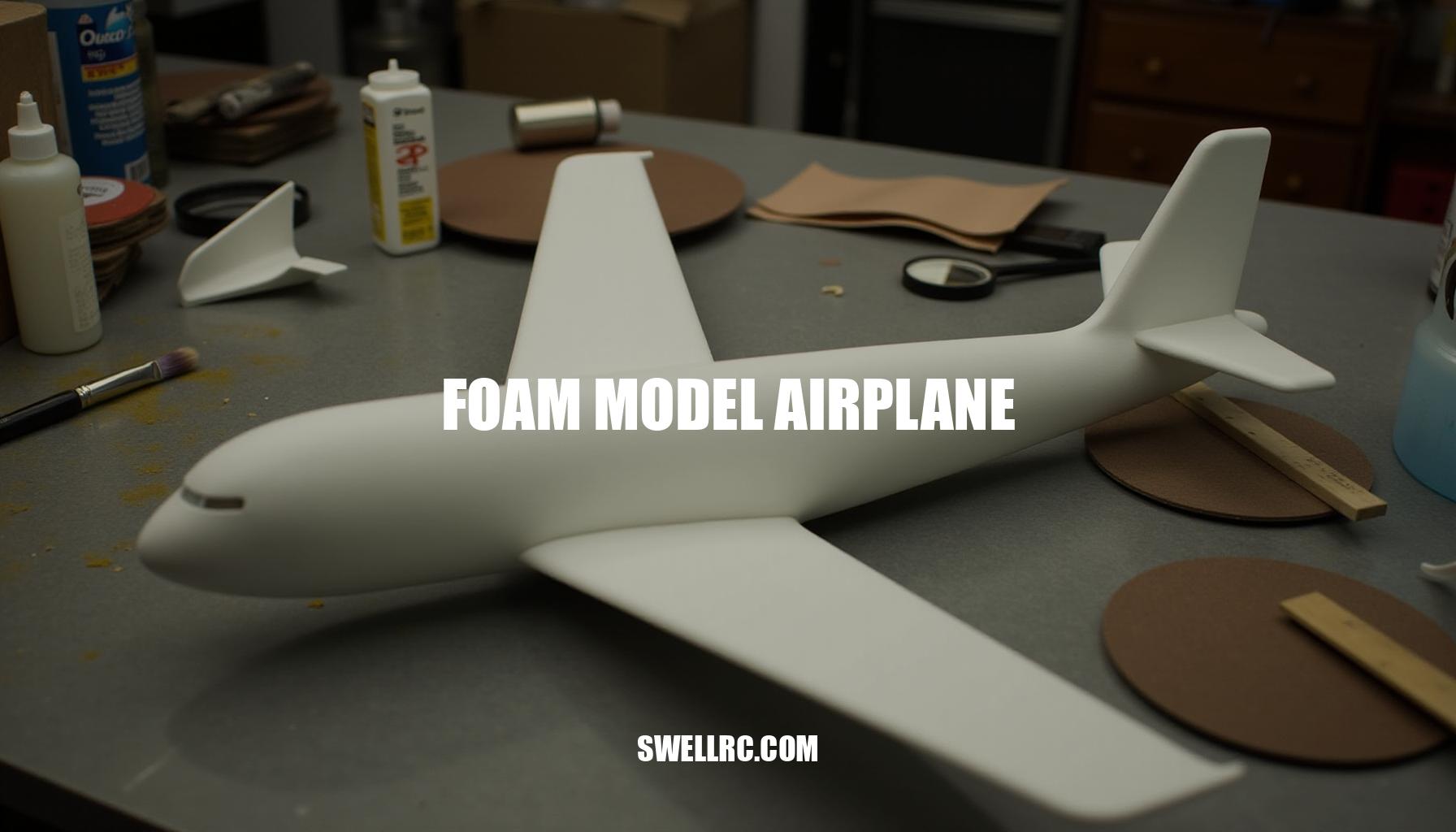
The Art of Building Foam Model Airplanes

The first time a foam wing I cut in my garage actually lifted into a sunset crosswind, I realized foam wasn’t a compromise—it was creative freedom. Growing up trimming balsa ribs and ironing covering film, I discovered that foam changed the tempo: enabling faster prototyping, braver experiments, and crashes that felt like lessons instead of setbacks. Over the past few years, I’ve iterated dozens of test builds—floaty indoor trainers, park 3D ships, and scrappy slope gliders—and the versatility of foam keeps surprising me.
Whether you’re passionate about RC foam planes, exploring different model aircraft building techniques, or choosing the right RC airplane materials, foam offers something for everyone. From indestructible EPP to razor-precise Depron or budget-friendly foamboard, there’s a path that matches your style and skill level. If you’re just deciding where to start your model airplane kits journey, here’s a helpful overview on the best foam for RC planes.
This comprehensive guide breaks down foam types, shows how to build and customize without adding weight, unpacks how airfoils and wing loading translate to real flight behavior, and shares advanced upgrades, maintenance, and safety tips—so your next radio-controlled flight feels as good as your first takeoff looked.
Understanding Foam Types for Model Airplanes
The world of RC foam planes thrives on a few standout materials, each bringing unique strengths for enthusiasts of all levels. The three most popular choices—EPP foam planes, Depron foam aircraft, and foamboard RC planes—offer distinct characteristics that influence how your model performs in the field.
After countless flights, crashes, and repairs, here’s a detailed comparison to help you decide which RC airplane materials suit your needs best:
| Foam type | Typical density/weight | Flexibility | Crash resilience | Stiffness/precision | Cost | Repairability | Best use cases | Notes |
|---|---|---|---|---|---|---|---|---|
| EPP | 1.3–2.3 lb/ft³ | Very flexible | Excellent crash survival | Moderate stiffness | Mid cost | Hot glue/foam-safe CA/urethane repair | Trainers, 3D bashers, slope | Shrugs off tip-stall arrivals that would crease foamboard |
| Depron | Around 30–40 kg/m³ sheets | Low flex | Moderate crash survival | High stiffness and precision | Mid-high cost | UHU POR/epoxy/foam-safe CA | Indoor aerobatics, light park flyers, speed | Stays true at speed and tracks beautifully, rewarding careful CG and smooth power |
| Foamboard | 5 mm paper-faced | Moderate stiffness with paper | Fair crash resilience | Very low cost | Hot glue/tape | Trainers, prototypes, scale sport | Better when paper removed and reinforced with carbon/tape; transforms with carbon spars, packing tape skins, and lightening cuts |
In summary, EPP foam planes reign as the crash king, delivering a springy and forgiving experience that’s easy to repair, perfect for newcomers and 3D flyers who push limits. Meanwhile, Depron foam aircraft offer a clean, precise build with efficient flight characteristics, ideal for pilots focused on indoor aerobatics and speed. Lastly, the foamboard RC plane shines as an affordable, quick-building solution that can be greatly enhanced with smart reinforcements to punch above its weight class.
Explore more on these materials and their platforms to pick the best RC airplane materials for your next build:
- Learn more about EPP platforms
- For clean, precise builds, see Depron foam model aircraft
- If you love quick, low-cost builds, explore foamboard plane projects
Building and Customizing a Foam Model Airplane
Whether you start from a kit or scratch, the build is where personality shows in model aircraft building. Here’s a concise, weight-smart workflow I’ve refined over many projects that perfectly fits into any DIY foam model airplane design guide:
- Plan and select: Choose a design that matches your flying space and experience. Kits accelerate success—browse reliable foam airplane kits. For tiny gyms and living rooms, study how to make super light RC indoor planes specifically designed for lightweight indoor RC planes enthusiasts.
- Tools and templates: Use fresh blades, a steel ruler, cutting mat, and square. Print tiled plans or cut directly from kit templates guiding your choice of RC airplane materials.
- Cut clean: Use multiple shallow passes. For Depron foam, support the sheet to prevent compression; for foamboard, score and fold techniques save time while preserving structural integrity.
- Glue wisely: Apply foam-safe CA with kicker for tack bonding; use UHU POR contact method for Depron joints; hot glue sparingly on foamboard and EPP; thin epoxy works best for high-stress areas.
- Reinforce without penalty: Add carbon strip spars in wings, light fiberglass tape on leading edges, and localized doublers at landing gear blocks to enhance strength without adding excessive weight.
- Hardware fit: Dry-fit servos and pushrods before final glue. Ensure linkages are slop-free and properly aligned to maintain precise control.
- Balance and CG: Start at plan CG and adjust battery position before considering additional ballast to maintain optimal flight characteristics.
- Electronics: Match motor and prop to the airframe. Aim for 150–220 W/kg for trainers and 250–400 W/kg for sport or 3D flying styles to meet performance demands.
- Finish light: Use water-based acrylic paints and light masking techniques. Avoid heavy solvent paints that can add unnecessary weight.
- Preflight: Verify control throws, expo settings, failsafe operation, and control directions. A careful maiden checklist minimizes risks and protects your investment.
Personal tip: Any time the airframe gains weight, ask yourself what you gain back in strength or performance. Small choices—like swapping to thinner servo leads or upgrading to a lighter servo mount—snowball into better wing loading and overall flight success.
Flight Dynamics: How Foam Design Affects Performance
Foam type and structure significantly influence how an airplane communicates with the air during radio-controlled flight. Imagine it like choosing shoe soles: EPP foam feels like cushioned trainers offering resilience and flexibility; Depron RC plane foam resembles sleek racing flats, optimized for precision and speed; while foamboard provides the sturdy support akin to hiking shoes, balancing toughness and rigidity.
Key factors to consider include:
- Wing Loading: Lower wing loading—achieved with lighter builds and larger wings—results in slower stall speeds and forgiving handling, ideal for beginners and lightweight indoor RC planes. Higher wing loading enhances penetration and speed but demands more pilot skill as it punishes slow flight maneuvers.
- Airfoil and Thickness: Flat-plate wings excel at sharp turns and are favored for high-alpha 3D maneuvers typical in 3D flat foam airplanes. Semi-symmetrical and symmetrical airfoils, conversely, track straighter and handle increased velocities more effectively.
- Foam Density and Stiffness: Stiffer foams like Depron maintain airfoil integrity under load, crucial for precise, ultra-light builds. Flexible foams such as EPP absorb vibrations and impacts better but can twist under high-G forces unless reinforced properly.
- Structure: Internal components including spars, shear webs, and quality glue joints contribute more to flight performance than foam strength alone. Well-designed structures enhance durability and keeping control surfaces true.
For pilots seeking aerobatic insight, exploring 3D flat foam airplanes offers invaluable design principles. Conversely, those favoring ultra-light and precise models should examine Depron RC plane setups.
Some tuning tips I rely on include:
| Adjustment | Details |
|---|---|
| Center of Gravity (CG) | Start slightly forward of neutral, then move aft incrementally until pitch feels responsive yet stable. |
| Dual Rates | Use tame settings for smooth takeoff and landing, and switch to acro rates for aggressive maneuvering. |
| Throttle-to-Elevator Mix | Add subtle mixing to maintain consistent pitch during high-alpha slow flight. |
| Propeller Selection | Choose prop for thrust first; then trim diameter and pitch to optimize noise levels and efficiency. |
By understanding these aspects and applying them thoughtfully, enthusiasts can maximize the potential of RC foam planes across various flying styles and environments.
Advanced Techniques: Going Beyond Basic Foam Builds
Once the fundamentals click in model aircraft building, enhancements unlock a huge performance window that elevates your radio-controlled flight experience. Upgrades that consistently deliver include:
- Carbon everywhere it counts: Utilizing uni carbon strips along spars, small rods in elevator and aileron trailing edges, and a short carbon joiner near the wing root significantly increases rigidity without adding much weight.
- Laminating film or light fiberglass: Applying a 25–35 g/m² glass veil with water-based polyurethane or thinned epoxy adds ding resistance while keeping the model lightweight; laminated film also tightens foamboard skins for durability.
- Hardware optimization: Metal gear micro-servos provide precise centering, complemented by low-friction pushrod sleeves and clevises or ball links on high-load surfaces to improve control responsiveness.
- Power system right-sizing: Using folded props on gliders, efficient outrunner motors, ESCs with reliable BECs, and testing power setups with a wattmeter before the maiden flight ensures optimal performance and reliability.
- Hybrid builds: Incorporating hybrid materials such as an EPP fuselage nose for crash absorption, a Depron wing for precision, and a foamboard tail for quick replacement balances strength, agility, and ease of repair.
Benchmarking your expectations helps too—explore world models RC planes (https://www.swellrc.com/world-models-rc-planes/) and the classic Great Planes Ultra Sport lineage (https://www.swellrc.com/great-planes-ultra-sport/) to compare geometry, control throws, and wing area-to-weight ratios.
My process is iterative, essential in advanced RC techniques: stiffen one area, retune control throws, remeasure the CG (center of gravity), and test. The best planes evolve over three to five flights of small, thoughtful changes, continually refining your skills in radio-controlled flight and model aircraft building.
Maintenance, Repairs, and Safety Tips
Proper maintenance and repairs are essential to keep your RC foam planes flying fresh and predictable. A little routine care goes a long way in the realm of model aircraft building. Here’s a quick-reference guide to ensure your foam flyers stay in top shape:
- After each session: Check control horns, linkages, and servo screws; inspect spars and glue joints for hairline cracks to prevent in-flight failures.
- Crash triage: Focus on rebuilding alignment first.
Dry-fit and tape-hinge any torn areas together to restore geometry before gluing, ensuring proper airframe integrity.
- Adhesives: Use foam-safe CA for clean breaks, UHU POR for Depron skin-to-skin bonds, hot glue for EPP and foamboard spot repairs, and epoxy for high-stress mounts. Knowing the right foam adhesives improves durability while keeping weight low.
- Dents and crushes: Warm water or gentle steam can re-inflate EPP foam; for foamboard, cut out crushed paper and patch with new panels or laminate to restore structural soundness.
- Reinforce smart: Add carbon splints and light tape rather than heavy glue blobs to maintain strength without excessive weight, critical in foam airplane safety and performance.
- Electronics health: Keep propellers nick-free, check motor bearings, confirm ESC (Electronic Speed Controller) temperatures, and verify failsafe settings before every session for reliable flights.
- Safety: Always wear eye protection when cutting and soldering. Use ventilated areas for adhesives and paints, and keep spectators upwind and clear of the prop arc to ensure a safe flying environment.
- Storage: Avoid leaving aircraft in hot cars as heat warps foam and delaminates paper skins, compromising your RC foam plane’s longevity.
- Balance check: Reconfirm center of gravity (CG) after repairs; even a gram moved aft can change the plane’s feel, affecting control and flight characteristics.
The mindset for maintenance and repairs in model aircraft building is that repairs are part of the craft—fast, light, and aligned beats overbuilt every time.
Applying these best practices maintains your foam flyers’ performance while enhancing foam airplane safety and durability.
Conclusion: The Joy and Craft Behind Every Foam Model Airplane
Every foam model carries a story: the template you redrew at midnight, the spar you re-glued after a cartwheel, the first smooth roll after tuning rates just right. RC foam planes reward curiosity—try, fly, learn, repeat—and they teach patience without punishing your wallet. Whether you’re chasing floaty indoor circuits or horizon-slicing passes, the path is the same: build light, reinforce smart, and let the air teach you the rest.
If you’ve been waiting for the perfect moment to start, this is it.
Pick a simple plan from a DIY foam model airplane design guide, cut the first part, and let the journey take flight. Engaging in model aircraft building not only improves your skills but also enhances your appreciation for radio-controlled flight.
Here are some tips to get started with your lightweight indoor RC planes:
- Choose lightweight materials to maximize flight time and control.
- Focus on simple, proven designs to build confidence and competence.
- Practice tuning your control rates for smooth handling.
- Learn from each flight—every crash is a step forward.
Embracing the world of lightweight indoor RC planes opens up endless possibilities for creativity and fun. So, gear up for your next adventure in radio-controlled flight and make the sky your playground!
Frequently Asked Questions
- What is the best type of foam for a model airplane?
It depends on your priorities: EPP for durability and crash resistance, Depron for precision and lightness, and foamboard for low cost and fast builds. Beginners often start with EPP or foamboard; performance-focused builders lean toward Depron. - How do you make a foam RC airplane fly better?
Lower wing loading (build lighter), set the CG slightly forward and inch it back, use proper control throws with dual rates and expo, keep the airframe stiff with carbon spars, and prop the motor for efficient thrust. Trim flights and small adjustments matter most. - Which foam is most durable for crashes?
EPP is the most crash-resistant thanks to its elastic, energy-absorbing structure. It deforms and springs back, making field repairs quick and reliable. - Are foam planes good for beginners?
Yes. Foam is inexpensive, easy to cut and glue, and forgiving to fly and repair. Trainers built from EPP or foamboard handle rough landings and keep costs low while you learn. - What tools are needed to build a foam airplane from scratch?
Sharp hobby knives with spare blades, steel ruler, cutting mat, square, pins or weights, sanding block, foam-safe adhesives (CA, UHU POR, hot glue), low-temp hot glue gun, tape, and basic electronics tools like a soldering iron and wattmeter. - How does Depron foam compare to EPP for RC builds?
Depron is stiffer and lighter for its thickness, yielding precise, efficient airframes but with less crash tolerance. EPP is flexible and durable, ideal for practice and 3D abuse, but benefits from carbon reinforcement to maintain precision. - How can you repair a damaged foam model airplane?
Realign the structure first, then use foam-safe CA for clean breaks, UHU POR for Depron, and hot glue for EPP/foamboard spot fixes. Reinforce with carbon or light tape, recheck CG, and do a short re-maiden to verify trims and integrity.