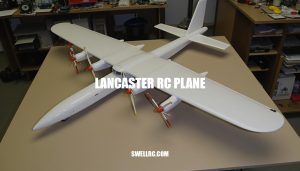
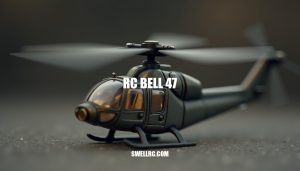
Remote control airplanes have been used all around the world for years. However, it was not until the 2000s that their usage widely increased, naturally following improvements in technology. As time passed, the cost, design, and capabilities of remote control airplanes developed quickly. Today, a wide variety of models and styles are available, and everyone can find one that suits their needs.
Remote control airplanes have also found their place in scientific, government, and military organizations. They are used for various experiments, aerodynamic modeling, and military purposes—often as spy planes for gathering important information. Some RC airplanes are made purely for display, usually constructed from wood. Depending on their purpose, remote control airplanes can use different power sources.
Power Sources
Models made for hobbyists and professionals contain a mechanism that powers the aircraft’s propulsion. The most common propulsion systems are electric motors and internal combustion (IC) engines.
Electric Motor
In electric-powered models, a battery-powered electric motor is used. Throttle control is achieved through an electronic speed controller (ESC), which regulates the motor’s output.
Electronic Speed Control (ESC)
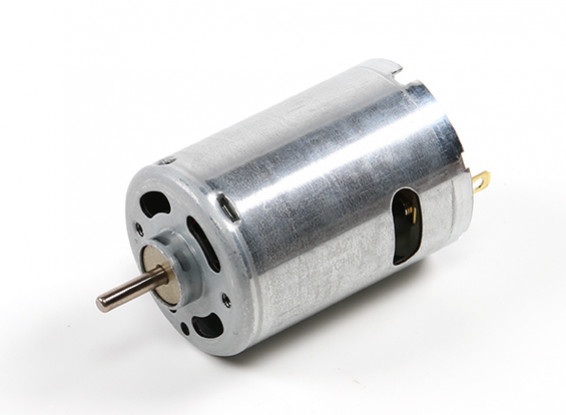
Early electric models were equipped with brushed DC motors, offering a limited flight time of around 10 minutes. In contrast, a glow-engine system of similar weight and power could achieve nearly double that time.
Brushed 540 DC motor
With advancements in technology, more efficient brushless DC motors—also known as outrunner motors—became common, improving flight time and overall performance.
Brushless DC Outrunner motor
These motors work by spinning their outer shell around internal windings—similar to a CD-ROM motor. In fact, CD-ROM motors can even be converted for aircraft use.
CD-ROM motor converted for RC airplane use. Rewound and upgraded with neodymium magnets.
While outrunners spin slower than traditional inrunner motors, they produce much more torque, making them ideal for directly driving aircraft propellers without needing a gearbox. Their compact size and high efficiency have made them popular across many model types.
Gas Engines
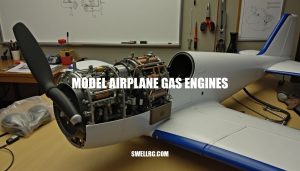
RC Gas Engine
When hobbyists refer to “gas airplanes,” they usually mean models powered by nitro engines (also known as glow engines). Larger-scale models tend to use real gasoline engines.
The main differences between nitro and gasoline engines are as follows:
Nitro engines use glow fuel (a mixture of methanol, nitromethane, and oil), while gasoline engines use a mix of regular gas and oil.
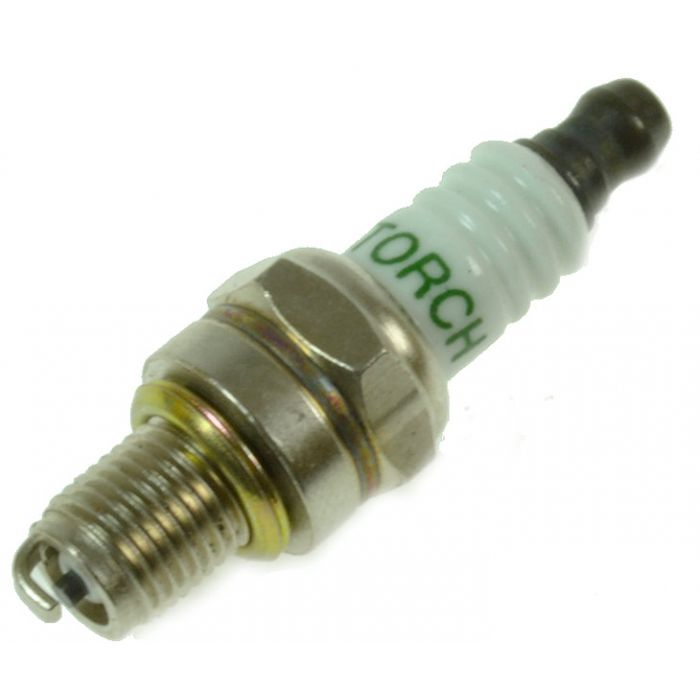
Nitro engines use glow plugs to ignite the fuel, while gasoline engines use spark plugs. Glow plugs operate at 1.5V to create a red-hot coil, whereas spark plugs produce a spark using 10,000–20,000 volts (and up to 30,000 volts in real car engines).
Glow PlugSpark Plug
Types of Construction
As with other radio-controlled models, you can buy Ready-To-Fly RC plane kits or build one yourself.
Ready To Fly
Ready-To-Fly (RTF) airplane kits come pre-assembled. You usually only need to attach a wing or perform a similar small task. These kits include a transmitter, receiver, and battery. However, their configurations are fixed and not customizable.
Almost Ready To Fly
Almost-Ready-To-Fly (ARF) kits require you to add your own motor, transmitter, receiver, and battery. Essentially, you get the model structure and must supply the main electronics yourself.
DIY Remote Control Airplanes
You can also build RC planes from published plans with included instructions. Typically, parts are cut from sheet wood using templates. A scratch-built plane is considered more valuable because you create it from the ground up. Professionals often prefer this approach as it allows complete customization.
Propellers
After selecting the engine or electric motor, the next important factor is the propeller. Always remember that IC engine propellers are designed for combustion engines, while electric propellers are for electric motors. You can use a gas propeller on an electric motor, but never the other way around.
Propellers come in various sizes and shapes. Their size is expressed as two numbers (e.g., 6×3 or 10×6). The first number is the diameter in inches, and the second is the pitch (the distance the propeller would move forward in one rotation). A higher pitch number means more forward movement per revolution.
When selecting propellers, APC Propellers are highly recommended for their efficiency and reliability. They can provide longer run times with the same thrust compared to other brands.