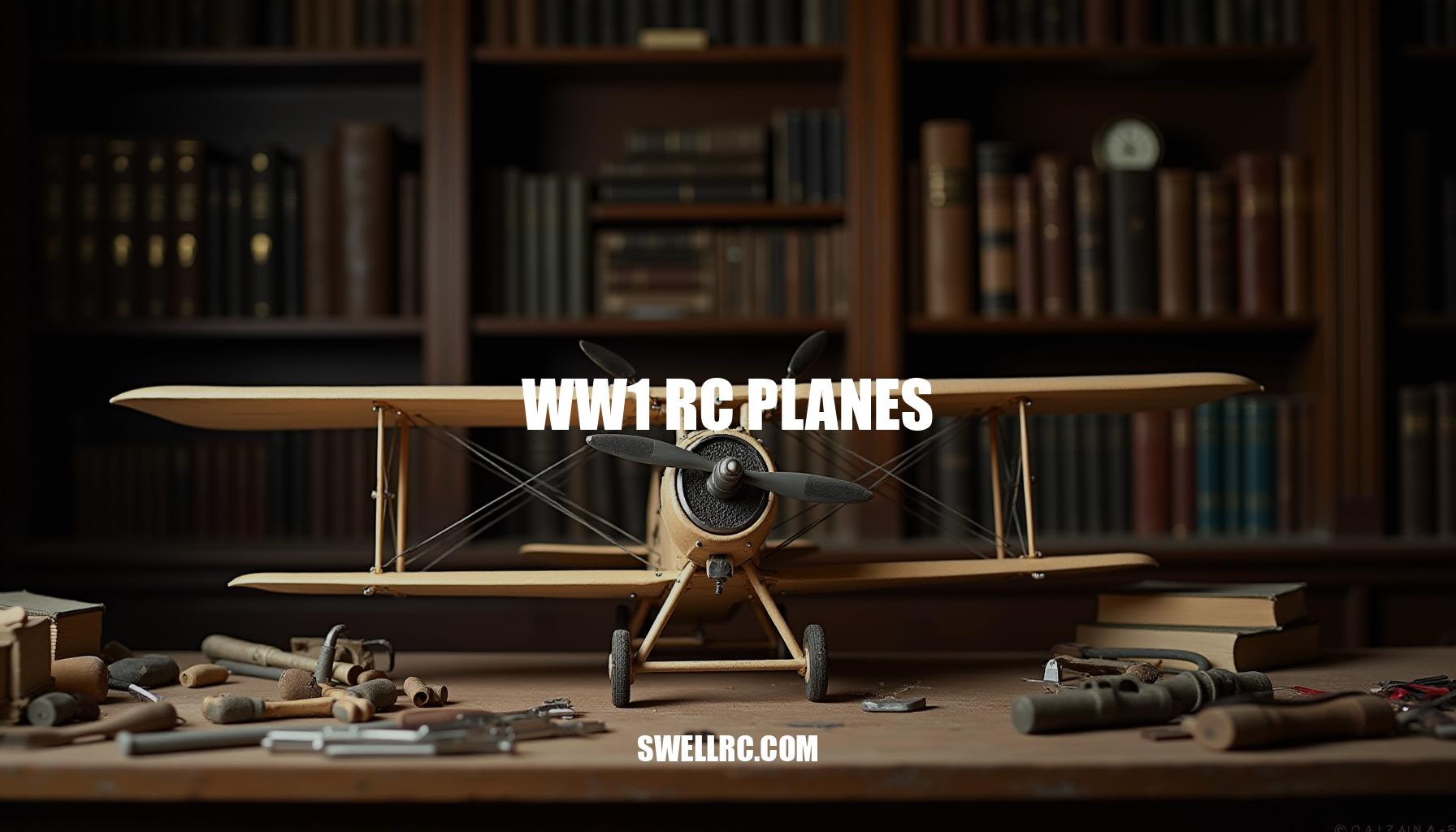
WW1 RC Planes: A Guide to Building, Flying, and Preserving History

The first time I watched a scale Sopwith Camel lift into the morning air, fabric-covered wings shimmering and a gentle rotary bark echoing across the field, I knew I’d stumbled into a special corner of the RC aviation hobby. These WW1 RC planes carry the audacity of early aviation—names like Fokker, Sopwith, and Royal Aircraft Factory—into our hands today. What began as fragile wood-and-canvas experimentation over the trenches now inspires builders and pilots who crave craft, story, and soul in every flight.
How did the battlefields of 1917 inspire today’s RC builders? Why do these biplanes feel so alive in the air? Part of the magic is the build itself: cabane struts, rigging lines, scale cowls, all coming together in a model that flies with character.
Whether you’re assembling a Sopwith Camel RC model or a Fokker Dr.I triplane, the attention to detail in these WW1 aircraft replicas is breathtaking. Part is the unique flight aesthetic: slow, stately passes, rudder-led turns, and those unmistakable roundels. For enthusiasts of scale airplanes and remote-controlled warbirds, this niche offers a connection to history wrapped in craftsmanship and precision.
If you love classic lines and hand-finished details, this niche will feel like home—especially if you already enjoy vintage RC pattern planes.
A Brief History and Evolution of WW1 RC Planes
WW1 fighters like the Sopwith Camel, Fokker Dr.I, SE5a, Nieuport 17, and Albatros D.Va defined the silhouette of early powered flight: wood-and-canvas frames, fixed landing gear, open cockpits, wire-braced wings. As the RC hobby matured, builders translated these features into model form—first with balsa-and-dope kits and glow engines, now with laser-cut wood, foam, brushless electrics, and even 3D-printed components. Today’s community keeps the heritage alive with museum-grade detailing but also embraces practical upgrades: better servos, reliable radios, and safer power systems that let more pilots experience WW1 flying.
Large, authentic replicas share DNA with giant-scale RC warbirds kits—think generous wingspans, realistic rigging, and presence in the circuit—while park-size biplanes make the genre accessible to more newcomers.
Old vs. modern materials at a glance for WW1 model airplanes and historical flight models:
| Aspect | Early Models | Modern Models |
|---|---|---|
| Frame/Ribs | Balsa, spruce | Laser-cut balsa, lite-ply, carbon-fiber spars |
| Covering | Silkspan and dope | Heat-shrink films, lightweight fabrics, advanced paint systems |
| Power | Nitro engines (glow) | Electric power (brushless motors) |
| Linkage | Mechanical linkages | Improved servos with precise radio control |
| Construction components | Hand-cut wood and tissue | Foam (EPO/Depron), 3D-printed details |
These advancements in RC plane construction allow enthusiasts to enjoy both authenticity and innovation in biplane design. Whether building from foam and balsa kits or assembling electric RC warbirds, hobbyists embrace radio-controlled aircraft that bring the thrill of historical flight models to life with safer, reliable, and highly detailed machines.
Design Challenges and Flight Behavior of WW1 RC Fighters
WW1 replicas have personalities; the unique aerodynamics of biplanes show up in features like short nose moments and draggy biplane wings which can make them pitch sensitive. On the other hand, generous dihedral and big rudders invite coordinated turns, improving flight stability. Their low power-to-weight ratios mean energy management is key—it’s essential to keep a touch of throttle in turns and plan your landing pattern early.
After weeks of tweaking wing incidence angles on my SE5a, the airplane transformed from twitchy to trustworthy, proving that meticulous RC plane tuning really pays off. Essentials to dial in include keeping the center of gravity slightly forward of neutral to calm pitch, treating throttle as lift control especially on final approach, and trimming for hands-off cruise with fine adjustments using subtrim and expo. For those seeking ultra-light precision flying comparable to F3P style aerobatics, checking out F3P RC planes is highly recommended—they exemplify how low weight and big surfaces can dance gracefully in the air.
Beginners practicing indoor RC practice are wise to try a sub-250g RC plane build first (see here) to develop stick finesse without risk.
Here are five critical trimming and setup tips that pay off fast for WW1 RC warbirds:
- Wing alignment: use incidence gauges to precisely match left/right stagger and dihedral angles.
- Rigging wires: add functional or semi-functional bracing wires to increase structural stiffness and maintain alignment.
- Servo balancing: keep linkages short and slop-free; match servo speed on ailerons for smooth coordinated turns.
- Paint weight control: apply mist coats to preserve fabric texture and avoid heavy color blocks that add unnecessary weight.
- Prop choice: opt for larger, lower-pitch props to achieve scale-looking thrust and short takeoff runs typical of WW1 aircraft.
Top WW1 RC Plane Kits and Models Available Today
Whether you love scratch builds or want something that flies this weekend, there’s a WW1 model for you. Favorites that keep showing up at fields and meets include:
- Fokker Dr.I triplane: iconic silhouette, generous control authority, benefits from forward CG and careful yaw coordination.
- Sopwith Camel: legendary but demanding; short-coupled tail means trim carefully and keep speed in the pattern.
- Nieuport 17: agile sesquiplane; watch lower wing loading and spar stiffness.
- SE5a: stable, forgiving, and a superb first-scale biplane.
- Albatros D.Va: sleek lines, smooth tracks through turns; great for scale detailing.
If you’re entering the category, best WW1 RC plane kits for beginners are often approachable and well-supported with kits from brands akin to World Models RC planes. For premium builds, precision hardware, and standout woodwork, explore makers in the spirit of Esprit RC planes. Considering span and presence?
Large-scale RC planes can deliver that jaw-dropping field experience, offering some of the most accessible RC warbirds with commanding appearances.
Understanding the differences between RC plane kits vs ARF vs RTF is key to choosing the right format for your needs. The table below summarizes each buying format to guide you:
| Format | Description | Ideal For |
|---|---|---|
| Kit | Maximum customization and learning; requires tools, adhesives, and covering. | Experienced builders seeking in-depth scale detailing |
| ARF (Almost Ready to Fly) | Airframe mostly complete; add your own power and radio gear. | Intermediate hobbyists wanting some assembly and customization |
| RTF (Ready to Fly) | Fastest to the field; best for first flights or casual scale enjoyment. | Beginners and those seeking quick flying fun with minimal setup |
Models like the SE5a and Nieuport 17 provide excellent handling characteristics suitable for various skill levels, while the Albatros D.Va excels in scale realism and smooth maneuvers, rewarding those who appreciate attention to detail.
Building, Customizing & Flying Your WW1 RC Warbird
Picture a weekend build revolving around detailed RC plane assembly: Day 1 starts with dry-fitting the fuselage, squaring up formers, and joining the tailplane to ensure precise alignment. On Day 2, the wings come together with careful attention to incidence, cabane alignment, and perfectly spaced struts — all foundational for a reliable WW1 RC biplane setup. Day 3 is dedicated to electronics installation, where the motor, ESC, servos, and pushrods are mounted.
Wiring is routed cleanly and protected against chafe to maintain durability and performance.
By sunset, the airframe rests on its gear, ready for the next stages of covering and paint. Incorporating thoughtful scale customization such as light weathering near gun ports, cord-wrapped struts, authentic scale decals, and a pilot bust in the cockpit makes your build uniquely alive.
To keep the model light yet strong, apply lightweight building techniques borrowed from how to make super light RC indoor planes: selective sheeting, hollowed blocks, and strategic carbon reinforcements minimize weight without sacrificing strength. When comfortable, branching out to multi-engine classics like a Lancaster RC plane leverages your biplane-building expertise for more advanced projects.
Before that magical maiden flight, follow this indispensable maiden flight checklist to ensure safety and optimal performance:
- Verify the CG with battery installed; confirm the aircraft is slightly nose-heavy.
- Perform a range check on your radio system; confirm failsafe settings with the throttle closed.
- Ensure control throws are correct in direction; add 20–35% exponential on pitch and roll for smoother handling.
- Confirm rigging tension is firm with no wing twist under gentle load.
- Check motor and prop are secure; verify current draw stays within ESC limits.
- Conduct a taxi test to ensure the plane tracks straight; adjust rudder trim as needed.
- Plan your takeoff into the wind; commit to a long, gentle climb-out for a smooth ascent.
The Modern Revival — Why WW1 RC Planes Remain Irresistible
WW1 replicas create the rare blend of craftsmanship, community, and history. At scale fly-ins, you’ll see pilots trading tips on rigging tension, swapping cowl patterns, and comparing subtle weathering techniques. This welcoming atmosphere fosters a strong RC community events culture where enthusiasts share their passion for handcrafted RC planes rooted in warbird heritage.
Nothing against high-speed turbines or giant liners—there’s real awe in a meticulously finished Boeing 747 RC plane (https://www.swellrc.com/boeing-747-rc-plane/)—but a hand-built biplane turning base to final feels intimate, like time travel in miniature. The nostalgia in RC aviation comes alive with every flight, inviting pilots into an emotional connection to flight that transcends speed or size.
You don’t just fly a WW1 model; you inhabit it—rudder leading the turn, throttle easing the sink, your eyes reading fabric and wood for clues. That ritual keeps us coming back: it’s slower, more intentional, more human.
Conclusion: Keeping History Alive through the Skies
WW1 RC planes embody a unique fusion of engineering craftsmanship and scale modeling art, where every rib and spar tells a story, and paint and patina hint at the missions flown. This niche of WW1 RC aviation heritage is not just a hobby but an inspiration guide that invites enthusiasts to build something new, restore classic kits, or explore different historical aircraft replicas that challenge and refine your skills.
Diving into this world offers endless rewards. The delicate flight manners demand smooth hands, making every takeoff and landing a testament to your dedication.
I personally went down the rabbit hole of WW1 flight and would eagerly do it again in a heartbeat.
What makes this pursuit even more exciting is how RC innovation continues to evolve within this vintage realm.
- Advanced laser cutting techniques enable precision parts creation.
- Smart radios enhance control and responsiveness.
- Refined electrics bridge the authentic charm with future-ready technology.
Through these advancements, more enthusiasts can keep history alive, flying these graceful circuits and celebrating the legacy of historical aircraft replicas for generations to come.
Frequently Asked Questions
- What are the most popular WW1 RC plane models?
Enthusiasts consistently recommend the Fokker Dr.I triplane, Sopwith Camel, SE5a, Nieuport 17, and Albatros D.Va. They’re available across formats—traditional kits, ARFs, and RTFs—so you can choose the build depth and flight readiness that matches your experience. - How do WW1 RC planes differ from modern RC aircraft?
WW1 biplanes have more drag, shorter tail moments, and often need coordinated rudder in turns. They fly slower, demand energy management, and emphasize scale detailing (rigging, struts, fabric effects). Modern RC types—sport monoplanes or EDF jets—are typically faster, more stable at speed, and less sensitive to trim changes. - Are WW1 RC planes suitable for beginners?
They can be, but choose carefully. Many WW1 biplanes are short-coupled and more sensitive in pitch. Beginners do best with a forgiving trainer first, then a stable WW1 type like an SE5a or a micro/foam model. RTF or gentle ARF options make the transition smoother. - How can I build or customize my own WW1 RC biplane?
Start with a well-documented kit, dry-fit major assemblies, and keep structures straight. Use lightweight coverings, minimize paint weight, and reinforce high-stress areas (landing gear, cabanes) with carbon or ply. Add scale touches like weathering, rigging, and a proper pilot; then trim carefully and confirm CG before the maiden. - What materials are best for constructing WW1 RC replicas?
Laser-cut balsa/lite-ply for structure, carbon fiber for spars and localized reinforcement, and lightweight foam for park-size builds. For finishes, heat-shrink film or light fabrics with paint deliver a scale look without excess weight. Some builders integrate 3D-printed details for complex shapes. - Where can I find authentic large-scale WW1 RC plane kits?
Look to specialist warbird suppliers, large-scale kit makers, and dedicated scale forums/clubs. Vendors offering giant-scale warbird lines often carry WW1 types or can source plans and short kits. Local clubs and events are excellent for leads on builders who take custom commissions.