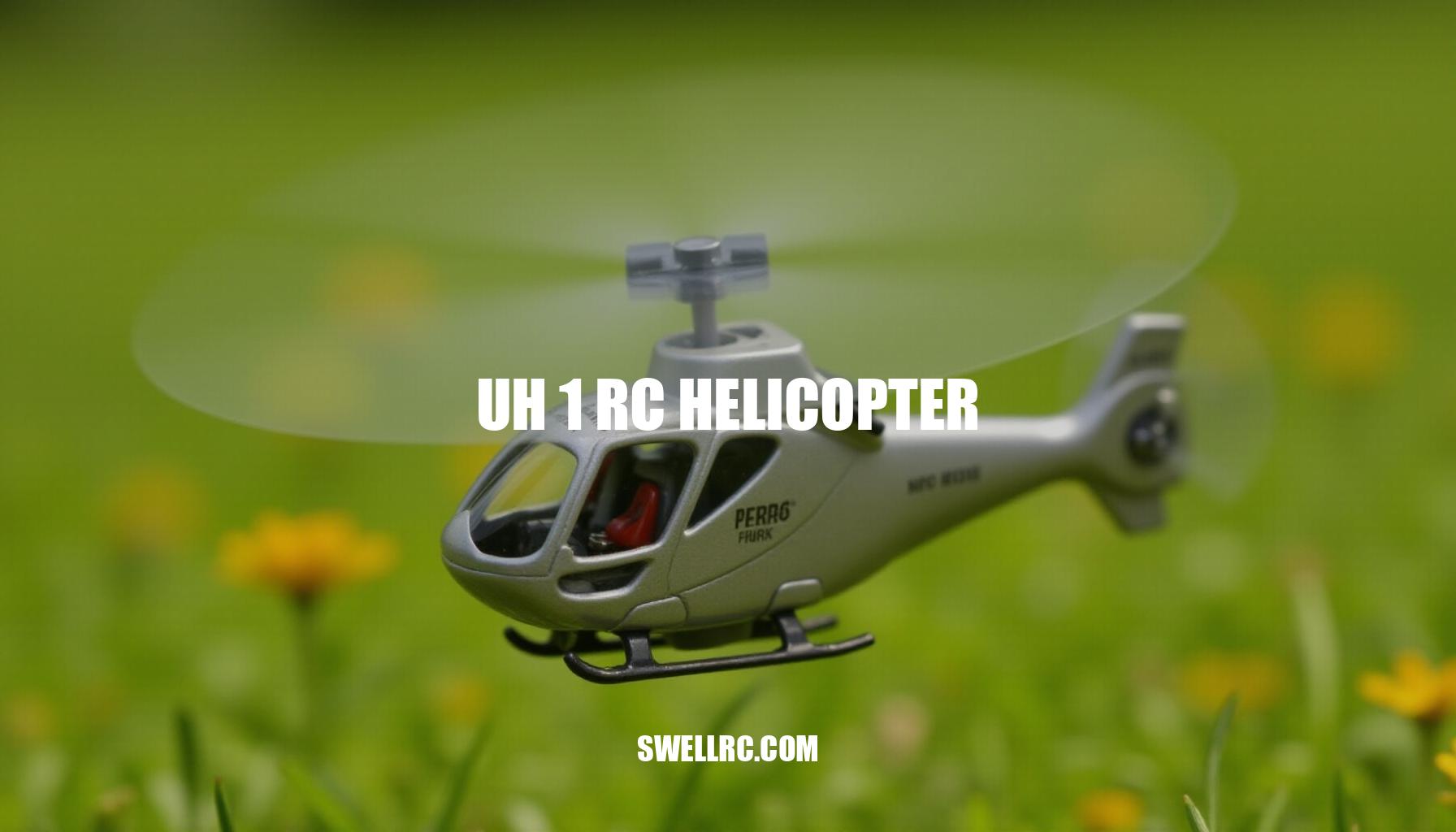
The Ultimate Guide to UH-1 RC Helicopters

The first time I heard the UH-1 “Huey” spool up on a flight line, I felt that unmistakable thump-thump of history come alive. That sensation ignited a passion that drew me toward the UH-1 Huey RC helicopter—an iconic aircraft reborn at a scale you can hold, tune, and truly master. My fascination began during a late-night build session and peaked at a sunrise maiden flight, where the silhouette of the Huey’s skids and tail fin looked almost cinematic against the glowing sky.
Unlike other RC helicopters, the UH-1 blends rich nostalgia with approachable flying manners, delivering a scale RC helicopter experience that still feels vibrant and alive in the air.
If you’ve ever wondered how deep the world of remote control models can go, the variety is stunning—from tiny indoor flyers that maintain scale authenticity (I first cut my teeth on micro RC helicopters like these: https://www.swellrc.com/micro-rc-heli/) to helicopter RC remote control radios and setup essentials that can make or break your first hover (a solid primer here). What truly hooked me is how the UH-1 Huey RC helicopter manages to be both a significant piece of aviation history and a hands-on classroom for mastering control, balance, and patience. It’s a remote control model that invites you to chase realism without ever sacrificing the pure joy of flying.
Design, Detailing, and Authenticity
The UH-1 Huey RC helicopter boasts an iconic body shape characterized by its boxy cabin, skid landing gear, and the classic two-blade rotor structure that faithfully replicates the original military design. This instantly recognizable silhouette translates beautifully into the world of scale RC helicopters, offering enthusiasts a true-to-life flying experience.
Manufacturers capture the military authenticity of the Huey in several ways:
- Material Construction: The fuselage is typically crafted from durable ABS plastic, often reinforced with fiberglass or carbon fiber sections to enhance strength without adding unnecessary weight. Metal components, especially in the rotor heads and swashplates, provide both precision and longevity where it counts.
- Detailing: Attention to scale details like rivet lines, a properly proportioned doghouse, subtle exhaust weathering, and accurate moldings replicate the ruggedness and character of the original medevac missions.
- Paint Schemes: Authentic military liveries such as Vietnam-era olive drab, rescue orange-and-white, and modern training colors immerse pilots in the historical context of the UH-1. These finishes are often matte to reduce shine and increase realism.
- Scale Accessories: Add-ons like door gun mounts, antennae, and navigation lights not only enhance visual fidelity but also contribute to flight characteristics by adding weight and altering wind profiles, enriching the scale flying experience.
When compared to other military RC helicopters, the UH-1 strikes a balance between form and function. Its narrow cabin and tail boom create manageable drag, contrasting with models like the airy, open design of the RC Bell 47 or the complex tandem-rotor system seen in the Boeing CH-47 RC. The two-blade rotor, whether flybarred or flybarless, provides that distinctive rotor disk diameter and characteristic sound of the Huey.
In summary, holding a UH-1 Huey RC helicopter reveals the meticulous finishing touches — including matte paint, scale-accurate skids, and a well-crafted tail rotor — that blend military authenticity with the practical demands of flight-ready design. This results in a model that not only looks the part among scale RC helicopters but also delivers a satisfying and realistic flying experience.
Flight Performance and Control Experience
The flight performance of the UH-1 RC helicopter varies significantly depending on its drivetrain and rotor head configuration, influencing factors like stability, maneuvering capability, and user control experience. Models with coaxial or 3–3.5-channel setups offer ultra-stable flight, making them ideal for beginners working on first hovers and gentle circuits. These 3-channel RC helicopters prioritize stability with less complex RC flight controls and generally use fixed pitch rotors, leading to forgiving handling but limited maneuverability.
Advancing to 4-channel fixed-pitch variants, pilots notice crisper cyclic response, improved forward speed, and more effective tail control. This setup enhances maneuvering without sacrificing stability, striking a balance suited for intermediate flyers. At the high-performance end, 6-channel collective pitch (CP) UH-1 models incorporate scale fuselages paired with modern flybarless helicopter gyro systems.
These gyros significantly improve heading hold and allow for more realistic banking turns, precise nose-in holds, and smooth approaches even in breezy conditions. The collective pitch mechanism lets experienced pilots modulate lift and perform more dynamic maneuvers, boosting overall control fidelity.
Beginners benefit from the Huey’s long tail boom and skid landing gear, which provide excellent visual orientation cues, helping mitigate spatial disorientation. Experienced users appreciate how the collective pitch head enables pinpoint landing control and flare capability for silky touchdowns, enhancing operational smoothness. Comparing similar models demonstrates these differences clearly: the Hero RC H911 fixed-pitch shows quick cyclic response with forgiving stability, ideal for newcomers, whereas the Double Horse 9101 3.5-channel coaxial features self-leveling gyros that yield superb hover stability but dampen pitch authority and forward speed.
In realistic flight testing, trimming the UH-1 for a slight forward bias facilitates natural tracking. Minor adjustments—such as sub-trim clicks—help control tail drift and skid height for enhanced flight precision. Regarding crash resilience, coaxial heads generally forgive minor tip-overs, while collective pitch heads, though tougher mechanically, require a properly tuned setup and sensitive collective input to avoid damage.
| Model/Type | Typical Flight Time | Gyro/Performance Notes |
|---|---|---|
| UH-1 (scale FP/CP) | 6–10 minutes (battery and size dependent) | Modern flybarless units hold heading well; scale fuselage adds inertia for smoother, more “real” banking |
| Hero RC H911 (fixed-pitch) | ~6–8 minutes | Stable beginner-friendly stabilization; responsive cyclic, mild wind capable |
| Double Horse 9101 (3.5-ch coaxial) | ~6–8 minutes | Strong self-leveling; superb hover stability, limited forward speed and pitch authority |
| Micro CP (e.g., similar class) | ~4–6 minutes | 6-axis flybarless; highly precise but requires finer inputs, especially outdoors |
Overall, the UH-1’s flight characteristics—from stability and maneuvering to gyro responsiveness and control setup—give pilots a wide range of options. Whether flying a 3-channel fixed pitch or a sophisticated 6-channel collective pitch model with advanced helicopter gyro systems, users can tailor their experience to skill level and flying style, enjoying balanced performance and satisfying flight times.
Variants, Upgrades, and Comparable Models
The UH-1 variants cater to a wide range of skill levels, from beginner-friendly 3-channel coaxials focused on stability and ease-of-use, to advanced 6-channel collective pitch (CP) builds that offer remarkable agility and realism. Entry-level models emphasize self-leveling and smooth, slow flight, ideal for new pilots. Mid-tier fixed-pitch versions improve wind handling and cyclic authority, providing a balanced experience outdoors.
At the top end, premium CP airframes combine proven 250–500 size mechanics enclosed within authentic Huey fuselages, powered by brushless motors and paired with sophisticated flybarless controllers (FBL) to deliver the most accurate, controllable flying experience.
In terms of upgrades, pilots should consider key upgrade kits such as brushless main motors and higher-capacity LiPo batteries to boost power and runtime. Installing programmable FBL units allows for customized flight behavior, offering a precise balance between agility and stability. Mechanical enhancements like metal swashplates, aluminum rotor heads, and reinforced tail cases significantly improve durability and flight precision.
Scale details—including lighting kits, functional doors, and realistic skids—enhance appearance but must be weighed carefully against potential weight penalties. Proper setup quality is crucial; investing in quality servos and optimized linkage geometry fundamentally transforms flight tracking and hover control.
Parts compatibility across RC helicopter parts is more accessible today thanks to shared core mechanics deployed under various fuselages. Cross-referencing trusted directories and active community resources is invaluable for sourcing spares efficiently. This ecosystem supports diverse customization options, allowing pilots to tailor their machines precisely to their preferences and flying style.
When comparing similar military-scale options, models like the UH-60-styled platforms offer a more modern aesthetic with increased speed and agility, ideal for those seeking a sleeker profile. The Yuxiang F09 Black Hawk stands out as a compact alternative within the military RC helicopter space, providing approachable handling coupled with reliable stabilization systems. For indoor practice and thumb sharpening, the Esky 150 V3 micro CP is a standout, enabling precision flights in tight spaces without the need for large open fields.
Below is a summary of recommended UH-1 variants by skill level and their defining features:
- Beginner: 3–3.5 channel coaxial UH-1 with strong self-leveling stability, near plug-and-play setup, and affordable batteries — forgiving and cost-effective for newcomers.
- Intermediate: 4-channel fixed-pitch UH-1 equipped with 6-axis stabilization, delivering enough outdoor speed with smoother hover control compared to coaxials.
- Advanced: 450-size CP mechanics housed in a UH-1 fuselage featuring brushless power and a tunable flybarless controller — offers the highest realism, control precision, and room for tasteful scale customization.
Conclusion – Why the UH-1 RC Helicopter Still Defines the Hobby
Every time I spool up a UH-1 Huey RC helicopter, it’s a powerful reminder of why this hobby captivates so many enthusiasts. Rooted deeply in history you can feel through the sticks, the Huey combines its iconic military heritage with precision engineering that delivers balanced hovers and authentic scale turns. This model is much more than a replica; it’s a bridge spanning eras—honoring military RC helicopters of the past while embracing modern gyro systems and cutting-edge powerplants designed to make flying accessible and rewarding at all skill levels.
What truly sets the UH-1 apart is its ability to teach RC piloting skills without harsh consequences. Mastering the art of reading the rotor disk, managing collective smoothly, and steering the cyclic with deliberate control becomes a gratifying journey rather than a daunting chore. The opportunity for customization—from detailed paintwork to added lighting and fine-tuned setups—only deepens the connection between pilot and machine, where each adjustment results in calmer hovers and more precise approaches.
Whether you’re taking your first step into military-scale RC helicopters or evolving beyond a trainer model, the UH-1 presents a welcoming and authentic challenge. From here, discovering other legendary aircraft—from tandem-rotor giants to sleek Black Hawks—feels like a natural adventure fueled by curiosity and respect for scale realism.
In essence, the UH-1 Huey isn’t just a helicopter; it’s a mentor in disguise. A steady, thumping heartbeat reminding us that true upgrades in this hobby come from control, patience, and a ceaseless desire to explore.
Frequently Asked Questions
- What makes the UH-1 RC helicopter unique compared to other RC helicopters?
Its iconic two-blade silhouette, rich military history, and scale-friendly fuselage make it instantly recognizable. In RC form, it balances authenticity with approachable flight characteristics—stable enough for learners, yet rewarding for pilots who tune flybarless systems for realistic banking and approaches. - Is the UH-1 RC helicopter suitable for beginners?
Yes—coaxial and 3–3.5-channel UH-1 variants are very beginner-friendly thanks to strong self-leveling and gentle response. New pilots can start there and later progress to 4-channel fixed-pitch or 6-channel collective-pitch versions as skills grow. - What are the main features or specs to look for in a UH-1 model?
Focus on rotor head type (coaxial, fixed-pitch, or collective-pitch), stabilization system (modern flybarless with adjustable gains), battery size/voltage for flight time, and the quality of scale details. Metal head parts and a reliable tail setup add durability and control authority. - How can you improve flight stability and control in a UH-1 RC helicopter?
Use a well-tuned flybarless controller with appropriate gain, ensure smooth linkages and balanced blades, and pick the right battery weight for your fuselage. A slight forward trim and careful Expo on cyclic/collective also smooth out inputs and improve tracking. - Are there scale RC helicopters similar to the UH-1 in design and performance?
Yes—Bell 47-style models emphasize vintage visibility, while UH-60/Black Hawk variants mirror modern military lines with quicker handling. Tandem-rotor CH-47 models deliver a very different but equally iconic scale experience with their distinctive presence and mechanics.