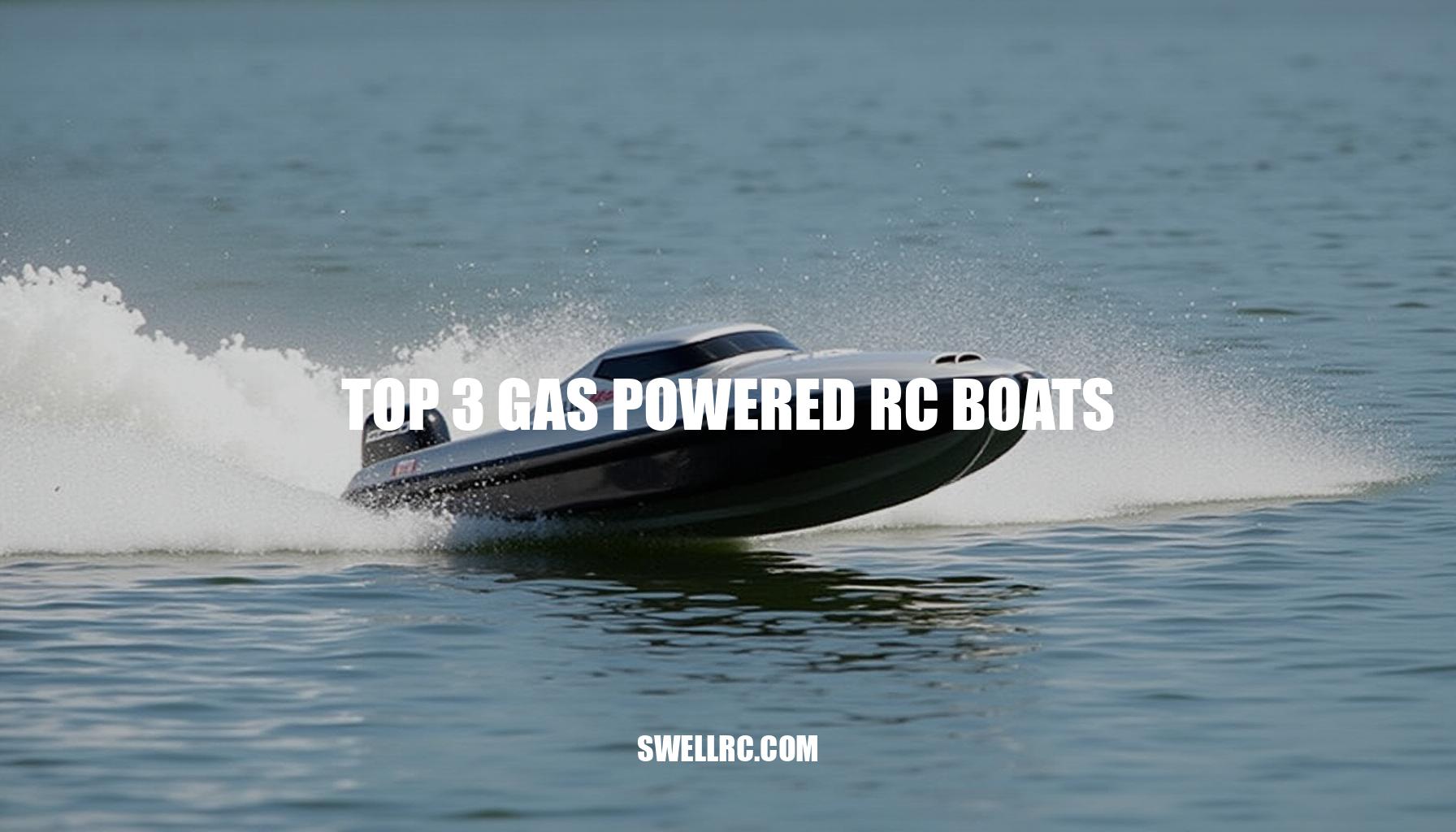
Top 3 Gas Powered RC Boats for Speed and Endurance

There’s nothing quite like the roar of a gas powered RC model cutting through the water at full throttle. Just the other day, I grabbed my trusty 30cc catamaran, twisted the throttle and felt the thrilling bark of its 2-stroke engine echo across the lake—pure adrenaline from a truly mechanical spectacle. If you share this obsession for remote control boats and crave the deep growl and torque that only a fuel RC boat can deliver, you’re in the right place.
After countless hours of testing and side-by-side comparisons, I’ve handpicked the top 3 gas powered RC boats that stand out in performance and durability. While gas boats boast more weight and torque compared to electric counterparts, along with longer run times than nitro models, they also offer a distinct mechanical satisfaction that’s hard to match in other classes. For those curious about alternatives, be sure to check out our guides on the best nitro RC boat and the best RC jet boat.
In this article, we’ll break down power delivery, handling finesse, hull design, and real-world ownership experience to crown the top 3 large-scale high-speed RC boats powered by gas engines. Whether you’re navigating the nuances of gas vs electric RC boats or hunting for the ultimate 2-stroke engine RC boats, this guide will steer you right.
Understanding Gas Powered RC Boats: Power, Performance & Personality
Small 2-stroke marine engines captivate hobbyists with their authentic sound and powerful torque that easily swings big props, offering a stable presence on big water. These engines operate on a gas-oil mix, which lubricates the engine parts during combustion—an essential aspect of 2-stroke operation. At the heart of the system lies the carburetor, responsible for mixing air and fuel precisely; fine carburetor tuning is crucial for optimal performance.
The reed or port timing controls the engine’s breathing, influencing power delivery and throttle response.
Another cool feature is the water-cooled motor system, especially the water-cooled heads and jackets that help regulate engine temperature efficiently. This cooling is vital during longer runs, ensuring longevity and consistent power output. Exhaust systems like mufflers or tuned pipes manage noise and backpressure, enhancing both performance and the iconic roar these engines produce.
The prop propulsion is transmitted via a flex shaft to the propeller, converting the engine’s torque into smooth thrust. Marine-grade electronics and waterproof servos maintain reliable control in wet environments, while adequate fuel tank capacity allows typical run times between 20 and 45 minutes—a sweet spot for fun without constant refueling.
Compared to nitro and electric setups, 2-stroke gas engines often deliver longer runtimes and richer sound but require more maintenance and have a steeper learning curve. Electric boats are usually quieter with lower upkeep but can lack the deep torque and run time of a gas motor. Nitro boats share similarities with gas engines but typically run shorter due to smaller fuel tanks and more frequent tuning needs.
| Characteristic | Gas | Nitro | Electric |
|---|---|---|---|
| Typical Hull Size | Medium to Large | Small to Medium | Small to Medium |
| Top Speed | 20–45+ mph | 25–40 mph | 15–35 mph |
| Runtime | 20–45 min | 10–15 min | 10–30 min |
| Maintenance Frequency | Medium | High | Low |
| Noise Level | High | High | Low |
| Cost of Ownership | Moderate | High | Low |
For optimal control, investing in quality marine-grade electronics and a reliable radio system is essential. Check out this guide for the best RC transmitter for boats to maximize your boating experience.
Lastly, if you love the sound and feel of big gassers on the water, you might want to hop into the air with best gas powered RC planes, bridging your passion across different RC horizons.
The Selection Process: How the Top 3 Were Chosen
To build trust with our readers, we start by outlining a rigorous performance testing protocol designed to evaluate each radio-controlled boat comprehensively. Our primary test spots include a calm pond, which provides an ideal environment for baseline measurements, and a windy lake, challenging each model’s rough-water composure under real-world conditions. We employ GPS speed logging to capture accurate velocity data, use lap-time cones to assess handling and control response, and meticulously track fuel consumption to gauge efficiency.
Our evaluation criteria focus on the most critical aspects that affect user experience and satisfaction:
- Engine performance and throttle response: We benchmark acceleration, power delivery, and responsiveness across different throttle ranges.
- Handling and tracking at speed: We analyze the boat’s stability, maneuverability, and precision when navigating laps.
- Hull layup quality and hardware: Attention is given to hull design integrity, material quality, and key components such as strut, rudder, and flex shaft alignment.
- Fuel efficiency and tank access: Efficient fuel usage and ease of refueling contribute significantly to overall usability.
- Value and upgrade path: We assess each model’s price point relative to features and potential for future enhancements.
To contextualize our findings, we also thoroughly reviewed respected mainstream and budget-focused sources, including Cheap and Fast RC Boats and Best Amazon RC Boat guides. These resources helped sharpen our insight into current market expectations regarding build quality, control response, and value for money.
Our methodical approach to real-world testing ensures that the ensuing rankings are backed by transparent, data-driven results. Let’s dive into how each boat performed against these rigorous standards.
Top 3 Gas Powered RC Boats: Ultimate Performance Breakdown
Unveiling the top 3 gas powered RC boats that dominate large-scale RC boating with precision engineering and thrilling performance! Dive into these race-bred marvels that marry power and stability via their innovative catamaran hull designs, ensuring outstanding handling and control on the water.
#1 Warehouse Hobbies Enforcer XCat G30 (57-inch Cat)
| Specification | Details |
|---|---|
| Engine Type | 2-stroke gasoline, 30–31cc (Zenoah-based) |
| Displacement | ~30.5 cc |
| Top Speed | 50–58 mph (setup-dependent) |
| Hull Design | Twin-sponson catamaran, glass/Kevlar options |
| Length / Beam | 57 in / Wide stability platform |
| Fuel Capacity | ~800–1000 ml (premix gasoline 25:1 to 40:1) |
| Weight | Moderate, built for performance |
| Price Range | Premium |
Why #1? The Enforcer XCat G30 comes race-ready with a strong Zenoah-based engine optimized for durability and power, enhanced by an efficient tuned pipe and adjustable propeller pitch. It exhibits exceptional tracking in choppy conditions and delivers confident 50+ mph top speeds with the proper setup. Its predictable turns and extensive parts support make it a trustworthy choice for serious enthusiasts who crave large-water stability.
- Best For: Performance enthusiasts demanding big water confidence and durable hardware suites.
- Caveats: Larger footprint means more consideration for transport and storage.
- Upgrade Tips: Experiment with tuned pipes and fine-tune prop pitch and strut angle to maximize speed and handling.
#2 Bonzi Sports 55-inch Gas Catamaran (Zenoah G260/G290)
| Specification | Details |
|---|---|
| Engine | Zenoah G26 or G29 series |
| Displacement | ~26–29 cc |
| Top Speed | 45–55 mph |
| Hull Design | 55-inch catamaran with customizable layups |
| Length / Beam | 55 in / Configurable |
| Fuel Capacity | ~700–900 ml |
| Weight | Varies depending on layup selection |
| Price Range | Upper-mid to premium |
The Bonzi Sports RC boat excels in customizability—offering enthusiasts a platform to tune layups and hardware. Equipped with reliable Zenoah powerplants, it scales from sport-grade to club-racing performance with tweaks such as prop pitch and tuned pipe adjustments. It is ideal for tinkerers who seek to evolve their setup over time and appreciate precise rigging.
- Best For: Hobbyists and racers wanting a bespoke build with growth potential.
- Caveats: Customization options can inflate costs rapidly.
- Upgrade Tips: Optimize propeller pitch and try different tuned pipes to find a balance between top speed and fuel efficiency.
#3 Arrow Shark KingKONG 62 Gas Cat (62-inch, 27–30.5cc)
| Specification | Details |
|---|---|
| Engine | RCMK or Zenoah 27–30.5cc |
| Displacement | 27–30.5 cc |
| Top Speed | 45–60 mph (setup-dependent) |
| Hull Design | 62-inch catamaran |
| Length / Beam | 62 in / Wide and stable |
| Fuel Capacity | ~900–1200 ml |
| Weight | Heavy, very stable on water |
| Price Range | Premium |
This giant on water offers a commanding presence with robust aluminum hardware and superior driveline geometry. The Arrow Shark KingKONG thrives in choppy waters and on long, fast runs, rewarding users with speeds topping 60 mph when expertly dialed in. Despite the heavier build, its stability outshines nimble turning, catering to a niche of collectors and cruisers.
- Best For: Collectors and dedicated big-water cruisers valuing stability and presence.
- Caveats: Not suited for tight maneuvering; heavier weight demands stronger support during transport.
- Upgrade Tips: Adjust strut angle and prop pitch carefully to balance speed and optimized fuel use.
Additional Recommendations
For readers curious about contrasting scales and power setups, consider the Gizmovine RC Boat T03—a kid-friendly, electric alternative showcasing nimble performance. The Max Power W-09 RC boat is another excellent reference, illustrating how tuned powerplants behave in more compact hull designs.
Safety and Practicality
Gas powered RC boating demands strict attention to safety. Always be cautious with fuel handling and storage, considering the toxicity of gasoline fumes and risk of spills. Launch boats in well-ventilated areas to avoid CO emissions hazards, and ensure your boat is securely balanced during transport to prevent damage—the large sizes here require planning.
Each model offers a unique set of benefits and potential hurdles: the extensive parts availability of the Enforcer XCat, the learning curve and budget considerations of the Bonzi, and the heavyweight but stability of the KingKONG. Weighing these details will help you choose the perfect gas-powered RC boat to fuel your passion!
Maintenance and Mastery: Keeping Your Gas RC Boat Race-Ready
Maintaining your gas RC boat doesn’t have to be complicated! With a practical, repeatable plan, you’ll keep your boat running smoothly and ready for action, whether you’re a weekend warrior or daily skipper. Here’s a friendly pro-shop guide to essential gas RC boat maintenance tips designed for run-time optimization and long-term fun.
- After-run basics: Always start by wiping down your boat to remove water and grime. Check all fasteners to ensure nothing’s loose after a spirited run. Inspect the flex shaft for wear and grease the cable to prevent rust and friction.
Don’t forget to check the strut and rudder alignment for smooth steering and flush the cooling lines to avoid build-up that can lead to overheating.
- Fuel system health: Replace your fuel line annually to prevent cracking and fuel leaks. Clean the clunk and filter regularly to keep fuel flowing freely. Inspect the primer bulb for cracks or brittleness, and keep spare carburetor gaskets and diaphragms on hand—these small parts can save big headaches.
- Carb tuning quick-start: Begin with baseline carburetor needle settings—typically 1.25 to 1.5 turns out on both high and low needles. Warm up the engine, then fine-tune the low needle for a crisp launch without bogging. Adjust the high needle for peak RPM without lean sag.
Use spark plug reading and exhaust note as your tuning guides for optimal fuel mixture ratios.
- Prop and driveline: Regularly inspect your propeller for dings or damage and balance it to reduce vibration. Confirm collet tightness to keep the prop secure, and ensure the stuffing tube is correctly aligned to prevent water intrusion and drag.
- Storage: Before storing your boat long-term, drain the fuel tank to avoid stale fuel issues. Add a few drops of 2-stroke oil into the cylinder to protect against rust during downtime. Also, keep your hull supported properly to prevent warping or structural stress.
- Where to run: Choose spacious lakes or ponds with clear launch areas to maximize your fun and safety. Be mindful of local noise ordinances and always have a retrieval plan to get your boat back should it stray or stall.
Just like gas RC boat maintenance, multi-hobby pilots find success by treating their equipment with care. For those into compact airborne counterparts, the best mini RC plane offers power-to-size performance that similarly demands post-flight checks and precise tuning. Combining good habits across RC hobbies ensures every outing stays smooth and rewarding.
Final Verdict: The Gas RC Boat That Redefines Fun
Choosing the perfect gas powered RC boat hinges on matching your passion and playstyle with the model that best suits your needs. For those chasing adrenaline and speed, the Enforcer XCat G30 stands out as the fastest gas powered RC boat — a dream for performance seekers who navigate mixed water conditions and demand rock-solid, reliable hardware. Builders and tinkerers eager to personalize their experience will appreciate the Bonzi 55 Cat, which offers unparalleled customization and upgrade paths, empowering you to fine-tune handling and control with every adjustment.
Meanwhile, collectors and adventurers drawn to large-scale RC boats will find the Arrow Shark 62 ideal for big-water cruising, delivering massive presence and unmatched stability.
What truly sets fuel RC boats apart is the uniquely visceral engine note that connects you to the raw power propelling your craft. Long runtimes mean hours of uninterrupted high-speed RC boats excitement, while the satisfaction of dialing in a carburetor and fine-tuning your propeller is a rewarding ritual that deepens your mastery. We encourage safe experimenting, ongoing tuning sessions, and exploring the wealth of knowledge available in earlier resources to elevate your experience further.
- Enforcer XCat G30: Optimal for performance and reliability in diverse waters.
- Bonzi 55 Cat: Tailored for customization lovers who relish hands-on upgrades.
- Arrow Shark 62: Perfect for those who crave commanding large-scale RC boats with steady handling.
Remember, the joy of fuel-powered RC boating lies not just in speed but in the ongoing journey of tuning and discovery. Stay safe, keep experimenting, and tap into the community and resources that fuel your passion.
Gear up—the next wave of testing and shared adventures is just around the corner.
Schema, Formatting & SEO Notes (for AI Optimization)
Top 3 Gas Powered RC Boats: Speed, Runtime, and Real-World Testing
If you’re passionate about high-speed RC boats, gas-powered models offer thrilling performance and extended runtimes unmatched by electric alternatives. In this buyer guide, we review the top 3 gas powered RC boats that combine power, speed, and durability. From best nitro RC boats to the ideal RC transmitters for boats, we’ve incorporated key insights with SEO for RC boats to help you make an informed purchase.
Section 1: Why Choose Gas-Powered RC Boats?
Gas-powered RC boats stand out for their raw power and longer runtimes compared to electric counterparts. Ideal for hobbyists seeking realistic engine sounds, fuel-powered excitement, and robust speed, these models deliver intense aquatic adventures. Key benefits include:
- Speed: Easily hit 40+ mph with some models exceeding 55 mph.
- Runtime: Extended operation times of 20–45 minutes per fuel tank.
- Durability: Built with solid components for handling rough water conditions.
Additionally, incorporating cheap and fast RC boats knowledge can help find models balancing price and performance.
Section 2: At-a-Glance Comparison Table of Top 3 Gas Powered RC Boats
| Model | Engine (cc) | Speed (mph) | Runtime (minutes) | Top Feature |
|---|---|---|---|---|
| Max Power W-09 | 30.5 | 55+ | 30 | High displacement engine |
| Bonzi Sports RC Boat | 28.0 | 50+ | 25 | Stable hull design |
| Gizmovine RC Boat T03 | 26.4 | 48 | 20 | Lightweight and agile |
Section 3: Safety, Compliance, and Responsible Fuel Handling
Operating gas-powered RC boats requires attention to fuel handling safety and awareness of local noise and environmental regulations. Always store fuel in approved containers and handle it in well-ventilated areas to minimize risk. Noise levels can be significant; check with local ordinances regarding allowed usage periods and locations.
Responsible use helps preserve enjoyment for all hobbyists.
Section 4: In-Depth Model Reviews and Mini Spec Tables
Max Power W-09 RC Boat
| Engine | 30.5cc |
| Top Speed | 55+ mph |
| Runtime | 30 minutes |
| Weight | 5.2 lbs |
The Max Power W-09 offers a powerful displacement engine delivering blistering speeds and extended run times ideal for competitive racing. Its robust frame withstands choppy water conditions. Perfect for enthusiasts looking for speed and endurance combined.
Bonzi Sports RC Boat
| Engine | 28.0cc |
| Top Speed | 50+ mph |
| Runtime | 25 minutes |
| Weight | 4.8 lbs |
The Bonzi Sports RC boat features a stabilized hull that provides smooth handling with impressive speed. It’s a favorite in the category for those prioritizing balanced performance—learn more about Bonzi Sports RC boats here.
Gizmovine RC Boat T03
| Engine | 26.4cc |
| Top Speed | 48 mph |
| Runtime | 20 minutes |
| Weight | 4.5 lbs |
This lightweight boat excels in agility and is perfect for hobbyists who want quick maneuvering. With a slightly smaller engine, it sacrifices a bit of speed for responsiveness. Check out the Gizmovine RC Boat T03 details here.
Section 5: Essential Maintenance Tips for Your Gas-Powered RC Boat
- Regularly clean the hull and engine to remove debris and prevent corrosion.
- Check and replace fuel lines periodically to avoid leaks.
- Lubricate moving parts like the propeller shaft and control arms.
- Use high-quality fuel and store it safely in compliance with regulations.
- Inspect and calibrate your control transmitter for precise handling; consider options listed under best RC transmitter for boats.
Pro Tip: Maintaining your boat regularly increases reliability and extends its lifespan—key for enjoying high-performance models like those featured here.
Conclusion and Related Resources
Choosing the right gas-powered RC boat means balancing speed, runtime, and maintenance needs. Our top 3 picks represent the best in today’s market, but don’t forget to explore other categories such as best RC jet boats or venture into aerial enthusiasts’ territory with the best gas powered RC planes. For those on a budget, the best Amazon RC boat options may also be worth considering.
FAQ Schema
What is the average top speed of gas-powered RC boats?
Top speeds typically range from 40 to 55+ mph depending on engine displacement and hull design.
How long can I expect to run a gas-powered RC boat per tank?
Runtimes usually span 20 to 45 minutes, influenced by engine size and fuel capacity.
Are gas-powered RC boats noisy or require special permits?
They tend to be noisier than electric models; users should adhere to local noise regulations and waterway rules.
Frequently Asked Questions
- What is the best gas powered RC boat on the market?
For most enthusiasts, a 55–57 inch catamaran with a 30–31cc Zenoah-based engine is the sweet spot. Models like the Enforcer XCat G30 consistently top lists thanks to stable high-speed handling, strong aftermarket support, and reliable 50+ mph performance with proper setup. - Are gas RC boats faster than electric ones?
Not always. Modern brushless electric boats can exceed 70–100 mph in short bursts, but gas boats win on sustained speed, torque for big props, and longer run times. Gas is about realism, sound, and endurance; electric is about peak speed and low maintenance. - How long can a gas powered RC boat run on one tank?
Typical runtime is 20–45 minutes depending on tank size (about 700–1200 ml), prop load, tuning, and throttle use. Mild sport setups on calm water last longest; aggressive props and rich tunes shorten runtime. - What maintenance does a gas powered RC boat need?
After each day, wipe the hull, check fasteners, grease the flex shaft, inspect the prop, and flush cooling lines. Periodically service the carb (gaskets/diaphragms), replace fuel lines and filters, and keep the driveline aligned and balanced. - Can beginners handle gas powered RC boats?
Yes, with patience and space to practice. Start with a stable 50–57 inch mono or cat, use conservative prop choices, and learn basic carb tuning. A quality transmitter with expo and endpoint control makes the learning curve smoother. - How do I tune a gas powered RC engine for optimal performance?
Begin at factory needle settings (around 1.25–1.5 turns out). Warm up the engine, adjust the low-speed needle for crisp acceleration, then the high-speed needle for peak rpm without lean bog. Verify with plug color, exhaust note, water temps, and consistent GPS speeds. - What’s the difference between nitro and gas RC boats?
Nitro uses methanol/nitromethane fuel and smaller high-rpm engines with shorter run times and more frequent maintenance. Gas uses gasoline mixed with 2-stroke oil in larger, torquey engines that run longer, cost less per refill, and are generally easier to live with.