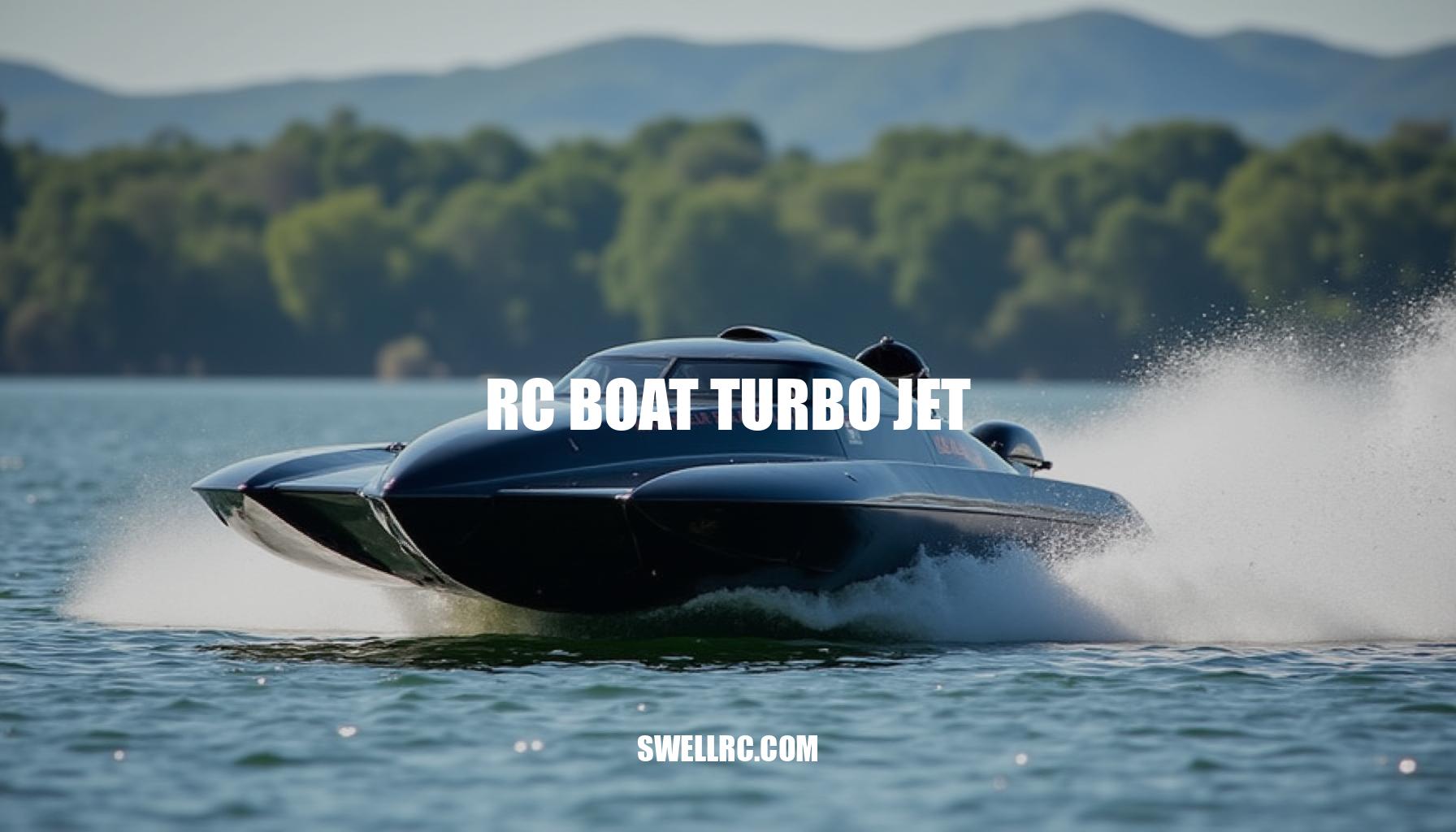
RC Boat Turbo Jet: Mastering High-Speed Watercraft Performance

The first time I spooled up a turbo jet RC boat at dawn, the lake was glassy and the shoreline was quiet—until the jet inhaled, the nozzle bit the water, and the hull rocketed forward with a rooster tail that looked like it belonged behind a full‑size river racer. After countless trials on the lake, that moment still gives me goosebumps. In RC terms, a “turbo jet” setup typically means a high‑RPM powerplant (often a micro turbine or a hot electric inrunner) driving a jet pump that compresses and accelerates water through a nozzle.
Unlike propeller boats, everything is enclosed: the intake grate feeds the impeller, stators straighten flow, and the nozzle converts pressure into thrust you can precisely steer. This advanced RC jet propulsion system delivers next‑level acceleration, confident tracking in shallow or weedy water, and a smoother, almost gliding feel at speed. Remote control jet boats equipped with miniature turbine engines offer unparalleled RC watercraft performance, making radio-controlled racing boats faster and more thrilling than ever.
If you’re new to turbine power in RC, this primer is a great start: https://www.swellrc.com/rc-boat-turbine-engine/
Section One — Understanding the Turbo Jet Mechanism: Power Meets Precision
Understanding how does a turbo jet RC boat work boils down to mastering fluid dynamics and maintaining tight tolerances in the components. The process begins as the intake channels water into the pump, where the impeller adds energy to the flow. The stator vanes then straighten the swirl created by the impeller, and finally, the nozzle constricts the flow to convert pressure into high‑velocity thrust.
For enthusiasts utilizing micro turbo jet systems, the air side operates through its own cycle—involving intake, compression, combustion, and exhaust—which spins the shaft driving the waterjet. In contrast, marine-grade RC engines for electric jet boats rely on a high‑KV inrunner motor coupled with a robust ESC (Electronic Speed Controller) to generate the necessary spinning force.
When comparing jet-drive propulsion vs. propeller drive, jet boats typically sacrifice some low‑speed efficiency but gain remarkable acceleration, enhanced shallow-water capability, and improved debris resistance because all working parts are internalized. Key components every DIY builder or racer should keep spares of include:
- Intake grate
- Impeller (pitch and diameter customized to match RPM)
- Wear ring to maintain minimal clearance for optimal performance
- Stator for managing flow straightening
- Steering nozzle to control direction
- Reverse bucket for backward movement when applicable
For step-by-step guidance on hull preparation and assembly, this comprehensive guide is indispensable. If you’re targeting compact, high-output configurations suitable for high-speed RC boats, consider benchmarking your motor and pump selections against tested platforms like the one detailed here: Max Power W-09 RC Boat. This ensures your setup maintains an optimal power profile tailored to your specific demands.
Section Two — Top Performing RC Turbo Jet Boats on the Market
Having chased, raced, and tuned a multitude of jets, I’ve identified these standout models that balance raw speed with real‑world control, making them some of the best RC boats with jet propulsion on the market. Here’s a curated list highlighting their unique strengths:
- Thrasher 27 Jet Boat: A compact hull that punches above its weight, the Thrasher 27 excels in RC watercraft performance, ripping across chop with confident yaw control at high trim. Learn more.
- Blue Streak RC Boat: Known for its clean lines and responsive handling, it impresses with quick on‑off throttle transitions and stable slide turns, perfect for fans of radio-controlled racing boats.
- Gizmovine RC Boat T03: An ideal choice for newcomers, offering a friendly stepping stone experience with reliable components and easy upgrades through RC boat customization kits. Check it out.
- 45 Cigarette RC Boat: For those who appreciate long, sleek hulls begging for hot‑rod modifications, this model serves as a perfect platform for performance enhancement among high-speed RC boats. Explore options.
- High Wind NQD 757 Boat: A classic favorite among modders, this boat has evolved into a cult favorite for jet conversions due to its accessible hull, making it a staple in RC boat customization kits.
Want a bird’s‑eye shortlist to compare these top-tier models before you buy? The current hits in the realm of best RC boats with jet propulsion are compiled here: Best RC Jet Boat.
Section Three — Building and Upgrading Your Own RC Turbo Jet System
When I swapped out a stock impeller for a tighter pitch and re‑cut the intake lip, holeshot improved instantly—proof that small changes matter. Whether you’re exploring how to upgrade an RC boat for turbo performance or diving into RC boat customization kits, understanding these key steps can elevate your marine machine’s capabilities.
- Choose your hull: Opt for a shallow‑V or delta design for jet stability. Aim to position the center of gravity (CG) around 25–30% from the bow to achieve neutral trim, which is critical when integrating micro turbo jet systems.
- Pick power: High‑KV inrunner motors on 3S–6S LiPo batteries work excellently with electric jet pumps. Alternatively, compact gas, nitro, or turbine engines offer sustained thrust and authentic sound. Gas-powered options, leveraging marine-grade RC engines, provide a balanced middle ground—check out this roundup for context.
- Match motor RPM to impeller pitch/diameter: Under‑spun impellers cause cavitation and inefficiency, while over‑spun setups damage bearings and ESCs, disrupting RC jet propulsion performance.
- Fuel and ECU for turbines: Ensure clean filtration, correct pump priming, reliable glow/ignition systems, and continuous temperature monitoring to maintain optimal operation.
- Install for alignment: Center the thrust line accurately, keep the intake flush with the hull, and use a wear ring to maintain minimal blade clearance, thus maximizing thrust and durability.
- Nozzle selection: Smaller nozzles favor higher top speeds with lower static thrust, while larger nozzles enhance launch power and turning authority. Starting conservative is recommended.
Common mistakes to avoid include:
- Positioning the intake too close to hull curvature, which leads to ventilation issues at speed.
- Over‑greasing bearings, resulting in increased drag and elevated temperatures.
- Using battery packs with low C ratings that cause voltage sag under heavy jet loads.
- Neglecting to radius the intake lip, which invites cavitation and reduces efficiency.
| Component | Recommendation | Effect on Performance |
|---|---|---|
| Hull Type | Shallow-V or Delta | Improves jet stability and neutral trim |
| Power Source | High-KV Inrunner (3S–6S) or Gas/Nitro/Turbine | Sustained thrust and authentic sound |
| Impeller | Matched pitch & diameter to motor RPM | Prevents cavitation and mechanical failure |
| Nozzle Size | Start small, adjust for needs | Balancing speed and thrust control |
| Battery C Rating | High C rating packs | Maintains voltage under load for peak jet propulsion |
By following this roadmap and integrating these insights on how to upgrade an RC boat for turbo performance and leveraging quality RC boat customization kits, you’ll maximize your setup responsibly and efficiently. Proper attention to each facet of the build, including micro turbo jet systems and marine-grade RC engines, ensures an unmatched RC jet propulsion experience that’s both thrilling and reliable.
Section Four — Performance Tuning and Maintenance: Keeping Your RC Jet at Peak Power
Most of my breakthrough gains in RC watercraft performance came from disciplined tuning rather than simply opting for bigger motors. To optimize high-speed RC boats, I follow a precise checklist after installs and before race days:
- Impeller-to-wear ring clearance set tight and even; lap if necessary to ensure optimal efficiency for RC jet propulsion systems.
- Intake sealed and faired, with a gentle anti-cavitation radius on the leading edge to improve water flow and prevent performance loss common in marine-grade RC engines.
- Nozzle diameter tuned in incremental steps of 0.5–1.0 mm to find the perfect balance between launch power and top-speed — a crucial adjustment in jet-drive propulsion vs. propeller drive setups.
- ESC timing and current limits verified under load conditions, with temperature logging after full-throttle runs to maintain reliable power delivery.
- Batteries selected with an honest C rating and voltage sag verified by telemetry to ensure sustained torque and acceleration.
- Effective cooling maintained by using jacketed motor/ESC assemblies, clean coolant passages, and unobstructed water pickups to prevent overheating.
- Precise alignment of motor, coupler, and pump concentricity to minimize heat generation and reduce vibration, extending component longevity.
Additionally, consistent maintenance habits greatly improve reliability and speed over time:
- Rinsing the craft after exposure to salt or silty water and flushing the entire cooling loop to prevent corrosion and blockages.
- Regular inspection of impeller edges and stator surfaces for nicks, dressing them lightly to restore smooth, efficient flow through the jet-drive system.
- Replacing O-rings and checking fasteners after hard impacts, as micro leaks can critically reduce top speed and performance.
- For turbine-powered models, ensuring fresh filters, leak-free fuel lines, and stable idle exhaust gas temperature (EGT) before launch to guarantee consistent thrust.
Having dialed these tuning and maintenance steps across environments from glassy lakes to choppy oceans and flowing rivers, I found that consistency built confidence—and confidence made me faster.
Conclusion — Why RC Turbo Jets Redefine What’s Possible on Water
From the first clean holeshot to the hiss of a perfectly tuned nozzle, remote control jet boats blend precision engineering with pure adrenaline. These high-speed RC boats carve through shallow water, shrug off weeds, and reward careful setup with eye‑widening speed and predictable control. Mastering key aspects like impeller fitment, nozzle tuning, and power matching in RC jet propulsion systems transformed my watercraft from merely fast to truly unforgettable.
The journey itself is half the fun!
For enthusiasts eager to enhance their RC watercraft performance, exploring RC boat customization kits offers invaluable opportunities to tweak and optimize your setup. Here’s a quick guide to the essential elements to focus on:
- Impeller Fitment: Ensure the impeller is precisely matched to your boat’s motor and hull design for maximum thrust.
- Nozzle Tuning: Fine-tune nozzle dimensions to achieve optimal water flow and increase efficiency in jet propulsion.
- Power Matching: Balance motor power with fuel or battery output to avoid overheating and maximize speed.
Engaging with the community by sharing your test results and modifications contributes to the broader knowledge base, pushing the hobby forward. Every pass on the water teaches you something new and refines your mastery over these dynamic machines.
Frequently Asked Questions
- How does a turbo jet engine power an RC boat?
In RC, “turbo jet” typically means a high‑RPM power source—either a micro turbine or a powerful electric inrunner—driving a waterjet pump. The pump accelerates water through an intake, impeller, stator, and nozzle, converting shaft power into a focused jet of thrust you can steer. Turbine versions spin the pump via the turbine’s shaft; electric versions use an ESC‑controlled motor. - Are RC turbo jet boats faster than propeller boats?
At equal power, prop boats are often more efficient and may edge out top speed on glass water. Jet boats shine with explosive acceleration, superior handling in shallow or weedy water, and better durability because the moving parts are enclosed. With proper tuning and sufficient power, many RC jets reach impressive top speeds while keeping their unique control advantages. - What’s the difference between a turbine and a turbo jet RC engine?
A micro turbine is a true gas turbine with intake, compression, combustion, and exhaust producing shaft power. In RC boats, it typically drives a waterjet pump. The term “turbo jet” in the hobby is often used loosely for high‑RPM jet‑drive setups, including electric motor–driven jet pumps. Turbines add realism and sound; electric jets are simpler, lighter, and easier to maintain. - How difficult is it to build your own RC turbo jet system?
An electric jet build is very achievable for an intermediate hobbyist: choose a compatible hull, match motor KV to impeller, and align the intake and nozzle carefully. Turbine builds add fuel systems, ECU management, and strict safety checks, raising complexity. Good plans, careful tolerances, and incremental water tests make either path manageable. - What materials and design factors affect RC jet boat speed and stability?
Hull stiffness (fiberglass or reinforced plastic), low drag bottoms, and precise intake geometry are critical. Impeller pitch/diameter matched to RPM, tight wear‑ring clearance, and the right nozzle diameter set the thrust curve. CG around 25–30% and subtle strakes or chines help stability while preserving the jet’s signature slide‑to‑carve handling. - Are RC turbo jet boats safe and beginner-friendly?
Electric jet boats are beginner‑friendly if you start on 2S–3S power and use conservative nozzle sizes. They’re safer around debris since the impeller is enclosed. Turbine setups require training, strict fuel handling, and preflight‑style checks—best for experienced builders or those working with a mentor and a safe test area. - Which models or kits are best for RC turbo jet upgrades?
Look for proven jet‑ready hulls and kits with robust pumps, available impeller sizes, and documented setups. Platforms like compact 24–27 inch jet boats, mod‑friendly classics, and curated “best of” roundups help you pick a reliable base. Prioritize spare parts availability, cooling support, and clear CG/thrust‑line guidance for easier tuning.