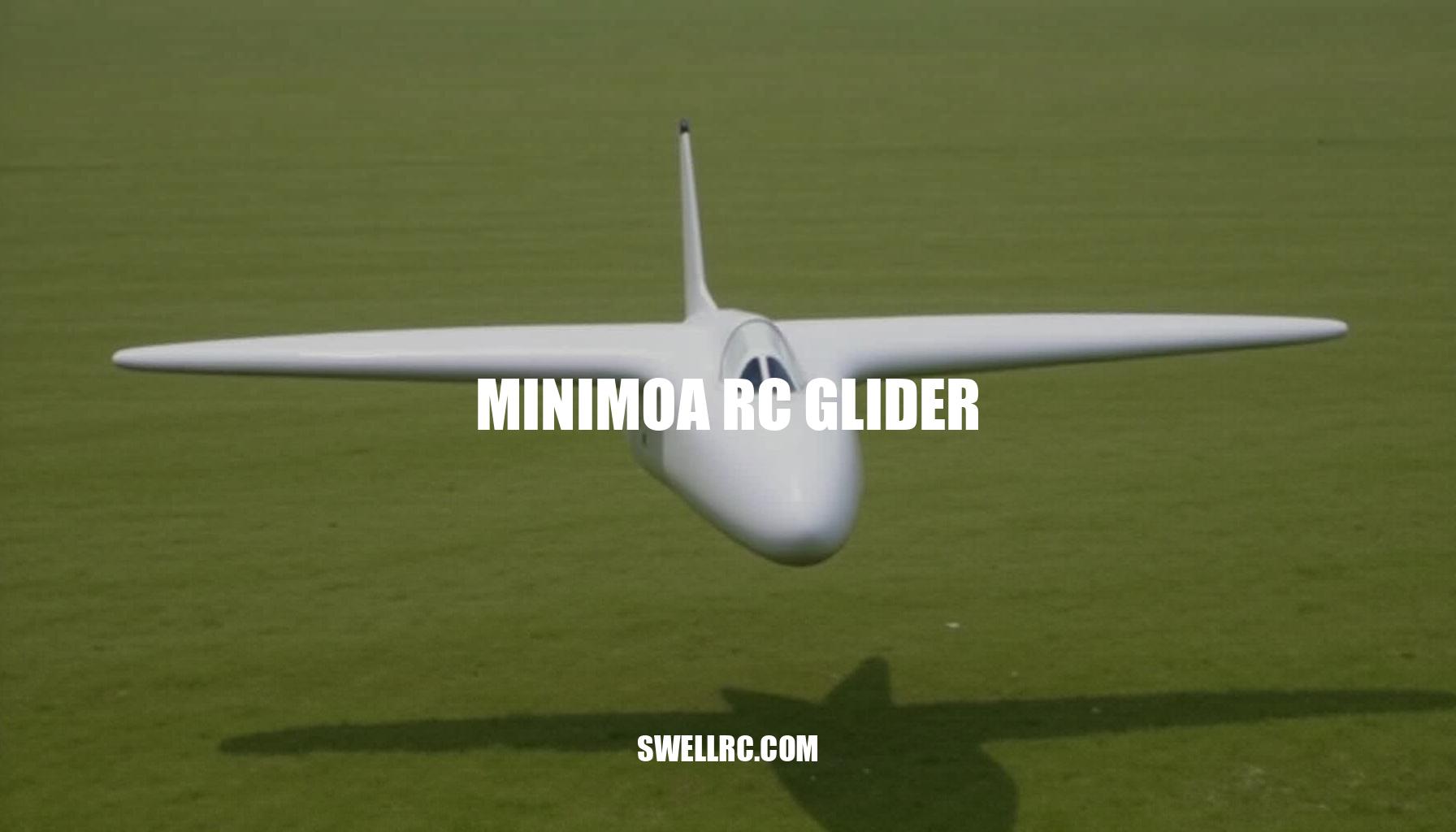
Minimoa RC Glider: A Timeless Icon of Scale and Aerodynamics

When I first saw the Minimoa carve through the air, it felt like watching history in motion—every bank and slip traced a lineage back to 1930s Germany. The Göppingen Gö 3 Minimoa—with those unmistakable gull wings and elegant woodwork—set records and hearts aflame long before it became a beloved subject for scale gliders enthusiasts. Today, the Minimoa RC glider captures that same poetry with modern reliability, a combination that keeps pulling me back to the flight line.
Whether you’re a fan of vintage RC gliders or diving into RC thermaling techniques, the Minimoa stands out for its remarkable RC plane aerodynamics that make soaring in thermals and on slopes both thrilling and graceful. In this guide, I’ll share what makes this RC sailplane special, how it handles in various flying conditions, and what to consider if you’re building, buying, or upgrading one. If you’re new to the broader scene and want to understand where the Göppingen Gö 3 Minimoa fits in the world of scale gliders and sailplanes, explore more background on RC gliders and sailplanes here.
The Legacy and Design Evolution of the Minimoa
The full-scale Göppingen Gö 3 Minimoa rose to iconic status by blending artistry with efficiency. Featuring a gracefully curved fuselage and a distinctive gull-wing planform that enhances roll stability, its wing was optimized for long, silent climbs in lift. This signature silhouette translates beautifully to scale gliders in the RC world—manufacturers and scratch builders alike replicate the gull break, slender tail, and canopy lines.
Often, they combine traditional balsa RC aircraft frameworks with strategic fiberglass or carbon reinforcement to maximize performance and durability.
Having built one myself, I finally understood why this sleek wooden craft is a legend among enthusiasts of vintage RC gliders. Modern kits respect the original’s elegant curves while embracing CAD precision, laser cutting, and lighter coverings. This means you get the timeless soul of the 1930s combined with today’s manufacturing consistency, optimizing factors like glider wing loading for better flight characteristics in your RC sailplane.
| Attribute | Early Hand‑Built Minimoa (kit/scratch) | Modern Minimoa ARF/ARC |
|---|---|---|
| Material | Hand-selected balsa/spruce, ply ribs, fabric/film covering | Laser-cut balsa/ply, composite reinforcements, heat-shrink film |
| Typical AUW | Moderate; varies widely with builder | Optimized; tighter tolerances, often lighter for size |
| Construction time | Long (60–120+ hours) | Short (8–20 hours to assemble/finish) |
| Skill/Tooling | High—plans building, jigging, sanding, sheeting | Moderate—assembly, hinging, radio install |
| Price range | Lower parts cost, higher time cost | Higher upfront cost, lower time investment |
If you’re drawn to classic wood craftsmanship, browse RC balsa glider kits for inspiration; if you prefer out-of-the-box precision, you’ll find plenty among today’s top model RC gliders. Regardless of your choice, the Minimoa remains a beacon for balsa RC aircraft lovers who appreciate both the aesthetics and the flight performance of a truly classic RC sailplane.
Flight Performance and Handling in Modern Conditions
In the air, the Minimoa embodies calmness and honesty, making it surprisingly communicative during flight. When engaging in RC thermaling with light lift, patience is rewarded: bank shallowly and keep the nose just under the horizon to feel it gently climb. On the slope, the distinctive gull wing provides a stately, rock-solid presence; while it may not carve aggressively like full-composite racers, it cruises efficiently and conserves energy beautifully, highlighting excellent RC plane aerodynamics.
Stalls tend to break predictably—more of a subtle nod than a sharp snap—making recovery straightforward with a gentle push of down elevator and coordinated rudder input. Following several test flights, adjusting the dihedral angle significantly enhanced roll response while maintaining the vintage stability I admire in classic scale gliders.
Optimizing the Minimoa’s performance involves careful tuning of the center of gravity (CG) and control surfaces, especially to balance glider wing loading for both RC thermaling and slope soaring. Consider the following setup tips:
- Start the CG at approximately 28–33% of the wing’s mean aerodynamic chord; then move it aft in 1–2 mm increments until thermal turns feel effortless without causing porpoising.
- Use the rudder as the primary turn control; incorporate a 5–10% rudder-to-aileron mix if needed to maintain coordinated circles.
- Maintain moderate elevator throw with 25–35% exponential (expo) to ensure smooth thermaling inputs.
- For slope days, shift the CG slightly forward and increase aileron throw to enhance stability and tracking in gusty conditions.
- Program a “float” camber preset, setting 1–2 mm of flap/aileron down for weak lift scenarios; employ a reflex camber preset for improved penetration when flying upwind.
- Balance the model laterally by adding a gram or two to a wingtip if one side persistently drops during slow flight phases.
- If equipping with a small power pod or nose-mounted motor, align 1–2° of down and side thrust to maintain straight climbs.
- Validate trim settings with a shallow dive test; a properly trimmed model will smoothly pull out on its own, indicating stable flight characteristics.
The principles of electric glider planes and lightweight design, commonly applied in micro and indoor flying, translate well to improving the Minimoa’s sink rate and responsiveness. Adopting techniques from super-light RC indoor planes (source) and sub-250g RC plane optimization (source)—such as meticulous weight budgeting and utilizing low-friction linkages—greatly benefit performance. Recommended upgrades include precision metal-gear micro servos for the tail, a modest brushless power assist with folding propeller for extended flight versatility, and a modern telemetry-capable receiver to monitor CG and battery pack status mid-flight.
These enhancements ensure the Minimoa remains a commendable example of refined slope soaring and RC plane aerodynamics, delighting pilots who appreciate classic scale gliders with modern capabilities.
Comparing the Minimoa with Other Iconic RC Models
Switching between the Minimoa and a sleek sportster reminded me how different flight philosophies can be equally captivating. The RC sailplane Minimoa celebrates efficiency, patience, and graceful arcs, making it a favorite among fans of scale gliders who appreciate long, lift-dependent flight duration. In contrast, aerobatic RC planes like the Great Planes Super Sportster 40 and the Great Planes Ultra Sport emphasize thrust, roll rate, and energy for dynamic maneuvers, appealing to pilots seeking fast rolls and crisp lines.
| Model | Typical wingspan | Primary material | Flight role | Typical duration | Pilot level |
|---|---|---|---|---|---|
| Minimoa (RC) | 2.5–3.0 m (varies by kit) | Balsa/ply with composite spots | Thermal/slope soaring | Long, lift-dependent | Intermediate |
| Great Planes Super Sportster 40 | ~1.4 m class | Balsa/ply | Sport/aerobatics (powered) | Fuel/electric pack dependent | Intermediate |
| Great Planes Ultra Sport | ~1.5 m class | Balsa/ply | Precision sport/aerobatics (powered) | Fuel/electric pack dependent | Intermediate-Advanced |
If aerobatics tempt you, the Great Planes Super Sportster 40 and the Great Planes Ultra Sport deliver fast rolls and crisp lines. Prefer compact convenience? See what defines the best mini RC plane and how these tiny flyers contrast with the Minimoa’s serene, scale presence in lift.
Building, Maintenance, and Modification Tips
When building Balsa RC aircraft, especially intricate designs like scale gliders featuring a gull wing, attention to detail is crucial. Before applying glue, dry-fit the gull wing joiner system as even small alignment errors can compound through the dihedral break, impacting RC plane aerodynamics. Employ slow-cure epoxy for spars and joiners to ensure strength, while thin CA glue works well for tacking ribs and sheeting but should be carefully avoided near hinge lines to prevent wicking.
Reinforcing the gull break with carbon or glass caps is advisable if you’ll be flying in gusty conditions, enhancing the wing’s resilience. To maintain smooth control response, keep servo leads light and flexible through the wing, minimizing connector bulk especially near the gull joint.
Maintenance is vital for longevity and performance. Before each flying session, verify wing incidence symmetry, control surface neutrality, and ensure linkages move freely.
After flights, inspect hinge security, spar joiners, and look for covering sag or separation, re-ironing film over compound curves when necessary. Proper storage avoids heat exposure and supports the wing both at the root and near the break to prevent warps. Additionally, rechecking the center of gravity (CG) is essential, especially after adding new scale details or changing batteries.
Modification ideas favored by enthusiasts of vintage RC gliders and modern electric glider planes include installing a transparent canopy with simple cockpit framing to elevate the scale look without adding weight.
Upgrading to carbon spars and pushrods can significantly stiffen the airframe, markedly improving energy retention. Another popular mod is a discreet electric nose setup with a folding propeller. This converts marginal soaring days into guaranteed airtime, especially when programmed with a low-power, climb-only throttle curve that keeps the experience glider-pure.
For those interested in a more ambitious conversion, the RC Airwolf Black Bell 222 electric scale 1/3.5 write-up (RC Airwolf Black Bell 222 Electric Scale) provides an excellent perspective on integrating power systems cleanly without compromising scale lines, a valuable reference when pushing the boundaries of scale gliders and electric glider planes.
Conclusion: Why the Minimoa Still Captivates the Skies
The Göppingen Gö 3 Minimoa stands as a timeless icon among RC sailplane enthusiasts, embodying the essence of scale gliders with its elegant design and superior craftsmanship. This model is truly a love letter to flight—patient and endlessly rewarding, especially when you master the art of RC thermaling. After numerous tests and late-night tuning sessions, the Minimoa rekindled my passion for flying, reminding me of the quiet satisfaction that comes from executing a perfect thermal turn and appreciating the aerodynamic finesse in every wing curve.
If this journey sparks your curiosity about other classic inspirations and manufacturers, I encourage you to explore the World Models RC planes collection. Consider how these historic designs could evolve and complement your hangar, enhancing your experience of slope soaring and refined glider control.
In essence, the Minimoa’s beauty goes beyond its vintage exterior—it serves as a masterclass in efficient aerodynamics that remains fresh and relevant in today’s skies. Whether you are drawn to its scale authenticity or its soaring performance, this RC sailplane offers a harmonious blend of tradition and modern flying pleasure.
Frequently Asked Questions
- What is the history behind the Minimoa glider design?
The Göppingen Gö 3 Minimoa emerged in 1930s Germany, celebrated for its gull-wing planform, elegant wooden construction, and record-setting performance. Designed in the early golden age of soaring, it influenced generations of sailplanes and remains a favorite for scale reproduction in RC. - How do you balance and trim a Minimoa RC glider for stable flight?
Begin with the CG at roughly 28–33% of the mean aerodynamic chord. Set modest elevator and aileron throws with 25–35% expo, verify lateral balance, and perform a shallow dive test to confirm stable pull-out. Fine-tune with small CG shifts and a rudder-to-aileron mix for coordinated thermaling turns. - What materials are used in building a Minimoa RC glider?
Most RC Minimoa builds use balsa and plywood structures with film coverings, often reinforced by fiberglass or carbon at high-stress points like the gull break and spar joiners. Hardware typically includes lightweight pushrods, micro servos, and sometimes a compact electric power system with a folding prop. - How does the Minimoa RC glider compare to modern sailplanes?
Modern composite gliders are stiffer and typically offer higher glide ratios and better penetration. The Minimoa trades outright performance for timeless scale aesthetics, predictable handling, and an engaging, low-sink thermal style—ideal for pilots who value character and craftsmanship as much as numbers. - Is the Minimoa RC glider suitable for beginners or only experienced pilots?
It’s best for motivated beginners with mentorship or for intermediate pilots. The airframe is forgiving, but the gull wing and scale details reward careful setup and light-touch flying. Start on calm days, keep throws conservative, and consider instructor support for the first flights.