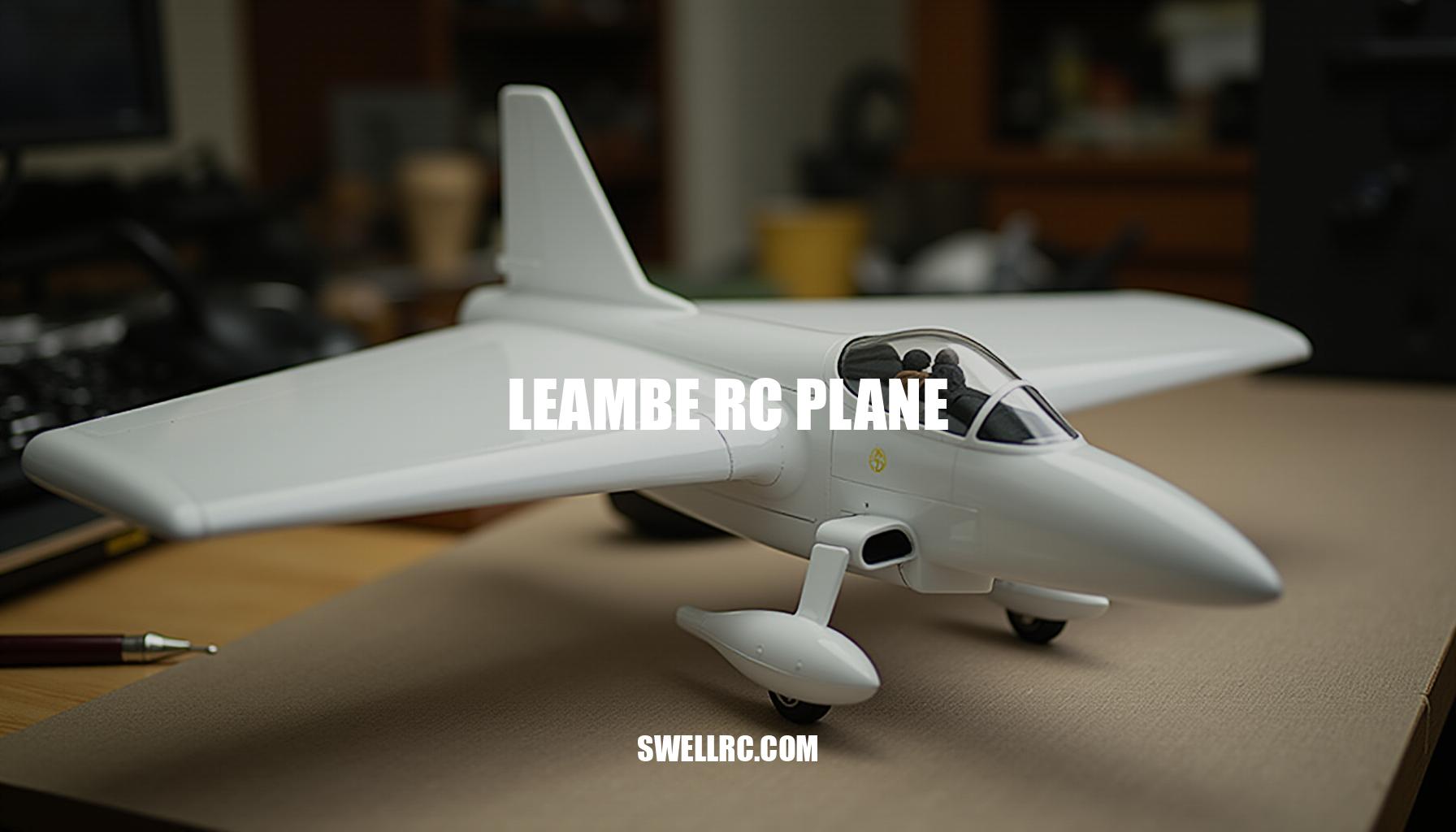
Leambe RC Plane Review: A Beginner-Friendly Fixed-Wing Model

I first met the Leambe RC plane on a breezy Saturday at our club’s grass strip. A friend hand-launched a compact, high‑dihedral foam trainer that refused to tip-stall, even when he ham‑fisted the sticks. That playful, confidence‑building attitude is what made me dig in: what’s under the hood, how far can it be pushed, and who is this little flyer really for?
This review is my deep dive—design, flight performance, tech highlights, and clear comparisons—so you can decide if the Leambe RC aircraft belongs in your hangar. As a fixed-wing RC model, the Leambe stands out in the RC hobby scene for its stability and ease of use. This electric RC plane offers beginner RC airplane pilots a unique blend of durability and responsive controls, making it ideal for those seeking a reliable remote control aircraft to hone their skills.
During my personal test, the Leambe’s hand launch capability proved effortless, further emphasizing its appeal to both novices and seasoned flyers looking for a fun, forgiving plane. Whether you’re just starting or expanding your fleet, the Leambe RC aircraft is certainly worth considering for your collection.
Design & Build Quality: The Aesthetics and Engineering Behind Leambe
Up close, the Leambe emerges as a purpose-built trainer engineered for durability and user-friendly flight characteristics. Its construction utilizes a resilient foam EPP EPO-style fuselage material that strikes the perfect balance between toughness and lightweight planes design. The weight distribution is cleverly optimized, positioning electronics low and central to ensure a predictable center of gravity, which is vital for beginner-friendly handling.
The clean, slightly rounded lines of the fuselage coupled with a removable canopy simplify battery swaps, enhancing its practicality.
The wing showcases a significant dihedral wing angle, which contributes to automatic self-righting, making it forgiving in flight—ideal for novices. A carbon spar running through the wing adds stiffness without adding unnecessary weight, reflecting an aerodynamic design that prioritizes stable flight over speed or agility. Tail surfaces are generously sized to maintain control authority even at slow speeds.
When measured, the Leambe’s typical trainer configuration exhibits these key dimensional traits:
- RC wingspan: about 500–700 mm, perfectly sized for easy hand launches and convenient car-boot travel
- All-up weight: usually ranges from sub-300 g to approximately 420 g, depending on battery and motor choices
- Airframe material: constructed from robust foam with selective reinforcement; foam-safe adhesives bond effectively
- Wing planform: high-wing with noticeable dihedral and a slight undercamber on some models to boost lift at low speeds
On the workbench, the Leambe impresses with tidy part fits and straightforward linkages. The entire airframe feels intentionally designed to absorb impacts and bounce back rather than break, championing the kind of resilience that’s essential for those learning the ropes. Compared to sleek flying wings like the Heewing F‑01, the Leambe favors docile handling and ruggedness over razor-edge aerodynamic design, making it a smart choice for new pilots and relaxed park flying.
Flight Performance: Testing Stability, Speed, and Control
The Leambe’s personality in the air embodies calmness and confidence-forward handling while remaining surprisingly willing to play. Its stability is excellent thanks to effective RC flight stabilization with gyro assistance: in Beginner mode (gyro high), it self-levels cleanly and easily shrugs off small gusts, giving pilots a forgiving flight experience with stalls that break straight ahead. Moving into Advanced or Expert mode, it loosens up for sweeping turns and lazy eights, offering a balanced mix of maneuverability that is relaxed for novices and pleasantly responsive for casual intermediates.
Equipped typically with a mid-capacity 2S LiPo battery, the Leambe achieves roughly 12–18 minutes of flight time.
This endurance depends on throttle profile, prop choice, and how aggressively you climb versus cruise — longer flights result from steady cruising, while practicing touch-and-goes or hard climbs reduce battery life. Its power-to-weight ratio feels adequate for confident climbs and efficient throttle management, perfectly matching its overall trainer-appropriate design.
When it comes to speed, the Leambe maintains a modest top speed that allows pilots to stay low and close without outrunning their controls. Its wind handling is respectable for a light foam airframe: smooth in light breezes, manageable in moderate conditions with well-timed pilot corrections, yet best kept grounded when faced with blustery winds.
Context is important when evaluating performance.
While precision indoor aerobats in the F3P RC planes category may out-twitch the Leambe at slow speeds, and ultra-minimal sub 250g RC planes can feel even more floaty and regulation-friendly, the Leambe strikes a sweet balance between docility and everyday practicality.
- Stability: Excellent with gyro; forgiving stalls that break straight ahead
- Maneuverability: Relaxed in Beginner/Intermediate; pleasantly responsive in Advanced
- Power-to-weight: Adequate for confident climbs; thrives on efficient throttle management
- Flight time: Roughly 12–18 minutes (battery, prop, and throttle profile dependent)
- Skill fit: Comfortable for first-timers, still engaging for casual intermediates
Features & Technology: What’s Inside the Leambe RC Plane
Leambe configurations vary by bundle, but the common thread is a lightweight electronics suite tuned for stability and simplicity. Core systems include a brushless motor in higher-spec bundles, typically a compact brushless outrunner offering better punch and durability, while beginner-friendly packages may use efficient small motors to ease entry. The flight controller ranges from 3-axis to 6-axis stabilization, featuring Beginner, Intermediate, and Expert modes, complemented by quick one-button level recovery available on many sets, ensuring reliable flight assist systems.
The servo setup consists of 2–4 g micro servos with direct, slop-minimized pushrods for crisp control responses.
- Radio transmitter setup: 2.4 GHz transmitters are included on Ready-to-Fly (RTF) bundles, whereas some Almost-Ready-to-Fly (ARF) versions accept common micro receivers, offering a range suitable for park flying.
- LiPo battery: Typically, 2S LiPo packs around 650–1000 mAh power the electric RC plane variants, with some micro versions opting for 1S packs to reduce overall weight.
- Aerodynamic integration: The foam airframe is crafted with strategic carbon reinforcements and features a removable canopy for easy access. The low mass and large wing loading margin reflect ultralight build best practices, prioritizing controlled, elegant flight rather than raw speed.
- FPV RC plane capability: Lightweight FPV setups are possible using micro All-In-One (AIO) cameras, provided weight and center-of-gravity considerations allow, enhancing versatility for experienced pilots.
In comparison with feature-rich lines like Nexa RC planes or the EDF-focused Freewing ecosystem, the Leambe’s intentionally simpler flight assist systems and streamlined settings reduce user complexity, translating to more time spent airborne rather than troubleshooting. Common channel configurations include 3CH (throttle, elevator, rudder) or 4CH (adding ailerons), with gyro calibration routines at startup to ensure precise stability. Propulsion setups vary between efficient direct prop drives and geared variants, optimized for balance between power and weight.
Skill Level & Learning Curve: Is Leambe Right for You?
If you’re a beginner RC plane pilot eager to conquer the learning curve with ease, the Leambe is a standout choice. Its advanced flight stabilization technology, including self-leveling modes, minimizes over-corrections, while the high dihedral design helps the aircraft maintain level flight, making it ideal for novices. Proper CG setup and trimming are essential initial steps—setting the center of gravity as recommended and fine-tuning control surfaces allow the gyro to effectively assist your flights.
Patience with throttle discipline ensures smooth takeoffs and landings, fundamental skills for any rookie.
Those who find joy in reliable and effortless flying will appreciate the Leambe’s versatility. It suits:
- Beginners wanting their first successful takeoffs and landings, thanks to its stability and forgiving controls.
- Park flyers craving a durable, toss-and-go companion, since the robust design withstands casual use while delivering enjoyable short flights.
- Intermediates looking for a relaxing, practice-friendly platform, where experimenting with control throws and flight modes can aid skill progression with comfortable aerobatics.
For enthusiasts who prefer extensive glide time or engaging in unhurried slope and thermal soaring, RC balsa glider kits serve as an excellent complement to fixed-wing electric models. Conversely, advanced pilots aiming for high performance often turn to Esprit RC planes, known for their premium composites and larger wingspans.
Positioned between these options, the Leambe blends approachability, ease of repair, and rewarding flight experience—perfectly bridging the gap for hobbyists moving beyond basic model airplane kits.
Comparison Corner: How Leambe Measures Against Other RC Legends
Every RC icon brings a different promise, making a detailed comparison essential when choosing your next model. The Leambe stands out for its easy, repeatable fun, making it ideal for beginners. In contrast, the RC F-35, especially in EDF form, offers top-end thrills and requires refined speed management and runway finesse.
Heewing F-01 flying wings deliver an efficient, slippery cruise and excellent wind penetration but bring a more sensitive roll axis, demanding more skill. For scale jets and larger platforms, Freewing planes are a preferred choice, known for their rich feature sets and scale presence. Traditionalists often gravitate towards World Models RC planes for their polished ARFs that excel in build quality and longevity.
| Aspect | Leambe | RC F-35 / Freewing | Heewing F-01 |
|---|---|---|---|
| Speed | Moderate and beginner-safe | EDF jets prioritize top-end thrills for speed enthusiasts | Efficient cruise and good wind penetration |
| Stability | Dihedral + gyro provides very forgiving flight | High speed but requires runway finesse | Stable at speed but more hands-on at low altitude |
| Material and Repair | Foam trainers patch easily, great for park flyer use | EDF intakes and thin sections can be less forgiving in mishaps | Durable with refined design for portable range |
| Battery Demands | Low power consumption, ideal for casual flying | Higher C-rate packs and larger capacities required | Balanced power efficiency for extended flights |
| Field Size | Thrives in parks and club fields | Prefers larger AMA-style fields due to speed | Suitable for a mix of field sizes with portable design |
In terms of speed vs stability, the Leambe leans towards stability and ease, while the RC F-35 and Freewing planes cater to speed-focused pilots. Battery requirements vary accordingly, with jets demanding high-performance batteries, unlike park flyer models like Leambe that are more economical. Field size is also a critical factor; Leambe is perfect for park flyer vs club field settings, whereas jets and larger wings need AMA-style fields for safe operation.
My verdict: for a first plane or casual practice flyer, the Leambe wins on low stress and quick smiles. If your heart beats for speed, slicing passes, and scale presence, the RC F-35 and Freewing route is your ticket. For efficient cruising and portable range, a refined wing like the Heewing F-01 is compelling.
And for those who cherish traditional build quality and longevity, World Models RC planes remain a timeless choice.
Maintenance, Parts, and Upgrades
Keeping your Leambe in top form is wonderfully straightforward with proper maintenance. After each session, it’s crucial to check control linkages for any slop, confirm that the prop and motor mount are tight, and verify that the gyro arms level correctly when powered up. Using foam-safe adhesive such as CA or hot glue is an effective way to repair most dings.
For those repeated grass belly landings, applying a strip of clear packing tape under the nose can do wonders. When it comes to battery care, storing batteries around 3.8 V per cell helps them last longer, and it’s best to avoid flying immediately after a hot-off-the-charger charge to preserve battery health.
When considering upgrades or performance tweaks, practical ideas include:
- Prop selection: Match prop diameter and pitch to your motor and noise preference, testing for efficient climbs at 70–80% throttle.
- Power system: If your setup is underpowered, a mild brushless motor replacement (ensuring compatibility within ESC limits) can provide valuable headroom.
- Control feel: Increase control surface throws gradually as your skills improve, and add a touch of exponential for smoother center-stick response.
- Reinforcement: Applying carbon ribbon to high-stress wing zones reduces flex without significant weight gain, enhancing durability.
- FPV integration: Adding a 1–2 g FPV micro camera and video transmitter (AIO cam/VTX) converts the Leambe into a low-and-slow cruiser—just confirm the CG and keep the antenna clear of the receiver for best results.
Keep in mind these important do’s and don’ts for optimal performance:
- Do rebind and recalibrate the gyro after any hard arrivals to maintain flight stability.
- Do label your battery packs and rotate them regularly to accurately track performance and lifespan.
- Don’t exceed the recommended center of gravity (CG) range; nose-light setups tend to balloon and can bite on landing.
- Don’t chase top speed by using heavy batteries, as this compromises the Leambe’s signature charm and flight characteristics.
Conclusion: The Verdict on the Leambe RC Experience
The Leambe RC plane truly nails the most important part of the RC hobby: it makes you want to fly again tomorrow. Its blend of forgiving aerodynamics, practical tech, and easy repairability means more airtime and fewer bench-bound weekends. The strengths are clear—durability, stable design and performance, approachable handling, and sensible battery demands.
Whether you’re on your first circuit or your fiftieth touch-and-go, the learning value is fantastic, supporting smooth beginner to intermediate progression.
If you find yourself craving classic build quality after mastering the basics, World Models RC planes offer a timeless Almost-Ready-to-Fly (ARF) experience. For those chasing scale jet energy and bigger-field thrills, Freewing jets provide tempting options that bring exhilarating flights and impressive presence. However, as a daily driver that keeps skills sharp and stress low, the Leambe stands out as an excellent fixed-wing RC model.
| Aspect | Leambe RC Plane | World Models RC Planes | Freewing Jets |
|---|---|---|---|
| Design and Performance | Stable, forgiving for beginners to intermediates | Classic build, intricate scale details | High speed, scale jet dynamics |
| Durability | Robust, easy to repair | Strong ARF construction | Durable but demands more experience |
| Ideal For | Daily practice, skill sharpening | Intermediate to advanced scale enthusiasts | Advanced pilots seeking jet performance |
Final verdict: For those seeking calm mornings, smooth circuits, and that perfect greaser of a landing that makes the whole week better, the Leambe RC plane remains a standout choice. It perfectly balances the needs of the dedicated pilot with the joy of consistent, stress-free flying in the RC hobby.
Frequently Asked Questions
- What makes the Leambe RC plane stand out from other RC planes?
It combines a forgiving high‑dihedral airframe with effective gyro stabilization, giving beginners instant confidence while still leaving room for intermediates to practice. It’s light, repair-friendly, and efficient on small batteries—more flight, less stress. - How durable is the Leambe model compared to similar lightweight RC aircraft?
Very durable for its class. The foam structure, simple linkages, and compact mass handle routine bumps well, and common repairs need only foam-safe CA or hot glue. Strategic tape and small carbon strips can extend longevity even further. - Does the Leambe RC plane require advanced flying skills?
No. In Beginner mode, it self-levels and resists overcontrol, making it suitable for first-time pilots. As your skills grow, Intermediate/Expert modes open up more responsive handling. - What kind of batteries and motors work best with the Leambe?
Most bundles fly well on a 2S LiPo around 650–1000 mAh. Power systems range from efficient small motors in entry kits to compact brushless outrunners in higher-spec versions. Choose the lightest pack that meets your target flight time to preserve handling. - Can the Leambe RC plane perform stunts or aerobatics?
Within reason. With stabilization turned down, it will do smooth loops, wing‑overs, and lively turns. It’s not a 3D or pattern ship, but it’s happy practicing basic aerobatic figures at comfortable speeds. - Are parts and upgrades easily available?
Yes. Props, micro servos, and small ESCs are widely available, and foam airframes are simple to reinforce. Many pilots also add lightweight FPV gear or modest power upgrades as their skills improve. - How does it compare to the RC F-35 or Freewing Planes series?
Leambe focuses on stability, simplicity, and park-fly convenience. An RC F‑35 or similar Freewing jet delivers speed, scale looks, and bigger-field excitement but demands more pilot skill, larger batteries, and a longer setup and landing space.