How to Build a Solar Powered RC Car: A Comprehensive Guide

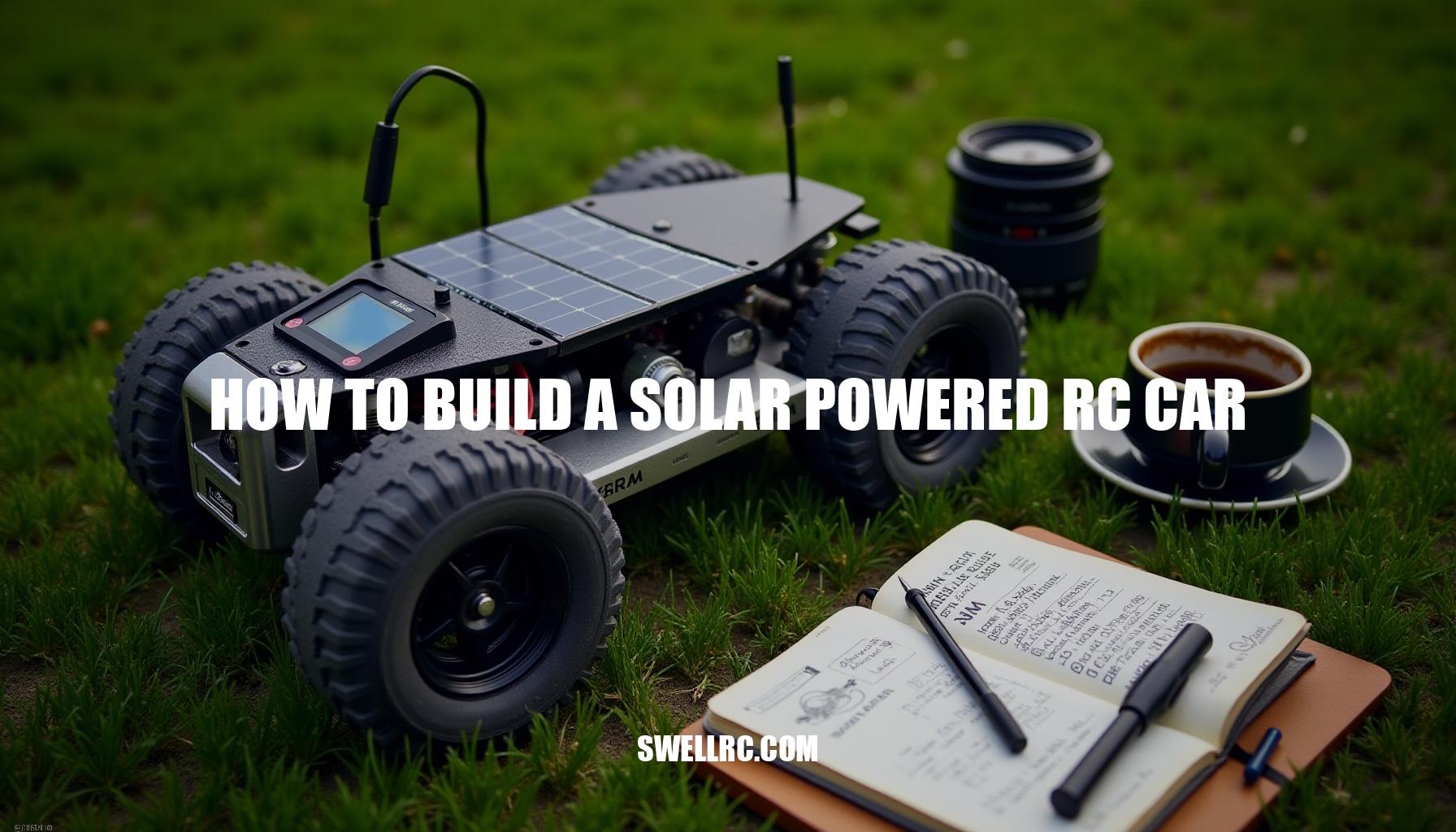
I still remember the aha! moment: watching my RC car idle in the sun and wondering, “Could the light do the driving?” That curiosity kicked off a hands-on journey to merge solar energy with radio-controlled fun—equal parts tinkering, testing, and the pure joy of seeing a self-built machine roll under its own sunshine power. In this guide, we’ll explore how solar energy integrates with a traditional solar powered RC car system: a mini solar panel for RC cars feeds a rechargeable battery, the battery powers a motor through an electronic speed controller (ESC), and a receiver (or microcontroller) handles steering and throttle.
You’ll meet the key components—solar panel, battery, ESC, motor (brushed or brushless), gearbox and drivetrain, chassis, and wheels—and how they play together efficiently. Engaging in such renewable RC projects not only enhances your understanding but also drives the innovation behind energy-efficient RC builds. If you’re curious about microcontroller control and coding options, see how a simple controller stack comes together in this primer: https://www.swellrc.com/how-to-make-an-rc-car-with-arduino/.
Diving into this realm of DIY robotics and radio-controlled cars powered by a sustainable solar RC circuit will empower you to not only understand the mechanics but have a full roadmap to build your own solar powered RC car.
The Core Components of a Solar Powered RC Car
Building an energy-efficient RC car powered by sunlight requires the right components, and understanding how each contributes to your solar panel for RC setup is key. The solar panel converts sunlight into electrical energy and choosing a lightweight, high-efficiency mono-crystalline panel sized to your car’s roof or trailer mount ensures maximum power without adding bulk. To manage power flow, a charge controller is highly recommended; it safeguards your battery by preventing overcharge, optimizing RC battery conversion for longer life.
The rechargeable battery acts as an energy buffer, delivering steady power to your motor. Popular choices include LiPo and LiFePO4 batteries suitable for high-performance builds, while NiMH batteries may suffice for simpler models. When selecting a motor, weighing the benefits of brushed vs brushless motors is crucial: brushed motors are simpler and cheaper, whereas brushless motors offer higher efficiency and greater power density, perfect for faster, energy-efficient RC builds.
Power regulation from battery to motor is handled by the Electronic Speed Controller (ESC), which also interprets throttle inputs from your receiver and transmitter or microcontroller setup, providing responsive control during your RC car modification project. Steering precision comes from the steering servo, responsible for turning the front wheels smoothly.
The gearing and drivetrain system affects torque and speed; matching gear ratios to your motor type and terrain ensures optimal performance. A light yet rigid chassis and frame maintain structural integrity while minimizing weight, and selecting the right wheels and tires tailored for terrain with low rolling resistance improves overall efficiency, giving you more speed and longer runtimes from the same sunlight.
| Component | Function | Recommended Type | Estimated Cost Range |
|---|---|---|---|
| Solar panel | Harvests sunlight | 6–12 V mono panel, 3–10 W for small cars | $10–$35 |
| Charge controller | Safeguards battery | Mini PWM or MPPT (if budget allows) | $8–$25 |
| Battery | Stores energy | 2S–3S LiPo (or LiFePO4) 500–1500 mAh | $12–$35 |
| ESC | Feeds motor | 10–30 A brushed/brushless ESC with BEC | $10–$30 |
| Motor | Creates motion | 180–380 size brushed; 1406–2204 brushless | $8–$35 |
| Receiver/Tx | Control link | 2.4 GHz RC set or microcontroller | $15–$40 |
| Servo | Steering | 9g–20g metal-gear | $6–$15 |
| Chassis | Structure | Light composite or 3D-printed | $0–$25 (materials) |
| Wheels/tires | Traction | Low-rolling-resistance set | $6–$20 |
By focusing on lightweight materials like foam-core composites, thin-wall aluminum, or carbon fiber offcuts, you can reduce weight dramatically. In my experience, every gram saved translates to free speed and longer runtime powered by the same sunlight, a key tip for successful RC car modification and energy-efficient RC builds.
Wiring, Assembly, and Solar Integration Setup
Creating a reliable DIY solar RC wiring system requires careful planning and assembly to ensure optimal performance and safety. First, plan voltage and current by matching your solar panel’s open-circuit voltage (Voc) and maximum power point (Vmp) to your battery chemistry; for example, a 6–9 V panel pairs well with a 2S LiPo battery, and using a charge controller between the panel and battery is essential to prevent overcharging.
Next, mount components securely by placing the solar panel on the roof or a lightweight rack, positioning the ESC and receiver away from motor noise, and leaving ample space for airflow to prevent overheating.
The core of your solar RC circuit involves wiring the power path correctly:
- Connect the panel’s positive and negative leads to the charge controller input.
- Attach the charge controller output to the battery, observing correct polarity.
- Wire the battery to the ESC power leads, making sure polarity is correct to avoid damage.
- Connect ESC to motor wires; for brushless motors, swapping any two leads reverses direction, while for brushed motors, reversing polarity achieves this.
- Use the ESC’s BEC output to power the receiver, or use a separate UBEC if needed.
- Plug the steering servo into receiver channel 1 and the ESC signal wire into channel 2, which is the typical mapping.
When it comes to controller options, you can employ a standard RC transmitter and receiver or incorporate microcontrollers like Arduino for customized control. For example, an Arduino RC setup or phone-controlled builds leveraging Bluetooth technology fit well with renewable RC projects; a useful guide can be found at this walkthrough.
Calibrating the ESC is vital to ensure smooth throttle response. Follow the ESC’s beep sequence to set throttle endpoints for neutral, full throttle, and full brake positions.
Before taking your RC car for a spin, test electrically by placing the wheels off the ground, verifying steering and throttle inputs work properly. Use a multimeter to check battery voltage, solar panel output in sunlight, and charge controller operation.
Effective cable management reduces interference: keep power and signal wires separated as much as possible, and twist motor leads to minimize electromagnetic interference (EMI).
Always prioritize safety by adding an inline fuse (typically 10–15 A) on the battery positive line and by heat-shrinking all exposed solder joints to prevent short circuits.
Common wiring issues and their fixes include:
| Issue | Fix |
|---|---|
| Motor twitches at idle | Check ESC calibration; verify BEC voltage is 5 V and receiver ground is solid. |
| No charging in sun | Confirm panel polarity; inspect connectors; measure panel Vmp; ensure controller suits your battery chemistry. |
| Brownouts on acceleration | Use a capacitor pack on the receiver or higher-current BEC; check drivetrain for binding. |
| Overheating ESC | Adjust gear ratio for higher torque; improve airflow; verify current draw is within ESC rating. |
A personal lesson learned from working on renewable RC projects is that minimizing voltage drop across connectors and using thicker gauge wire on high-current paths significantly improves speed under the same sunlight conditions—indeed, every milliohm counts for maximizing efficiency when learning how to wire solar cells to an RC battery.
Enhancing Performance and Efficiency
Once your solar-powered RC car runs reliably, it’s time to make your solar RC car faster by optimizing several key factors. Effective weight management is crucial: use a compact battery that’s just big enough to meet your performance goals and trim any excess mounting hardware. Select lightweight wheels and tires with low rolling resistance to improve speed, while keeping the center of gravity low for better stability during maneuvers.
When considering brushed vs brushless motors, brushless motors are the superior choice as they deliver higher efficiency and a better power-to-weight ratio—especially ideal when harnessing limited sunlight as your fuel source.
Adjusting your gear ratio can also help improve solar RC speed. For scenarios with modest solar power, gearing down provides more torque or “punch.” However, be sure to regularly track your motor temperatures; if they become too hot, reduce gearing or current to avoid damage.
Solar optimization plays a pivotal role. Implement solar panel angle adjustments by tilting the panel directly toward the sun when parked or installing a hinged mount for dynamic positioning.
Even a modest 10–20% gain in sunlight capture can have a measurable impact. Maintain panel cleanliness since dust accumulation results in wattage loss, so wipe panels before runs. Additionally, minimize wiring losses by using short, appropriately thick wires and high-quality connectors.
For battery optimization, it’s essential to use a rechargeable pack to buffer against clouds and shadows effectively.
Lithium Iron Phosphate (LiFePO4) batteries are recommended for robustness, while Lithium Polymer (LiPo) packs offer higher energy density. Avoid deep discharges to prolong battery life and maintain performance.
Here are some practical tips to fine-tune your solar RC car’s performance:
- Keep spare pinions and spur gears handy to quickly adapt gear ratios on the fly.
- Use a small inline meter to log current and voltage, revealing real solar gains and helping identify inefficiencies.
- Conduct shade tests by rolling your vehicle from sun into shade to validate the battery buffer’s effectiveness.
For enthusiasts eager to make solar RC car faster with deeper insights, this guide on speed tuning fundamentals complements your solar setup perfectly. Additionally, you can explore alternate platforms and testing ideas like scaling your solar drivetrain into a monster-truck layout for enhanced torque and ground clearance via this monster truck how-to.
Modular tinkerers might enjoy prototyping solar drivetrains on brick-based builds such as the one detailed in this Lego RC car project.
Field notes: On a clear summer day, my setup featuring an 8 W panel combined with a 2S 850 mAh pack delivered peppy performance. On hazy days, simply gearing down one step maintained consistent speeds without overheating, proving that thoughtful battery optimization and gearing adjustments are invaluable.
Experimenting Beyond Cars — Expanding Solar Creativity
Solar propulsion concepts transfer beautifully to other RC platforms, opening up exciting avenues in renewable RC projects. For instance, RC boats benefit greatly from wide, flat decks that are perfect for mounting solar panels. By combining a slow, efficient hull design with solar power, you can let the sun handle the cruising.
For inspiration, check out this detailed guide: how-to-make-rc-boat-instructables.
Indoor planes are another fantastic way to explore solar-powered flight. Ultra-light airframes consume minimal power, meaning you can pair tiny solar assist panels with a small buffer cell for sustained indoor soaring. Learn featherweight construction techniques here: how-to-make-super-light-rc-indoor-planes.
Mini conversions invite both fun and education by scaling down existing models. By electrifying tiny platforms such as toy cars, then imagining adding micro solar panels—perhaps mounted on a trailer—you delve into the world of RC car modification and DIY robotics. Explore this innovative approach in detail: how-to-turn-hot-wheels-into-rc-car.
| Tips for Enhancing Solar RC Projects |
|---|
|
Beyond the builds themselves, these projects serve as approachable lessons in sustainable engineering education. Turning sunlight into motion through your own solar RC circuit is not only rewarding but also a profound classroom experience, nurturing innovation and environmental consciousness simultaneously.
Conclusion: The Joy of Solar Innovation in the RC World
From concept to first sun-powered roll, building a solar RC car blends engineering, sustainability, and play. You learned how solar energy panels, batteries, ESCs, and motors cooperate; how wiring, calibration, and careful material choices boost efficiency; and how tuning gears, weight, and panel angle translate sunlight into speed. The most rewarding moment is watching your creation glide under a bright sky—proof that curiosity and a bit of patience can turn photons into motion.
If this project lit a spark, explore more innovative ideas for energy-efficient RC builds across SwellRC to level up your skills and imagination. Whether experimenting with RC battery conversion or diving deeper into DIY robotics, there’s a world of discovery in the realm of radio-controlled cars.
- Learn advanced solar panel integration techniques
- Optimize energy storage and management with efficient battery setups
- Customize motor and ESC combinations for maximum performance
- Explore robotics concepts that enhance RC car functionalities
Embrace experimentation—because innovation always starts in the garage.
Frequently Asked Questions
- What components are needed to build a solar powered RC car?
A lightweight solar panel, charge controller (recommended), rechargeable battery (LiPo or LiFePO4), ESC, motor (brushed or brushless), receiver/transmitter or microcontroller, steering servo, chassis/frame, wheels/tires, and appropriate wiring, connectors, and a fuse. - How do solar panels power an RC car?
The solar panel converts sunlight to DC power, which is routed through a charge controller to safely charge a battery. The battery then supplies stable current to the ESC and motor, while the receiver or microcontroller handles control signals. Under bright sun, the panel reduces battery drain; in shade, the battery buffers power. - Can I use Arduino to control a solar powered RC car?
Yes. Arduino can read receiver inputs or replace them entirely for custom control logic, telemetry, or autonomous features. Pair it with an ESC for throttle and a servo for steering. Ensure the Arduino is powered via a stable 5 V regulator or BEC from the ESC. - How long can a solar powered RC car run on sunlight?
It depends on panel wattage, sunlight intensity, drivetrain efficiency, and vehicle weight. With a 5–10 W panel and a small 2S pack, you can run continuously in full sun at low-to-moderate speeds; in partial sun, expect extended runtimes compared to battery-only but not true infinite operation. - What type of motor works best for solar-powered RC vehicles?
Brushless motors are generally best due to higher efficiency and better power-to-weight, especially when power is limited. However, small brushed setups are simpler and cheaper for beginners or very lightweight builds. - How do you make a solar RC car go faster?
Reduce weight, optimize gear ratio (slightly lower for torque if solar power is modest), use a high-efficiency brushless motor and ESC, minimize wiring losses, keep the panel clean and angled toward the sun, and use low-rolling-resistance tires. A well-tuned battery buffer helps maintain voltage under load. - Is it better to use a rechargeable battery in a solar RC car?
Yes. A rechargeable battery acts as an energy buffer, stabilizing voltage and current when sunlight fluctuates. LiFePO4 offers robustness and flat voltage; LiPo provides high energy density. Avoid running the system panel-only unless current draw is extremely low and constant.