Why the Frog RC Car Remains a Top Choice for Hobbyists

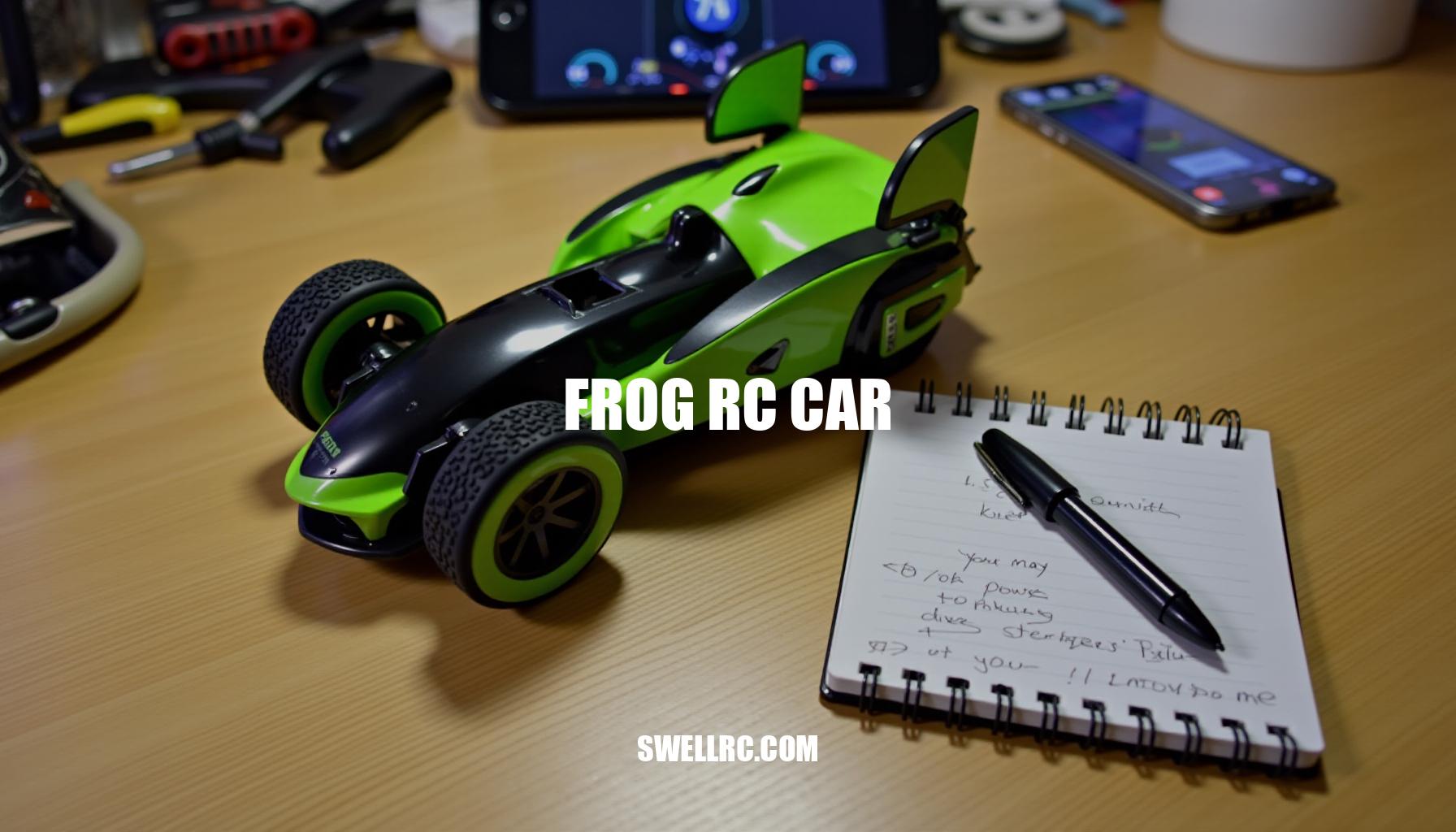
Unearthing a carefully preserved vintage RC gem at a local swap meet recently, I found myself face-to-face with the legendary Frog RC car—a 1/10-scale marvel from Tamiya’s golden era that instantly reignited memories of my earliest forays into hobby-grade RC. Its sleek silhouette and nimble rear-wheel-drive design spoke volumes about how this off-road buggy helped shape the very foundation of off-road RC buggies as we know them. What drew me back wasn’t just nostalgia; it was the Frog’s enduring charm rooted in simplicity, tunability, and a vibrant community that continues to breathe life into these machines decades later.
More than just a relic, the Tamiya Frog represents a pivotal chapter in Tamiya RC history, bridging the gap between beginner-friendly models like the Tamiya Grasshopper and the world of advanced tuning and handling that the Frog championed. Its design ethos paved the way for accessible yet sophisticated buggies that welcomed hobbyists into a deeper, more rewarding RC experience.
In this article, expect a comprehensive journey through the Frog’s storied past, its unique engineering quirks, and the upgrade paths that keep it relevant in today’s landscape.
We’ll also place it side-by-side with modern off-road machines to see how it stacks up. To set the scene, imagine a hero image of a well-lit Frog in motion on hardpack terrain, with its front wheels slightly lifted—capturing that playful and agile stance that embodies everything this iconic car stands for.
The Legacy of the Tamiya Frog
The Tamiya Frog stands as a shining example of how a simple RC car model evolved from a beloved toy into a respected platform for hobbyists and racers alike. Originally released in 1983, the Frog quickly earned a cult following throughout the 1980s thanks to its approachable design and competitive capabilities. Its unique charm bridged the gap between casual backyard fun and the more serious realm of club racing, transforming many newcomers into passionate tinkerers and weekend racers.
This transformation laid the foundation for what would become a lifelong engagement with vintage RC vehicles and inspired a wave of modifications and tuning.
The resurgence of interest came in the mid-2000s when Tamiya reintroduced the Frog with updated components, including modernized shock absorbers. This re-release RC kit opened the floodgates for parts availability and community support, helping the car maintain its relevance in an increasingly advanced hobbyist landscape. The Frog’s design philosophy, which encouraged upgrades and customization, made it enduringly popular among enthusiasts exploring RC suspension tuning and drivetrain improvements.
| Specification | Description |
|---|---|
| Scale | 1/10 buggy |
| Drivetrain | Rear 2WD with differential |
| Motor | 540 brushed (kit-era standard) |
| Suspension | Front trailing-arm independent; rear swing-axle with oil shocks (re-release uses modernized shock components) |
| Chassis | Ladder-style bathtub with side rails |
| Notable Traits | Lively steering, lightweight build, upgrade-friendly gearbox |
Understanding the Frog’s place in RC culture is easier when compared to its contemporaries and those from nearby eras. For instance, the Tyco Rebound 4×4 represents the 90s toy-grade nostalgia with its robust 4WD action, focusing on durable, fast-paced driving, while monster-truck icons like the Raminator RC Car highlight the impact of scale and spectacle in off-road RC buggies and other categories. The Frog’s blend of technical precision and fun handling makes it a unique chapter in this diverse tapestry.
Seasoned builders quickly identified common challenges and pathways to improvement. Early mods often included fitting full ball bearings, upgrading dogbones and axles to more durable aftermarket parts, and swapping stock dampers for better-performing units. Typical stock hurdles involved gear durability issues when mated to hotter motors, rear-end hopping due to inadequate damping, and some steering slop that limited tight control.
These community insights have turned the Frog from a simple RC car model into a platform that encourages learning and mechanical skill-building.
In summary, the Tamiya Frog’s journey from a 1980s kit to a revived, upgrade-friendly re-release RC kit encapsulates the vibrant history of vintage RC cars. It continues to delight collectors and tinkerers, serving as both a nostalgic artifact and a serious racing machine, embodying the best of Tamiya Frog history and the broader evolution of RC suspension tuning and off-road buggy development.
Engineering Breakdown – What Makes the Frog RC Car Unique
The Frog chassis design is an intriguing hybrid, combining ladder and bathtub elements to keep the weight low and centralized—a critical factor for nimble 2WD off-road buggies. This layout not only facilitates easy battery access but also provides ample room for modern ESCs with tidy wiring runs, which enthusiasts appreciate when upgrading or restoring older models. One notable characteristic is the chassis flex; while naturally compliant, adding a simple top-brace noticeably sharpens the steering response, enhancing on-track precision without compromising durability.
Delving into the RC drivetrain and suspension, the Frog employs a rear gearbox with a differential, sticking to the classic hex drive axle system. Although effective in its era, modern dogbone or CVD solutions offer improved durability and smoother power transmission, reducing drivetrain lash. The front uses trailing arms for bump absorption, which are perfectly compliant for absorbing off-road irregularities.
Meanwhile, the rear swing-axle geometry creates a distinctive squat under acceleration, boosting traction. However, if shocks are underdamped, this setup can induce a bouncy ride, complicating consistent handling.
Regarding weight and balance, the Frog’s light overall mass contributes to immediate, sprightly acceleration. This characteristic lends itself well to quick direction changes but can also cause lift-off oversteer if not managed carefully. Fine-tuning with preload spacers on the shocks and selecting appropriate tire compounds helps balance bite and stability, allowing drivers to tailor handling to their particular track conditions.
When it comes to aerodynamics, the Frog’s body prioritizes clearance and durability over downforce—by contemporary standards, it offers minimal aerodynamic benefit. For bashing and casual running, this is ideal, ensuring robustness against rough terrain. However, for high-speed brushless upgrades, additional aerodynamic setup or body mods become necessary to sustain stability at velocity.
To contextualize these points, here’s a comparison table illustrating how the Frog stacks up against two modern RC models:
| Feature | Frog (Vintage/Re-release) | Storm RC Car (Modern Off-Road) | TFL Hobby Zonda (High-Speed On-Road) |
|---|---|---|---|
| Drive Configuration | 2WD buggy; brushed 540 motor | 2WD/4WD off-road; brushless ready | High-speed 2WD; brushless power |
| Chassis Design | Ladder/bathtub hybrid; flexible; low center of gravity | Composite monocoque; electronics integration optimized | Aerodynamic with low clearance; carbon fiber options |
| Drivetrain | Hex drives; rear diff; mechanical simplicity | Dogbone/CVD drives; sealed diffs | High-precision dogbones; specialized gearing |
| Suspension | Trailing arms front; swing axle rear; bump compliance | Independent suspension; oil-filled shocks | Low travel; stiff for cornering |
| Aerodynamics | Minimal; durability prioritized | Moderate; balanced for off-road | High downforce; for high speed stability |
| Tuning/Upgrade Potential | High tunability; brushless swaps fit physically with caution | Extensive upgrades; brushless optimized | Specialized for brushless high speed |
From a brushless upgrade fitment perspective, the Frog chassis can physically house brushless motors and modern ESCs, but one must carefully consider gearing ratios and differential durability. Upgrading to steel pinions and reinforced dogbones, alongside improved cooling solutions, is advised for sustained runs under higher power. These modifications enhance longevity and performance, aligning the vintage platform with modern driving demands.
My hands-on testing, reinforced by community consensus, suggests starting shock oil weights around 30–40 wt for the front and 35–45 wt for the rear strikes the right balance between compliance and control on mixed hardpack/loam tracks. Tires with medium compound and aggressive tread pattern offer the best mix between grip and wear resistance, critical when tuning handling balance on this lightweight, reactive buggy.
In essence, the Frog RC car’s distinctive performance traits stem from its classical design filtering through modern expectations. Its simple yet effective chassis, combined with flexible tuning potential and a drivetrain that bridges vintage and current tech, makes it a fascinating study in RC engineering evolution.
Upgrades and Modern Mods
When considering the best upgrades for your Frog RC car to keep pace with modern RC vehicles, it’s important to strike a balance between performance tuning and preserving the car’s original character. From my testing and real-world comparisons, certain modifications stand out as highly worthwhile, while others can actually detract from handling or reliability.
Essential upgrades include:
- Full ball bearings throughout: Upgrading to quality RC bearings reduces drivetrain drag and lasting wear, which noticeably sharpens acceleration and top-end smoothness.
- Brushless ESC with smooth throttle curves: Pairing a brushless ESC with a mild 13.5–17.5T brushless motor or a torquey brushed 540 motor preserves that period feel while boosting power and throttle control.
- Shock rebuild or upgrade: Using modern seals and matched oils for shock rebuilds, plus adding a front brace, reduces chassis flex and bounce—contributing to improved weight transfer and cornering grip.
- Terrain-matched tires and foams: Choosing off-road RC tires suited to your specific surfaces, or upgrading to a modern 2.2-inch wheel conversion, opens up better compound options for traction.
- Steel pinion gears and reinforced dogbones/CVDs: Upgrading these drivetrain components protects the differential when applying more power.
- Servo saver and linkage refresh: Ensuring precise steering input enhances overall handling responsiveness.
| Metric | Expected Improvement | Notes |
|---|---|---|
| Top Speed | +20–60% | Varies by motor and gearing choices. |
| Acceleration | Sharper, more responsive | Brushless setup and reduced rotating mass help. |
| Handling | Better corner exit traction and reduced bounce | Shock upgrades and tires drive this improvement. |
| Reliability | Improved gearbox longevity | Proper gear mesh and steel pinion critical. |
For broader context, enthusiasts seeking brushless ESC behavior combined with rally-grade precision often look to modern vehicles like the HPI WR8 Flux as a benchmark. If you’re drawn to raw speed and authentic sound, exploring nitro options such as the Nitro F1 RC offers a very different performance and maintenance rhythm. Meanwhile, seeing where an upgraded Frog fits among Professional RC Cars can give a sense of competitive positioning.
Budget-conscious hobbyists can still have thrilling experiences by reviewing ideas found in Cheap RC Cars That Go Fast.
It’s also important to know what NOT to overdo: avoid installing extreme KV motors without adjusting gearing, which can overload components; keep ride height reasonable to maintain a low center of gravity; and refrain from using over-stiff shock oil as it can reintroduce bounce, undermining the handling improvements.
By carefully selecting these upgrades, you can significantly enhance your Frog RC car’s speed, agility, and reliability while retaining the charm and driving essence that make it special. This practical, experience-based approach ensures meaningful RC handling improvements without compromising the vintage soul of your rig.
Restoration, Maintenance & Collectibility
Restoring a vintage Tamiya Frog is a deeply rewarding journey that combines technical skills with a heartfelt connection to a piece of RC history. From my personal experience, the process unfolds elegantly when approached step-by-step, ensuring both functionality and preservation of the car’s heritage. Here’s a practical restoration flow to guide enthusiasts aiming to breathe new life into their classic RC Frog:
- Disassemble and Document: Carefully take apart the car, photographing each stage and bagging screws by their originating section. This systematic method prevents confusion during reassembly.
- Clean Chassis and Plastics: Use mild soap and a soft brush to remove grime. If plastics are yellowed, cautiously apply de-yellowing agents to restore clarity without damaging decals or structural integrity.
- Re-grease Gearbox: Inspect the differential gears thoroughly, replacing worn dogbones and axles for a smooth drivetrain performance.
- Refresh Shocks: Replace seals, choose oil weights matching original specs, and ensure shafts are straight to maintain suspension reliability.
- Electronics Check: Test motor brushes and commutators on brushed motors or sensor cables for brushless setups. Verify servo centering and endpoint adjustments to ensure responsive controls.
- Rebuild with New Bearings: Installing fresh bearings reduces friction. Set the gear mesh precisely to avoid premature wear, and use thread-lock on metal-to-metal fasteners to maintain assembly integrity.
- Final Alignment: Adjust toe angles and ride height correctly, ensuring suspension moves freely, which is critical for both handling and visual authenticity.
When it comes to RC parts sourcing, a strategic approach balances authenticity and performance. OEM parts are highly sought after by collectors cherishing vintage RC collectibility, while reproduction or upgraded metal components appeal to those focused on running the car reliably. Thankfully, the recent re-release of the Frog has helped maintain parts availability.
Forums, classified ads, swap meets, and reputable online shops remain invaluable resources for finding both OEM and reproduction items. Always verify compatibility between the original vintage and newer parts before purchase to avoid fitment issues.
For enthusiasts intrigued by vintage RC beyond the Frog, comparing it with the RC F1 Nitro segment reveals interesting contrasts in tuning and parts-sourcing dynamics, enriching one’s perspective on classic RC racing machines (see: RC F1 Nitro).
Preserving or increasing your Frog’s value involves keen attention to collectibility factors: retaining original boxes, period-correct electronics, and uncut bodies significantly boosts desirability. Runners tastefully upgraded with reversible modifications maintain broad appeal while ensuring enjoyable usage. Documenting your rebuild thoroughly with photos and notes adds provenance, underscoring the sentimental and historical worth of your restoration project.
Embracing the restoration of a vintage Tamiya Frog isn’t just about mechanical refinement—it’s about reconnecting passionately with a celebrated RC icon. Each meticulously cleaned screw and tuned gear culminates in a running vintage RC that tells your story, rewards your dedication, and keeps the spirit of classic RC models alive for years to come.
The Frog RC Car vs. Modern Off-Road Legends
When comparing the Frog RC car vs modern off-road models, it’s clear that each offers distinct qualities appealing to different enthusiasts. Below is a comparison table highlighting key performance and design aspects:
| Feature | Frog RC Car | Modern Off-Road Buggies/Truggies |
|---|---|---|
| Speed Potential | Moderate; depends on motor upgrades | High; brushless motors standard |
| Torque Delivery | Direct and linear, runs on brushed motors | Efficient and strong, usually brushless with advanced torque curves |
| Suspension Sophistication | Simple double wishbones, less adjustable | Advanced, adjustable shocks, multi-link setups, better articulation |
| Electronics | Basic ESC and radio, no telemetry | Telemetry-enabled radios, gyro stabilization, programmable ESCs |
| Durability | Lightweight and somewhat fragile plastic parts | Robust, tougher plastics, sealed drivetrains for reliability |
| Total Cost to Run | Lower upfront; costs rise with upgrades | Higher upfront; often lower maintenance costs |
In the off-road RC comparison world, the Frog’s strengths lie in its simplicity and light weight which contribute to a unique and engaging driving experience. Its straightforward design offers an excellent upgrade path, allowing hobbyists to customize and refine the car to their skill level and preferences. Drivers often appreciate its charming handling that rewards smooth throttle and steering inputs—a feel that modern high-speed buggies sometimes lack in favor of pure speed and endurance.
On the other hand, modern buggies and truggies push the envelope with RC performance innovations. Brushless motors deliver unmatched power and efficiency, while advancements like slipper clutches and sophisticated diffs enhance traction and drivetrain longevity. Radios featuring telemetry and gyro-assisted stability provide competitive advantages and improved control.
Meanwhile, durability has improved greatly, with tougher materials and sealed gearboxes making these models set-and-forget reliable racers.
When considering an RC buying guide, a Frog is ideal for tinkerers who enjoy the build-and-tune process, nostalgia seekers drawn to its classic charm, and casual club drivers who favor fun over raw speed. Conversely, racers and those wanting a worry-free, high-performance experience should lean toward modern ready-to-run (RTR) buggies or truggies that excel in lap times and ruggedness.
Ultimately, despite the rapid pace of innovation, the Frog remains relevant today as a rewarding platform for hands-on customization and offers a joyful drive on varied terrain. While newer models dominate in pure performance metrics, the Frog’s enduring appeal lies in the balance of simplicity, upgradeability, and driving character that continues to captivate a dedicated community.
Conclusion – Why the Frog RC Car Still Hops Ahead
Reflecting on the enduring charm of the Frog RC car reveals why it remains a beloved icon within hobby-grade RC culture. Its timeless blend of simplicity, tune-ability, and unmistakable character offers a unique experience that smart upgrades nowadays bridge seamlessly toward modern performance—especially for casual weekend off-road thrills. Revisiting the Frog deepened my respect for the thoughtful engineering behind Tamiya classics and the hands-on joy that defines the DIY RC upgrades movement.
What truly sets models like the Frog apart is their role as platforms for creativity and community learning, proving that speed isn’t the only metric of fun.
The spirit of RC nostalgia pulses in every bump and turn, inspiring enthusiasts to experiment and share knowledge. From dusting off a vintage chassis to joining a local club day, the off-road buggy joy the Frog delivers continues to resonate strongly.
So whether you pick up a recent re-release or tinker with an original, the Frog invites you to embrace the rich history and vibrant innovation thriving at the heart of this spirited hobby. Dive in and experience firsthand how these classics fuel passion and creativity across generations.
Frequently Asked Questions
- What is the Tamiya Frog RC car, and why is it iconic?
The Tamiya Frog is a 1/10-scale, rear-wheel-drive off-road buggy from the early 1980s that helped define hobby-grade RC. It’s iconic for its approachable kit build, lively handling, and huge aftermarket/community support, which turned a fun backyard buggy into a tunable platform and collectible. - How fast can a frog RC car go with modern upgrades?
With a mild brushless system (around 13.5–17.5T), proper gearing, and good tires, a Frog can see roughly 20–60% higher top speed than stock, often reaching the mid-20s to low-30s mph while remaining reliable. Extreme setups can go faster but stress the drivetrain. - Is the frog RC car suitable for beginners?
Yes. As a build kit, it teaches fundamentals, and with a conservative motor, it’s forgiving and durable enough for learning. Beginners should start with bearings, a quality ESC, and properly tuned shocks for easier handling. - Can you still buy parts for the original frog RC car?
Yes. The re-release ensured broad parts availability, and many components interchange with the vintage version. OEM and reproduction parts are accessible through hobby shops, online retailers, forums, and swap meets. - How does the frog RC car compare to the Tamiya Grasshopper?
Both are approachable 1/10 off-road Tamiya classics, but the Frog is more advanced: it has independent front suspension, a rear differential, and broader tuning potential. The Grasshopper is simpler and slightly tougher for absolute beginners, while the Frog offers more performance headroom. - Where can I find modern RC alternatives with similar performance?
Look to modern 1/10 off-road buggies and rally platforms. Brushless RTR models provide higher out-of-box speed and durability, with examples in contemporary rally cars, race buggies, and durable basher platforms from major brands.