Best Slow Flying RC Plane: Expert Guide to Low-Speed Flight

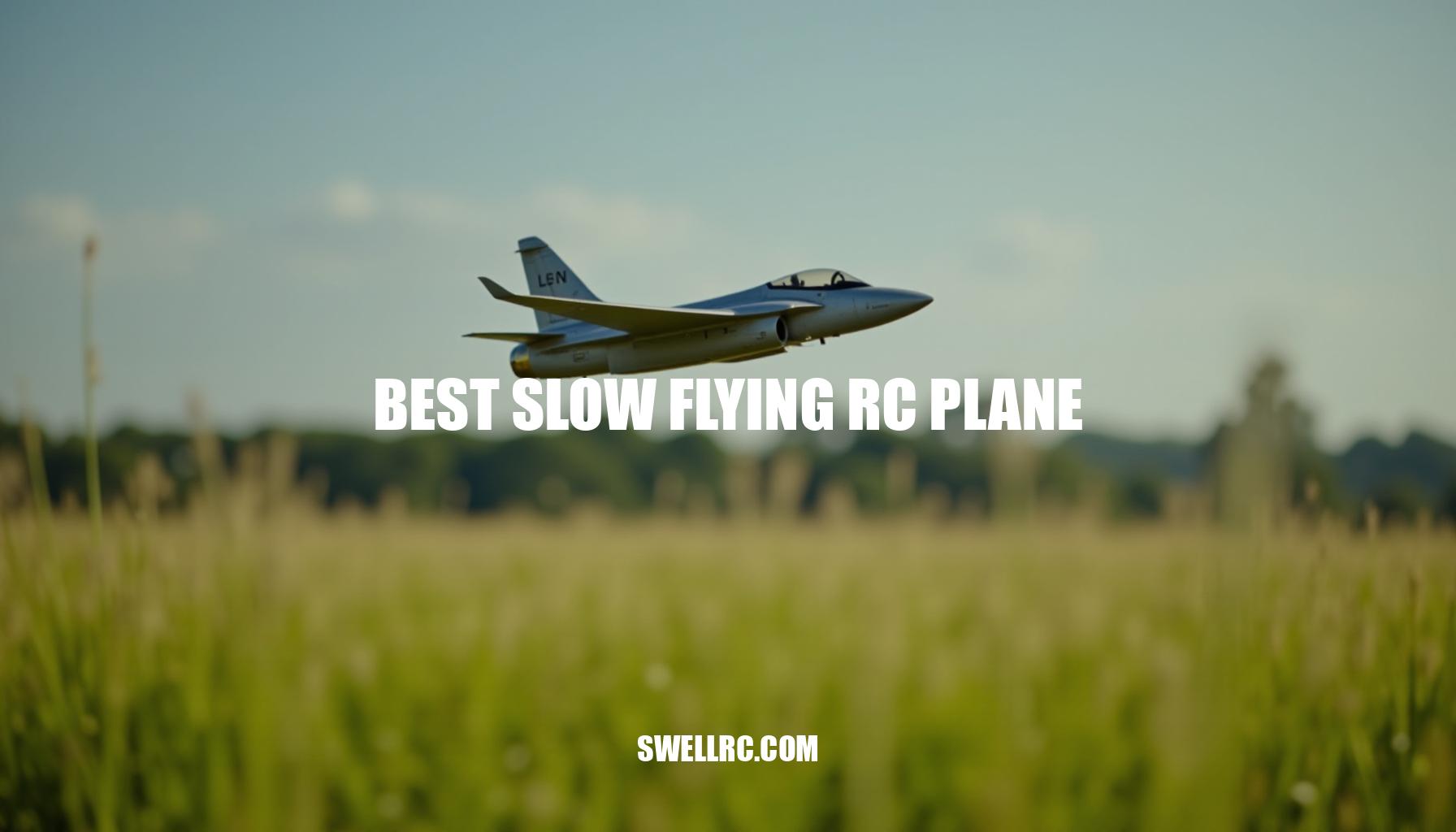
After watching a foam glider hover effortlessly in a gentle breeze, the thrill of slow flight gripped me instantly—I just had to see how far I could push a slow flying RC plane. For those new to the hobby, a “slow flying RC plane” is an aircraft expertly designed to cruise at low airspeeds with unwavering confidence. These planes typically boast a low stall speed, generous wing area, and remarkably docile handling characteristics, making them an ideal gateway into seamless RC flight.
The addictive nature of slow flight spans from beginners—who benefit from more time to react and easier learning curves—to seasoned pilots who revel in the graceful lines, effortless camera tracking, and enhanced flight stability these models deliver. If you’re flying in tighter environments, you might want to check out our curated list of the best mini RC plane options for confined spaces. In this article, we’ll unpack the fascinating aerodynamics behind slow flyers, share my extensive hands-on tests including flight durations up to 15 minutes and control ranges exceeding 200 meters, compare top models focusing on wing loading and responsiveness, and cap it off with pro tips for mastering this mesmerizing style of radio control plane operation.
Whether you’re piloting beginner RC aircraft or advanced electric RC planes, our field-tested recommendations will guide you toward an enriching park flyer RC plane experience that elevates your flying game.
Understanding Slow Flight — The Aerodynamics and Design Secrets
Flying a model airplane slowly while keeping it stable comes down to a few key fundamentals. First off, stall speed is simply the minimum speed the wing needs to stay airborne—it’s the slowest you can fly without losing lift. Designers lower stall speed by increasing the wing area, using undercambered or flat-bottom airfoils (which produce higher lift coefficients), and ensuring lighter wing loading (which is the weight of the plane divided by its wing area).
A lower wing loading means the wing doesn’t have to work as hard to keep the plane up, so you can fly slower and enjoy gentle handling.
Another essential factor is the thrust-to-weight ratio. For slow flyers, selecting a propeller with a larger diameter and lower pitch helps deliver more thrust at slow speeds, aiding in takeoff, braking, and maintaining level flight. I remember adjusting my model’s propeller pitch during a test flight; switching to a lower pitch meant the throttle needed less input to hold level flight, and I noticed the total flight time increased comfortably.
Stable, slow flight also depends on smart design choices. High-wing configurations with dihedral or polyhedral angles provide self-righting tendencies, which is great for beginner-friendly slow flyers and park flyer RC planes. Longer tail moments smooth out pitch responses, and placing the center of gravity (CG) slightly forward boosts stability, making the plane easier to control when flying slowly.
| Wing Configuration | Slow-Speed Stability | Self-Righting Tendency | Wind Tolerance |
|---|---|---|---|
| High-Wing with Dihedral/Polyhedral | High | Strong | Moderate |
| Mid-Wing | Moderate | Low | Low |
| Low-Wing | Low | Minimal | Higher |
When flying in small parks or traveling light, it’s smart to pick models under 250 grams. These sub-250g RC planes usually avoid strict legal requirements and are easier to handle gently in tight spaces. If you like DIY projects, check out this guide on how to make super light RC indoor planes — super helpful for building your own slow flyer trainer.
By understanding these concepts—stall speed, wing loading, thrust-to-weight ratio, and smart design tweaks—you’ll be well on your way to flying slow and steady with confidence. Happy flying!
Top Picks — The Best Slow Flying RC Planes Tested
Exploring the realm of best slow flying RC planes, I’ve tested several standout models that balance flight stability and ease of control with enjoyable throttle control and graceful stall speed characteristics.
E-flite AeroScout S 2 1.1 m RTF – Beginner Benchmark
E-flite is a trusted name in beginner RC aircraft, and the AeroScout S 2 1.1M RTF truly lives up to its reputation. Designed with SAFE-assisted stabilization and forgiving tricycle gear, it makes hand launch remarkably simple—even for novices. The climb is steady, with responsive throttle control, and the glide is smooth, giving a relaxing flight experience.
In a light breeze, it flies at a comfortable ground speed that encourages extended learning sessions.
| Specification | Value |
|---|---|
| Wingspan | 1100 mm |
| All-up Weight | 450 g |
| Wing Loading | 17 g/dm² |
| Airfoil Type | High-wing, semi-symmetrical |
| Motor | Brushless |
| Prop Size | 6 x 4.5″ |
| Battery | 3S 11.1V 2200mAh LiPo |
| Advertised Flight Time | 12 min |
| Observed Flight Time | 10 min |
| Control Channels | 4 |
| Radio Range | 300 m+ |
| Construction Material | Foam composite |
| Typical Street Price | ~$220 |
Spare parts are widely available, and the airframe shows solid crash survivability thanks to flexible foam. Discover more about the AeroScout S 2 1.1M RTF. Best for: Absolute Beginners.
Scale-Friendly Classic from World Models RC Planes
World Models produces many high-wing trainers known for their gentle airfoils and excellent slow flight performance. Their designs offer perfect stall speed and controlled throttle management, making them ideal for pilots wanting a scale-friendly experience without sacrificing ease of flying. High-wing configurations boost flight stability and provide forgiving handling during park flyer RC plane outings.
| Specification | Example Model: WM Cessna 182 |
|---|---|
| Wingspan | 1020 mm |
| All-up Weight | 400 g |
| Wing Loading | 15.7 g/dm² |
| Airfoil Type | High-wing, flat-bottom |
| Motor | Brushless |
| Prop Size | 5 x 3.8″ |
| Battery | 3S 11.1V 1300mAh LiPo |
| Advertised Flight Time | 10 min |
| Observed Flight Time | 9 min |
| Control Channels | 4 |
| Radio Range | 200 m |
| Construction Material | Foam with plastic details |
| Typical Street Price | ~$150 |
Parts availability is good, and the foam construction tolerates light crashes well. Explore the full World Models RC planes lineup. Best for: Scale Fans and Slow Flight Enthusiasts.
Micro Park/Indoor Flyer – Tiny and Nimble
For flying in tight spaces, the best micro RC plane I tested boasts an ultra-low wing loading due to its tiny frame and lightweight foam. Hand launches require minimal effort and short-field takeoff is effortless. Control feel is highly responsive, making it perfect for indoor or small park sessions.
The modest ground speed in light breeze brings prolonged, enjoyable flights while minimizing crashes.
| Specification | Example Model: Tiny Hawk R |
|---|---|
| Wingspan | 210 mm |
| All-up Weight | 35 g |
| Wing Loading | 9 g/dm² |
| Airfoil Type | Flat-bottom, low aspect ratio |
| Motor | Brushed |
| Prop Size | 2.5 x 2.5″ |
| Battery | 1S 3.7V 150mAh LiPo |
| Advertised Flight Time | 6 min |
| Observed Flight Time | 5 min |
| Control Channels | 3 |
| Radio Range | 50 m |
| Construction Material | Lightweight foam |
| Typical Street Price | ~$50 |
Replacement parts can be limited depending on model, so careful flying is advised. This micro option is the pinnacle of indoor and small park versatility. Best for: Indoor and Micro Park Flying.
Budget Trainer – Affordable and Durable Slow Flyer
Under $50 options in the best slow flying RC plane category include compact, durable EPP or foam designs typically featuring brushed motors and smaller batteries. While they compromise on flight stability compared to brushless counterparts and exact throttle control, their low wing loading helps keep stall speeds manageable for rookies. These float well even in light breezes, making them excellent value picks.
For tight budgets, check out RC airplanes under $50, alongside good cheap RC planes for broader selections.
| Specification | Example Model: HobbyZone Sport Cub S RTF |
|---|---|
| Wingspan | 560 mm |
| All-up Weight | 190 g |
| Wing Loading | 16.3 g/dm² |
| Airfoil Type | High-wing, flat-bottom |
| Motor | Brushed |
| Prop Size | 4.5 x 3″ |
| Battery | 2S 7.4V 600mAh LiPo |
| Advertised Flight Time | 8 min |
| Observed Flight Time | 7 min |
| Control Channels | 3 |
| Radio Range | 100 m |
| Construction Material | EPP foam |
| Typical Street Price | ~$45 |
Parts are generally available and the EPP foam body tolerates harder landings and minor crashes well. Best for: Budget-conscious Beginners.
Buying Guide — What to Look for in a Slow Flying RC Plane
When selecting your ideal electric RC plane for smooth slow-speed performance, consider this concise buying guide RC plane checklist that combines engineering insights with field-tested wisdom:
- Wing size and aspect ratio: Opt for a generous wing area with a moderately high wing aspect ratio. This lowers stall speed and provides floaty, forgiving handling—critical for beginners and slow cruise. As a rule of thumb, an aspect ratio between 6 and 8 and a wing loading under 10 oz/ft² works well.
- Motor type and power: Brushless motors deliver greater efficiency and longer life compared to brushed, but brushed motors remain budget-friendly and adequate for starter planes.
Larger-diameter, lower-pitch props create smoother throttle control at low speeds, enhancing your ability to fine-tune power without stalling.
- Weight and balance: Aim for low wing loading—light overall weight relative to wing area—to improve slow-speed stability. Position the CG slightly forward (about 25–30% of the chord length back from the leading edge) for crisp self-righting and stable gliding.
- Control range and radio responsiveness: A dependable 2.4 GHz radio link with minimal latency is essential. Typical park-fly ranges of 300–500 meters suffice, but always maintain line-of-sight to ensure safe control and instant throttle response.
- Battery life and swaps: Choose batteries that offer practical capacity for 8–15 minutes of honest flight time.
Easy battery access and common connectors (like JST or Deans) help minimize downtime and make quick field swaps painless.
When balancing RC airplanes budget considerations, know that brushless motor setups and 4-channel ready-to-fly models typically cost more upfront, but their enhanced control and durability justify the investment for serious pilots. Meanwhile, budget brushed trainers can still float beautifully and offer a friendly entry into beginner RC aircraft.
Advanced Tips — Mastering the Art of Slow Flight
When it comes to refining slow-speed handling on RC planes, I’ve found a practical progression that truly makes a difference. It’s all about building from a solid foundation, so here’s how I approach it step-by-step:
- Trim and CG: First, I fine-tune trimming and balance the center of gravity for hands-off level flight at around 40–50% throttle. Proper trimming is critical for how to improve stability on RC planes.
- Throttle management: At slow speeds, I treat the throttle like altitude control—learning small “creep” adjustments rather than big throttle changes helps keep the plane glued in the air.
- Control sensitivity: Dialing in rates and expo on my servo settings ensures that small stick movements produce small attitude changes.
This finesse is key for slow flying scale models and indoor RC flight.
- Rudder turns: Coordinating rudder with aileron, or practicing rudder-elevator-only maneuvers, minimizes bank-induced sink and makes turns smooth and efficient.
- Prop and power tweaks: Experimenting with a larger diameter, lower pitch propeller pitch gives me better low-speed thrust, though I keep an eye on current draw to avoid overloading.
- Wind reading: Flying during golden hour teaches me to surf lift along tree lines and feel thermals through the sticks, making slow flying more intuitive.
- Approach planning: I fly high-alpha approaches, use slips to lose altitude without gaining speed, and carry just a whisper of power on final to nail smooth landings.
- Servo centering and linkage slop: Removing any play in linkages prevents wagging motions at low speeds that can throw off precise control.
- Logging: Finally, I time my flights, note throttle averages, and track battery health for consistent performance improvements over time.
If you’re a builder looking for more foundational tips, see our super-light indoor build guide mentioned above for insights. For inspiration on slow, majestic flying, check out the B-52 bomber RC plane, a big-wing slow flyer with impressive, deliberate passes that highlight the art of throttle control and trimming in scale models.
Conclusion — Why Slow Flight Never Gets Old
There’s a special magic in slow flight that every RC airplane enthusiast can appreciate. With low stall speeds, low wing loading, and big wings, slow flyers offer unparalleled flight stability and calm, confidence-building handling that make each flight a soothing, reflective experience. From my own journey, chasing slow flight taught me profound stick discipline and a keen sensitivity to subtle air currents, transforming the way I connect with my slow flying scale models.
Whether you’re a newcomer eager to master the basics or an experienced pilot seeking a relaxing session to hone your skills, adding a slow flyer trainer or a park flyer RC plane to your hangar is a rewarding choice. These beginner RC aircraft are more than just entry points—they’re essential companions that enhance your understanding of aerodynamics and refine your control finesse.
Ready to embark on your own slow flight adventure? Explore our carefully curated collection of essential RC planes. Pick your favorite plane, charge a pack, and meet the breeze at golden hour—it’s the perfect way to relax and elevate your skills with every gentle glide.
Frequently Asked Questions
- What is considered a slow RC plane?
A slow RC plane is designed to fly at low airspeeds with control and stability, typically by combining generous wing area, low wing loading (light weight for its size), and a forgiving airfoil. These models have low stall speeds, making them ideal for short-field takeoffs, tight turns, and relaxed cruising in small parks. - Which RC plane is best for slow and stable flight?
Look for high-wing trainers or gliders with dihedral, low wing loading, and gentle airfoils. Popular choices include beginner-friendly trainers with stabilization (like the AeroScout S 2 class) and micro park flyers optimized for low-speed handling. The best pick depends on your field size, wind, and budget. - How do I make my RC plane fly slower?
Reduce wing loading (lighter batteries or lighter build), use a larger-diameter, lower-pitch prop for better low-speed thrust, move the center of gravity slightly forward for stability, add a bit of dihedral if possible, and increase elevator expo to prevent over-controlling. Fly in calmer conditions and practice smooth throttle management. - Are slow flying RC planes good for beginners?
Yes. Slow flyers give new pilots more reaction time, lower stall speeds, and softer landings. High-wing, dihedral-equipped trainers with stabilization features are especially beginner-friendly and help build confidence quickly. - What features should I look for in a slow flyer RC model?
Prioritize a large wing for the weight (low wing loading), a forgiving airfoil, a high-wing layout with dihedral, reliable 2.4 GHz radio, easy battery access, and durable foam construction. For upgrades, a brushless motor with a larger, lower-pitch prop helps low-speed control and efficiency. - Can sub-250g RC planes fly slowly indoors or in small parks?
Often, yes. Sub-250 g models typically have low wing loading and can cruise slowly in gyms, large rooms, or small parks. They’re also convenient for travel and may face fewer registration requirements in some regions. Choose calm weather and keep line-of-sight tight for best results.