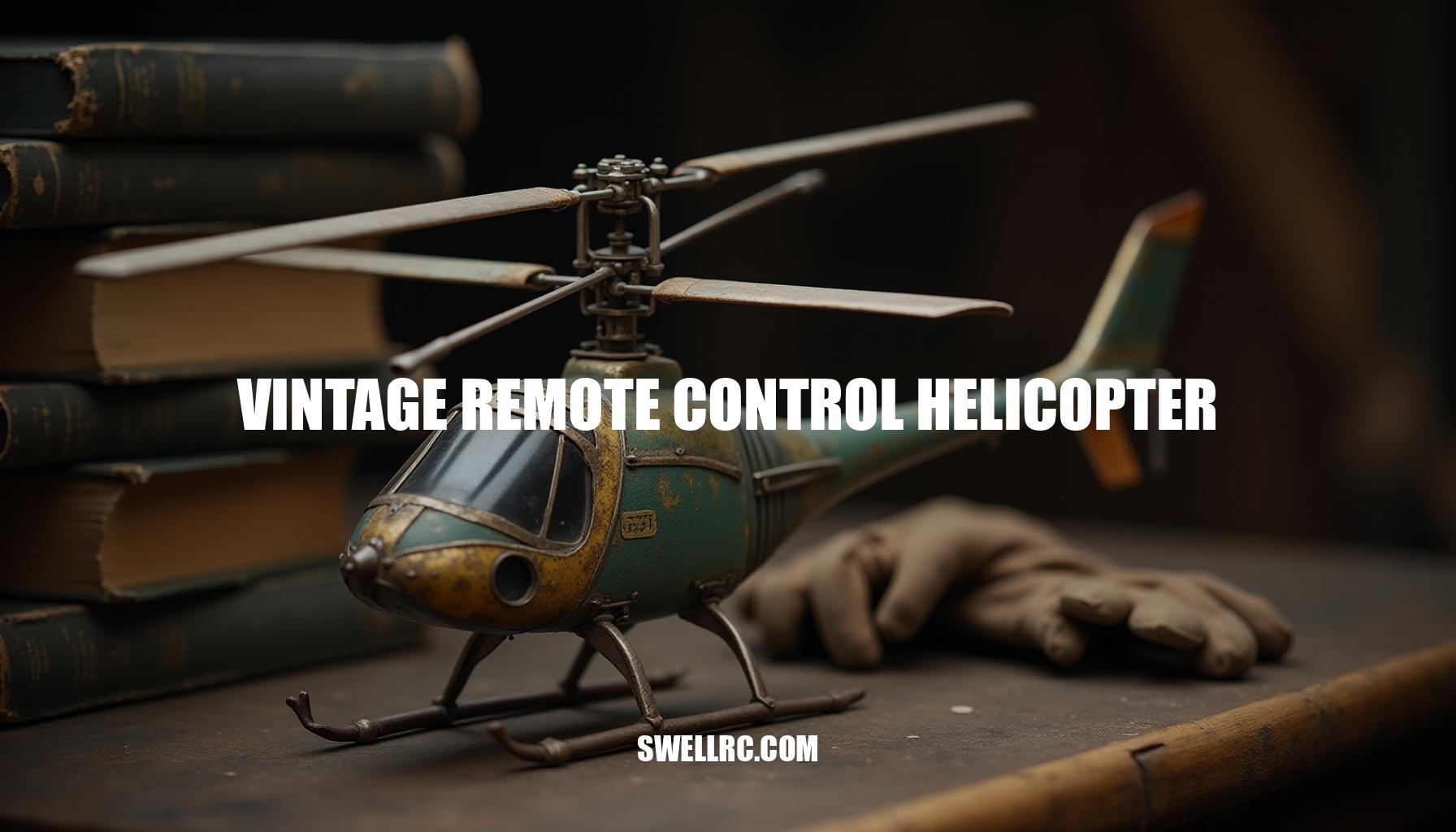
The Allure of Vintage Remote Control Helicopters: A Collector’s Guide

The first time I spooled up an old two-channel heli in my garage, the squeal of the brushed motor and the thrum of those wide wooden blades transported me straight back to the early days of radio-controlled aircraft. What truly makes a helicopter feel “vintage”? For most enthusiasts of vintage RC helicopters, we’re talking about pre-2000s designs—or any early hobbyist-era models that embody the analog-era charm, simple mechanics, and tactile control that defined this era of remote control aviation.
These classic model helicopters represent cultural milestones in the helicopter hobby collecting world: they taught a generation how to trim, tinker, and fly by feel, long before the introduction of auto-leveling and GPS technology. The early hobbyist era emphasized hands-on learning and craftsmanship, creating an intimate connection between pilot and machine. Iconic silhouettes such as the bubble-canopy RC Bell 47 and the battlefield workhorse UH-1 RC Helicopter continue to ignite passion among collectors and pilots alike.
In this guide, I’ll delve into the rich model helicopters history, explore significant technological leaps, and share insights from the collector’s mindset—revealing which models are truly worth chasing and how to keep these timeless machines airworthy for years to come.
Evolution Timeline: From Analog to Proportional Control
In the early days of RC helicopters, pilots grappled with early transmitters characterized by bulky designs, limited channels, and analog control systems with fixed steps. This setup meant control wasn’t truly proportional, making finesse difficult to achieve. Moving into the 1980s, the evolution of proportional control and miniaturization of receivers brought smoother cyclic inputs and more predictable throttle responses.
The 1990s saw further advancements, including improved servos, more reliable NiMH battery packs, and the introduction of gyro aids that helped counteract tail drift.
These technological strides paralleled the broader radio frequency evolution that enhanced communication reliability in the hobby. Throughout these decades, the helicopter hobby collecting community thrived, embracing a repair-and-fly culture born from constant hands-on learning and innovation. This foundation established the vibrant vintage collecting scene cherished by enthusiasts today.
- 1970s: Bulky early transmitters with limited channels and fixed-step analog control
- 1980s: Maturation of proportional control and smaller receivers for smoother handling
- 1990s: Enhanced servos, NiMH packs, and gyro aids reducing tail drift
- Community Impact: Development of a hands-on, repair-driven culture
Breakthroughs in Motors and Stabilization
Advancements in motors and stabilization technology have revolutionized the world of electric RC helicopters. We’ve transitioned from traditional brushed vs brushless motors—moving away from less efficient brushed cans to powerful and efficient brushless outrunners that deliver superior performance and reliability. Alongside this, the evolution from simple rate gyros to sophisticated gyro stabilization systems employing MEMS sensors has transformed flight control, offering precise multi-axis stabilization that enhances maneuverability and flight confidence.
This technological shift has breathed new life into accessible models such as the Double Horse 9101, a popular beginner-friendly bird, and the compact trainer Esky 150 V3. Both benefit immensely from modern innovations including the integration of LiPo batteries, which provide lighter weight, higher energy density, and longer flight times—qualities once reserved for premium kits but now standard even in budget models.
Further illustrating this progression, cutting-edge collective pitch helicopters like the Wltoys V950 demonstrate remarkable advancements. These platforms offer:
- Crisp punch-outs that deliver swift, responsive throttle control
- Locked-in tails thanks to advanced gyro stabilization ensuring precise yaw control
- Aerobatic confidence enabling pilots to perform complex maneuvers with ease
Such features underscore how far the hobby has advanced, empowering enthusiasts from novices to experts with increasingly capable and accessible electric RC helicopter options.
Then vs. Now: Quick Spec Snapshot
When comparing electric RC helicopters then vs. now, several key differences stand out that influence performance and user experience both on the bench and at the field. Signal reliability has evolved drastically from the older 27/72 MHz frequencies prone to interference, to modern 2.4 GHz spread spectrum systems that offer superior signal range and stability.
Battery technology has also been transformed, shifting from NiCd and NiMH chemistries—which suffered from the dreaded memory effect and limited battery life—to high-discharge LiPo batteries that provide longer flight times and more consistent power output.
| Aspect | Then | Now |
|---|---|---|
| Signal Reliability | 27/72 MHz with interference issues | 2.4 GHz spread spectrum with enhanced signal range |
| Battery Chemistry | NiCd/NiMH with memory effect limiting battery life | High-discharge LiPo batteries for improved endurance |
| Rotor Systems | Simple fixed pitch/coaxial rotor design | Advanced collective pitch with governor control |
| Stabilization | Basic tail rate gyro | 3-axis/6-axis gyro suites for enhanced control |
| Maintenance Cadence | Frequent tuning and adjustments required | Set-and-fly repeatability with minimal upkeep |
These advancements in rotor systems and stabilization technology have allowed pilots to enjoy a smoother flying experience, reducing the time spent on maintenance and increasing the time in the air. While older models relied heavily on coaxial rotor design simplicity for stability, today’s collective pitch models equipped with sophisticated gyro suites offer responsiveness and control that elevate the hobby to new heights.
Iconic Vintage Models Every Collector Should Know
Certain airframes defined the hobby’s golden age for me: big, purposeful fuselages, gearbox whine, and that unmistakable rotor wash. These iconic models stand as some of the finest scale RC models that capture the essence of remote control aviation. Below, I highlight standouts I still reach for when I want to feel connected to the rich model helicopters history that shapes today’s helicopter hobby collecting experience.
| Model Name | Notable Features | Era |
|---|---|---|
| Bell 47 | Classic bubble canopy, reliable gearbox whine | 1960s |
| Hughes 500 | Streamlined fuselage, smooth rotor wash | 1970s |
| Sud-Ouest SO 1221 Djinn | Unique tip-jet rotor system, scale detail | 1980s |
- These models emphasize the art of accurate scale replication, vital to scale RC models enthusiasts.
- Each selection pays homage to the progressive milestones in model helicopters history.
- Engaging with these helicopters enriches one’s passion for helicopter hobby collecting and remote control aviation.
Boeing CH-47 Chinook RC Helicopter
The twin-rotor silhouette of the Boeing CH-47 Chinook RC Helicopter is pure aviation art and a standout among scale RC models. Featuring a coaxial and tandem rotor design, it creates a distinctive layered hum on throttle-up, with front and rear discs communicating seamlessly. Well-built Chinook-style models, such as this one, offer impressive stability during hovers and execute scale turns with remarkable finesse, making them favorites among helicopter hobby collecting enthusiasts.
For those passionate about display models, the Chinook impresses not only in performance but also in aesthetic details. From intricate scale panel lines to fully functional lighting systems, it serves as a captivating centerpiece that elevates any collection. Whether you’re showcasing at home or in competition, this tandem rotor RC helicopter exemplifies the best in realistic design and engaging flight characteristics.
| Feature | Description |
|---|---|
| Rotor System | Coaxial and tandem rotor design providing stable flight and authentic sound |
| Scale Detailing | Detailed panel lines and accurate paint scheme for true-to-life appearance |
| Lighting | Functional lighting enhancing display value and realism |
| Flight Performance | Stable hovering and smooth, scale-accurate maneuvers |
- Ideal for helicopter hobby collecting and display enthusiasts
- Replicates the iconic Boeing CH-47 Chinook with precision
- Offers an immersive auditory and visual flying experience
CH-53 Remote Control Helicopter
The CH-53-inspired giants carry an imposing stance and produce a deep, throaty gear sound that can be picked out from across the field. These scale RC models reward smooth inputs—roll into wide patterns, then gently add a touch of collective for a majestic climb that captivates any remote control aviation enthusiast. The CH-53 Remote Control Helicopter is truly a dream come true for those who crave rugged, military lines and a commanding rotor disc in their collection of military helicopter replicas.
Whether you’re flying a casual session or showcasing at an event, its detailed features and realistic performance make it stand out among other scale models.
Exceed Remote Control Helicopter
Exceed birds took many of us from tentative hovering to confident circuits. Their parts availability and modular frames made repairs approachable—exactly what a vintage-minded tinkerer wants. The Exceed Remote Control Helicopter line remains a solid gateway into collecting and flying without fear of grounding the fleet for weeks.
For enthusiasts exploring electric RC helicopters, these models offer a reliable and user-friendly experience. Furthermore, as some of the best beginner RC helicopters, they provide an ideal starting point for new pilots. Whether your passion lies in flying or in helicopter hobby collecting, the Exceed range combines ease of use with repairability, making it a favorite among RC hobbyists.
Gas-Powered Remote Control Helicopter
Gas-powered RC helicopters and nitro RC models offer a visceral soundtrack that electric helicopters simply can’t match. From the distinct exhaust note to the clutch bite and rotor slap, these machines provide an immersive flying experience. When you pull into a fast climb, the engine’s growl syncs perfectly with the blade beat, creating goosebumps for any enthusiast.
Choosing a Gas-Powered Remote Control Helicopter is ideal for flyers seeking long flight time combined with the ability to perform restoration and maintenance easily out in the field.
The unmistakable smell of fuel and the mechanical engagement give a nostalgic feel that many pilots cherish.
- Extended flight duration thanks to fuel efficiency
- Authentic engine sounds enhancing realism
- Hands-on restoration and maintenance opportunities
- Robust performance suitable for advanced maneuvers
Collectibility & Restoring Vintage RC Helicopters
What makes an RC helicopter collectible often comes down to condition. Airframes with straight booms, unwarped blades, and clean wiring fetch more in the market. Besides pristine condition, helicopter hobby collecting enthusiasts value rarity and the presence of original parts such as the canopy, landing skids, gearbox, and period-correct radio gear.
Brand reputation also plays a crucial role, especially when combined with documented history—things like original manuals, receipts, and old club photos can add surprising restoration value to these miniatures.
When evaluating model helicopters, understanding their model helicopters history is essential. Provenance is assessed first to establish authenticity and originality. Only then is a sympathetic restoration planned to respect the model’s era, ensuring that collector value is preserved or enhanced.
| Key Factors in Collecting RC Helicopters | Details |
|---|---|
| Condition | Straight booms, unwarped blades, clean wiring |
| Original Parts | Canopy, landing skids, gearbox, period-correct radio gear |
| Provenance | Manuals, receipts, old club photos |
| Brand & History | Brand reputation and documented model helicopters history |
| Restoration Approach | Planning a sympathetic restoration that respects the model’s era |
Restoration Steps and Tools: A Practical Checklist
When undertaking the best restoration tips for old RC helicopters, I adhere to a detailed numbered checklist before the first spin-up to ensure optimal performance and longevity. This process starts with:
- Inspecting the frame and bearings closely and replacing any rusted hardware.
- Cleaning and re-lubricating the drivetrain while de-gunking brushed motors or verifying the KV rating and bearings on brushless setups.
- Rebuilding or performing precise rotor balancing on both the main and tail rotors to guarantee smooth flight.
- Testing all servos and linkages for any slop, followed by re-centering and applying necessary subtrim adjustments.
- Re-capping or replacing worn receivers and ESCs, alongside rewiring brittle insulation.
- Refreshing the canopy and skids by carefully color-matching paint for period accuracy.
- Executing a thorough range-check and conservatively setting the gyro gain for gyro stabilization.
For modern helicopter RC remote control technologies, including TX/RX pairing and failsafe settings, I frequently consult reliable sources like SwellRC’s helicopter RC remote control guide to stay current. Essential maintenance tools I keep on the bench include a rotor balancer, pitch gauge, thread locker, silicone fuel tubing, contact cleaner, a variety of heat-shrink tubing, and a stable 12V power supply, all vital in completing a thorough restoration and tune-up.
A Small Triumph: Breathing Life Back Into a Classic
My favorite save was a sun-faded, tail-drifting trainer I found at a swap meet. After meticulous bushing-to-bearing upgrades, careful blade tracking, and a gentle canopy respray, it hovered hands-off in the late afternoon light—a true testament to restoration success. Witnessing the owner’s grin when he saw it fly again beautifully captures the heart of the helicopter hobby collecting experience: a blend of engineering, patience, and shared awe for vintage RC helicopters.
Modern Takes on Vintage Craft: Where Innovation Meets Tradition
I love how today’s modern RC helicopters channel classic aesthetics while sneaking in 21st-century reliability. You’ll see bubble canopies, rivet lines, and military drab paint wrapped around brushless motors, high-C LiPos, and gyro stabilization. The Wltoys V950 (https://www.swellrc.com/wltoys-v950/) is a great example: modern collective pitch agility with styling cues that nod to old-school lines.
Some brands even do stylized reissues—faithful looks with modern internals—so you can enjoy the romance without the wrenching marathon.
- Bubble canopies and rivet lines reflect vintage design.
- Brushless motors provide unmatched power and durability.
- Gyro stabilization ensures precise control and smooth flight.
- Scale RC models capture the charm of classic helicopters.
- Reissues combine nostalgic aesthetics with modern performance.
Classic Style vs. Modern Function
When comparing classic vs modern electric RC helicopters, the differences are striking yet complementary. Classic style features include riveted fuselages, analog dials, cable-style linkages, wood or heavy plastic blades, the fuel aroma, and that unmistakable gearbox whine. On the other hand, modern function brings brushless power, LiPo battery endurance, precise digital servos, advanced flybarless systems, and dependable 2.4 GHz radio links, all ensuring superior performance and reliability.
The perfect blend lies in a scale body housing modern guts—offering nostalgic appeal you can actually fly every weekend.
Below is a comparison that highlights the key aspects that distinguish classic from modern RC helicopters:
| Feature | Classic Style | Modern Function |
|---|---|---|
| Power System | Fuel engines with gearbox whine | Brushless motors with LiPo endurance |
| Control Linkages | Cable-style linkages and analog dials | Precise digital servos and flybarless control systems |
| Blades | Wood or heavy plastic blades | Lightweight composite blades optimized for performance |
| Radio Link | Older frequency bands with interference | Dependable 2.4 GHz links with minimal latency |
This fusion of classic aesthetics with modern electronics and mechanics ensures enthusiasts enjoy not just the look and feel of traditional models but also the high performance and reliability that today’s technology offers in electric RC helicopters.
Conclusion: Why the Vintage RC Helicopter Hobby Continues to Soar
Vintage RC helicopters keep us grounded in the craft—measured inputs, mechanical empathy, and the joy of making imperfect machines fly beautifully. This is the essence of remote control aviation, where skill and passion intertwine to create unforgettable moments. Innovation hasn’t erased that magic; instead, it has preserved it, allowing enthusiasts to fly more often and share the experience with newcomers eager to explore the helicopter hobby collecting world.
Understanding the model helicopters history enriches our appreciation for these timeless machines.
Each restored classic represents decades of design evolution and the dedication of countless hobbyists. Every time I lift a restored classic into a steady hover, I’m reminded why I started: the sound, the presence, the tiny dance between pilot and machine.
If your heart sped up reading this, you’re among friends. Here’s why many choose to embrace this passion:
- Why collect vintage RC helicopters? To connect with the roots of the hobby and preserve its legacy.
- To enjoy a hands-on experience that modern technology sometimes smooths over.
- To share stories and skills within a passionate community of remote control aviation fans.
Come join the community and let these icons sing again—where history, hobby, and heart come together in every flight.
Frequently Asked Questions
- What defines a vintage remote control helicopter?
Most collectors consider pre-2000s designs—early hobbyist-era helicopters with analog or first-wave proportional radios, simpler mechanics, and minimal onboard stabilization—as “vintage.” - How have RC helicopter designs evolved over the decades?
They moved from bulky analog radios and brushed motors to compact proportional systems, brushless power, LiPo batteries, and multi-axis gyros, transforming hover stability, flight time, and aerobatic capability. - Are vintage RC helicopters still functional today?
Yes—if airframes are sound and electronics are refreshed. With careful restoration (bearings, wiring, blades, and gyro updates), many vintage models fly reliably and safely. - What are the best models to start a vintage RC helicopter collection?
Look for sturdy, well-supported platforms: scale icons like Bell 47 and UH-1 variants, approachable Exceed-style electrics, and tandem-rotor Chinooks. Choose examples with intact canopies and available spares. - How can you maintain or restore old remote control helicopters?
Inspect frames, replace worn bearings, clean drivetrains, balance blades, test servos, update receivers/ESCs, and range-check. Preserve original parts when possible and document changes for provenance. - What’s the difference between vintage and modern RC helicopter performance?
Modern helis offer stronger power-to-weight, longer flight times, precise digital servos, and rock-solid gyros. Vintage models feel more hands-on, with softer response and more frequent tuning. - Where can you find authentic vintage RC helicopters for sale?
Try RC forums, club swap meets, specialty Facebook groups, estate/garage sales, and reputable online marketplaces. Verify authenticity with manuals, photos, and part numbers before buying.