RC Steam Boat Enthusiasts: A Guide to Building, Operating, and Enjoying Model Steam Boats

This article is part of our complete guide to RC boats, which explains the basics and links to every related article.
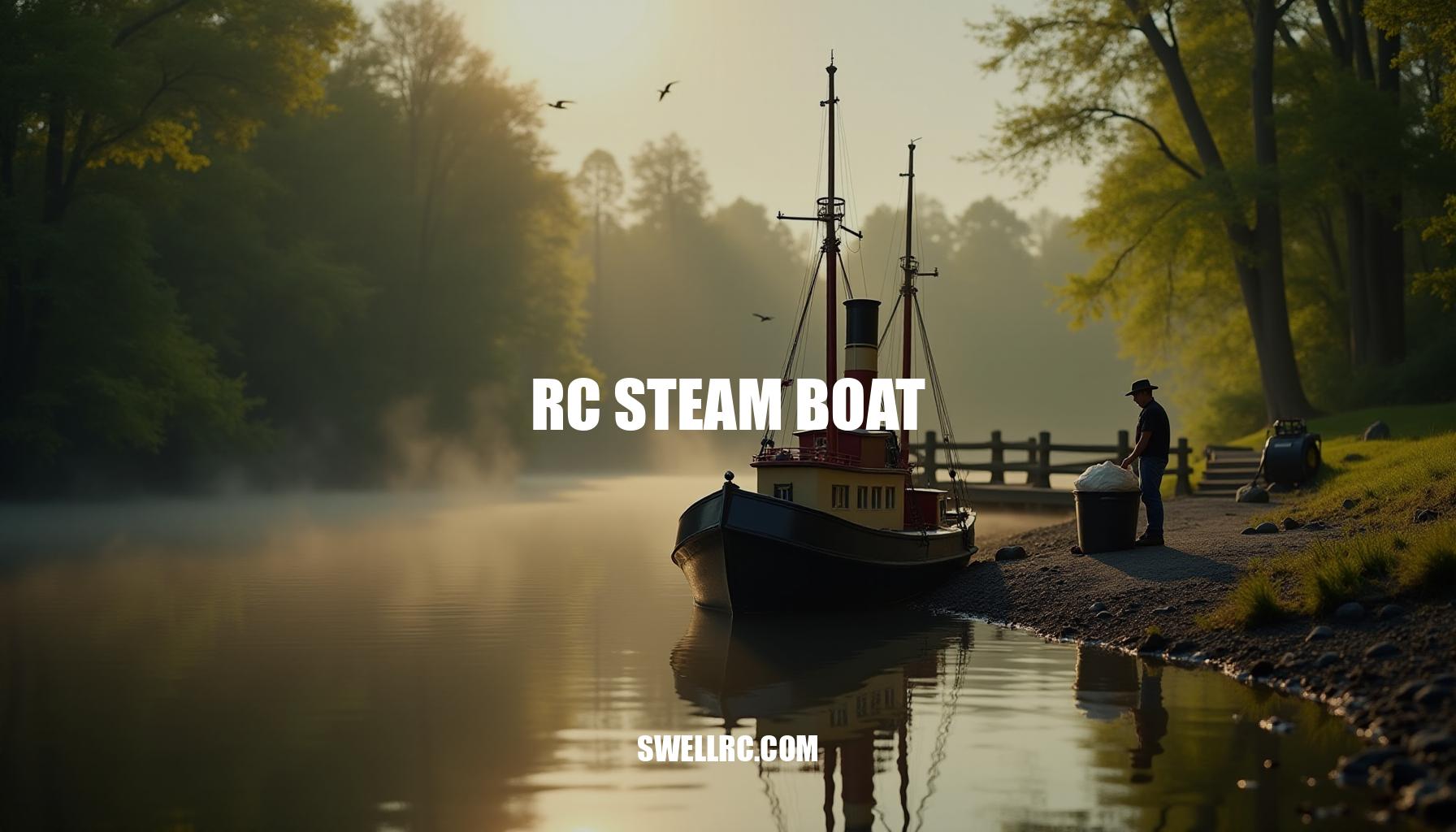
The first time I heard a model boiler hiss and watched a tiny piston begin to dance, I realized RC steam boats aren’t just vehicles—they’re time machines with radios. Unlike most RC boats that sprint ahead powered by brushless motors, steam-powered models breathe, warm up, and come alive like living machines. This theatrical build-up, from the burner lighting to the pressure needle rising, transforms a simple pond run into an event filled with anticipation and craftsmanship.
RC steam boats harness live steam propulsion, combining the charm of model steam engines with the precision of remote control ships, making them a uniquely hands-on hobby. Whether you’re interested in building your own or tuning a realistic replica, the blend of engineering and artistry involved elevates each outing. While if raw speed still calls your name, performance-focused craft like the Blue Streak RC Boat provide an exciting contrast, the slow, steady hiss and dance of steam will always captivate those seeking a deeper connection with their model.
Ready to trade lipos for live steam? Let’s lift the hatch and get technical.
The Heart of the Hobby – How RC Steam Boats Work
Understanding how a steam-powered RC boat works reveals a fascinating blend of heat and mechanical engineering that powers these miniature vessels. At its heart, live steam propulsion transforms heat into motion through a carefully designed system. The process begins in the model boiler, typically made from silver-soldered copper or brass for durability and safety.
The boiler stores and vaporizes water, using a burner fueled by common options such as butane/propane mix, denatured alcohol, or solid fuel. As pressure builds, steam flows into a small engine — often an oscillating or slide-valve type, classic examples of RC boat engine types. This steam pushes pistons connected to a crankshaft, which is carefully aligned to transfer power smoothly to the propeller shaft.
The choice of fuel for model steam engine burners affects performance and complexity. A reliable burner setup includes an adjustable needle valve for fine-tuning and thorough leak checks for safety. Exhaust steam may vent directly or pass through a small condenser—a personal favorite upgrade that reduces noisy exhaust plumes and increases operational runtime without frequent water refills, enhancing the model’s appeal.
Comparatively, steam turbine RC boat designs provide a different thrill, pushing the boundaries of high-RPM exotic propulsion with turbine engines instead of piston setups, although these are less common in traditional live steam models.
| Component | Description |
|---|---|
| Boiler | Stores and vaporizes water; choose certified copper/brass with insulation for model boiler safety. |
| Burner/Fuel | Butane/propane, alcohol, or solid fuel; fit adjustable needle valve and perform thorough leak checks. |
| Engine (piston) | Oscillating or slide-valve types typical among RC boat engine types; lubricated via displacement lubricator. |
| Crankshaft/Shaft | Transfers power from engine to propeller; precise alignment minimizes vibration and wear. |
| Propeller | Typically 2–3 blade brass propellers; pitch and diameter must match hull design and steam torque. |
| Radio system | Controls throttle (steam valve) and rudder; consider failsafe features for safe operation. |
| Safety gear | Includes pressure gauge, safety valve, fire blanket, and extinguisher to ensure operational safety. |
Safety remains paramount when operating with live steam propulsion. Use boilers sourced from reputable makers with certification, stress-test them above operating pressure, and always fit a reliable safety valve. Carrying a small fire extinguisher and maintaining excellent ventilation with flameproof safety practices is non-negotiable to avoid accidents.
Keeping a log of operating pressure and runtime further supports safe and effective operation of your model steam engine.
Craftsmanship and Customization – Building Your Own RC Steam Boat
Building an RC steam boat blends the artistry of woodworking, precision in metal fitting, and the patience needed for meticulous boiler calibration. The process begins by selecting a suitable hull—either from a kit or by scratchbuilding—followed by choosing a perfectly matched boiler and engine set. To optimize balance and performance, mount the steam plant low and centered within the hull, and thoughtfully route clean linkage mechanisms to both the rudder and throttle valve.
These steps are foundational in RC hobby building and customization to achieve superior RC boat performance metrics.
Essential tools and materials include fine razor saws, a pin vise, and if fabricating parts yourself, a silver-soldering torch. Precision measuring instruments like calipers ensure accuracy, while thread sealant and marine epoxy provide leak-proof joints. Heat-resistant gaskets and quality silicone steam tubing are vital for maintaining steam integrity.
For effective waterproofing, coat the interior hull surfaces with epoxy and implement coamings and magnetic hatches. Additionally, adding a raised lip around the boiler bay helps contain any drips, enhancing durability and reliability of the vessel.
Calibration is critical to performance and safety. Set the safety valve according to the manufacturer’s guidelines and verify the pressure gauge against a known reference to ensure precise pressure control. Run-in the engine on blocks before the maiden voyage to smooth operations.
It’s important to log nozzle settings, fuel types, and propeller dimensions to refine your setup iteratively. For example, experimenting with different hull shapes—whether slender or beamy—showed that switching to a slightly smaller propeller with increased pitch improved lift and stability in crosswinds, a practical insight in hull design and propulsion efficiency.
To inform modern performance craft and disciplined setup, inspiration was drawn from designs like the Max Power W-09 RC Boat and the race-oriented Seaducer RC Boats. Even in steam-powered builds, maintaining a clean drivetrain and the correct center of gravity (CG) significantly contribute to enhanced handling and speed.
| Performance Metric | Key Factors | Testing/Notes |
|---|---|---|
| Speed | Hull shape, propeller pitch, steam flow rate | Test with GPS logger for accurate measurement |
| Endurance | Boiler volume, burner efficiency, condenser system | Monitor runtime and fuel consumption |
| Handling | Center of gravity (CG), rudder area, thrust line alignment | Evaluate responsiveness and track in different conditions |
| Reliability | Quality seals, lubrication schedule, heat shielding | Log failures and maintenance needs |
| Maintenance Frequency | Boiler inspections, O-ring replacements, fuel line checks | Plan maintenance calendar for long-term upkeep |
In conclusion, effective RC hobby building of steam boats requires attention to detail in every aspect from hull design and waterproofing to boiler calibration and pressure control. Combined with methodical testing of RC boat performance metrics, these practices yield a dependable, high-performing steam-powered model boat ready for the open waters.
Realistic Replicas and Themed Builds
Steam lends itself perfectly to realistic RC replicas—spanning from elegant paddle steamers and Victorian launches to mighty steel warships. For enthusiasts who cherish history, the imposing silhouette of an RC Battleship Bismarck offers an unforgettable project that combines scale modeling precision with immersive control. If your passion leans towards swashbuckling adventure, a remote control galleon ship with authentic sails, detailed rigging, and ornate features provides a spectacular thematic build, as showcased here.
Creative hobbyists often venture into unique themed builds—even integrating playful platforms like LEGO Technic into RC boats. This innovative crossover allows tailoring of models with customized styling, demonstrated effectively with a Lego Technic RC Boat.
Enhancing immersion through lighting and effects elevates the scale modeling experience. Incorporate functional features such as LED lighting, smoke generators, and sound modules that simulate authentic steam exhaust. For combat-style demonstrations at club events, some RC battleships include safe, regulated firing effects—offering exciting visual appeal while adhering to club rules.
Inspiration and guidelines can be found here.
Balancing performance vs realism is critical. Finely detailed fittings and heavy topside components can adversely affect speed and stability. To maintain optimal handling, place heavier items low within the hull, utilize lightweight resin or 3D-printed parts, and carefully tune steam burners for steady, consistent output during display runs rather than for peak power.
- Explore realistic RC replicas that celebrate historical vessels and creative themes.
- Incorporate engaging lighting and effects to boost authenticity.
- Consider the trade-offs of performance vs realism in your remote control ships.
- Draw inspiration from classic RC battleship and galleon models available online.
- Embrace themed builds for unique customization opportunities.
Performance and Testing – Putting Steam to the Water
Testing RC steam boat performance is a ritual involving a warm-up, pressure check, slow taxi, and then gradual throttle increase. During water trials, I meticulously log ambient temperature, fuel type, boiler pressure at launch, and runtime to the first pressure dip. If waves build, I trim burner flow a touch richer to maintain headway without overheating, an essential aspect of effective temperature management.
When considering the speed vs endurance debate, comparisons are invaluable. For instance, compared to a pure speed machine like the 45 Cigarette RC Boat—built for blistering straight-line runs—a steam launch won’t win drag races. However, it delivers a torque-rich pull, scale wakes, and a mesmerizing sound unique to steam propulsion.
For newcomers focusing on hull handling, budget-friendly electric boats from outlets like RC Boat Harbor Freight provide a low-stakes way to practice before graduating to steam.
Practical tips for enthusiasts include carrying spare fuel canisters, a wind shield for the burner, and a temperature probe for the boiler casing. Use thread-lockers sparingly because heat can weaken some types; opting for high-temp variants is advisable. After each run, wiping surfaces prevents mineral spotting, enhancing both aesthetics and performance longevity.
| Propulsion Type | Startup Time | Runtime | Throttle Response | Noise Level | Maintenance | Key Advantages |
|---|---|---|---|---|---|---|
| Steam | 5–10 min | 10–25 min | Smooth torque | Moderate | High | Fuel efficiency, rich sound, torque-rich pull |
| Electric | Instant | 10–30 min | Sharp | Low | Low | Easy handling, low noise, low maintenance |
| Gas/Nitro | 2–5 min | 15–30 min | Strong top speed | High | Medium | High speed, longer runtime |
Understanding the nuances of steam vs electric vs gas RC boat systems helps enthusiasts weigh trade-offs between speed, endurance, and maintenance needs. Each propulsion type offers unique advantages, and thorough testing, including fuel efficiency and temperature management, shapes informed decisions during RC boat development and enjoyment.
The Community and the Future of RC Steam Boats
Steam modelers tend to be generous tinkerers, passionate members of the RC community who thrive on collaboration and innovation. You’ll discover vibrant clubs and forums at local ponds, maker spaces, and classic model engineering societies, alongside active online forums and video channels documenting builds and boiler tests. Many of these groups prioritize safety and skill development through briefings and workshops covering silver soldering, pressure testing, and burner tuning.
Future trends in sustainability and eco-friendly steam operation are shaping the hobby’s direction, including:
- Cleaner butane mixes and bio-ethanol fuels
- Improved condensers to reduce visible exhaust
- Hybrid propulsion setups blending electric assist with authentic steam plumbing for redundancy
- Increased adoption of CAD-designed engines and 3D-printed patterns for precise casting
- Modular boiler and engine trays designed to fit interchangeable hulls
These innovations in model steam highlight the community’s commitment to evolving the hobby responsibly and creatively. For newcomers, attending a regatta is an invaluable experience—there’s nothing quite like the camaraderie of a dock full of tiny boilers sighing in unison, underscoring the essence of this thriving hobby.
Conclusion – The Last Puff of Steam
RC steam boats possess a timeless appeal that beautifully marries craftsmanship with performance. Engaging with these miniature marvels is more than just pressing a button; it’s about coaxing a tiny power plant to life, turning engineering into a theatrical experience. Enthusiasts find inspiration in both historic replicas and cutting-edge racers, creating a diverse community bound by a shared passion.
- Craftsmanship: Each build is a labor of love, where intricate brass fittings and precise linkages offer tactile rewards.
- Performance: Models like the Blue Streak push the limits of speed, demonstrating innovation in steam technology.
- Innovation: Builders continuously evolve their setups, blending tradition with modern techniques.
- Community: Supportive groups provide a platform to share advice, test boats, and celebrate successes.
- Model Steam Inspiration: Historic recreations, such as those inspired by the Bismarck, deliver unforgettable storytelling moments on the water.
For those drawn to RC steam boats’ allure, starting small and learning safely ensures a fulfilling journey. This hobby uniquely rewards patience with the pleasure of presence: the warmth of brass, the rhythmic ticking of linkages, and the first gentle wake trailing behind the hull. In this world, tradition and innovation coexist seamlessly—one puff at a time.
Frequently Asked Questions
- What makes an RC steam boat different from an electric RC boat?
An RC steam boat uses a real boiler and engine to convert heat into motion, so it has warm-up time, live pressure management, and distinctive exhaust and sound. Electric boats deliver instant throttle, quieter running, lower maintenance, and higher peak speeds, while steam offers mechanical authenticity, smooth torque, and a more hands-on operating experience. - How do you maintain a steam engine in a model boat?
After each run, drain and dry the boiler, oil moving parts with steam oil, check fuel and steam lines for leaks, and wipe mineral residue. Regularly inspect the safety valve and pressure gauge, clean the burner jet, replace O-rings and gaskets as needed, and perform periodic hydrostatic pressure tests per the boiler manufacturer’s guidance. - Are there ready-to-run RC steam boats available?
A few RTR or nearly RTR steam launches exist, but most steam boats are kit-based or custom builds. Many suppliers offer pre-assembled boilers and engines that simplify setup, yet you’ll still handle installation, plumbing, and radio integration. Local clubs can help beginners evaluate reputable kits and pre-tested plants. - How safe are RC steam boats for beginners?
They are safe when built and operated correctly. Use certified boilers, a reliable safety valve, leak-checked fuel systems, and follow manufacturer pressure limits. Operate outdoors with ventilation, keep a fire extinguisher on hand, and never leave a lit burner unattended. Training with a club mentor shortens the learning curve and reduces risks. - Which is more powerful — a gas, electric, or steam RC boat?
For sheer top speed and power-to-weight, modern electric (brushless/LiPo) and gas/nitro setups usually outperform steam. Steam shines in smooth torque delivery and scale realism rather than outright speed. If your goal is racing, choose electric or gas; if you value authenticity and presence, steam is unmatched in character.