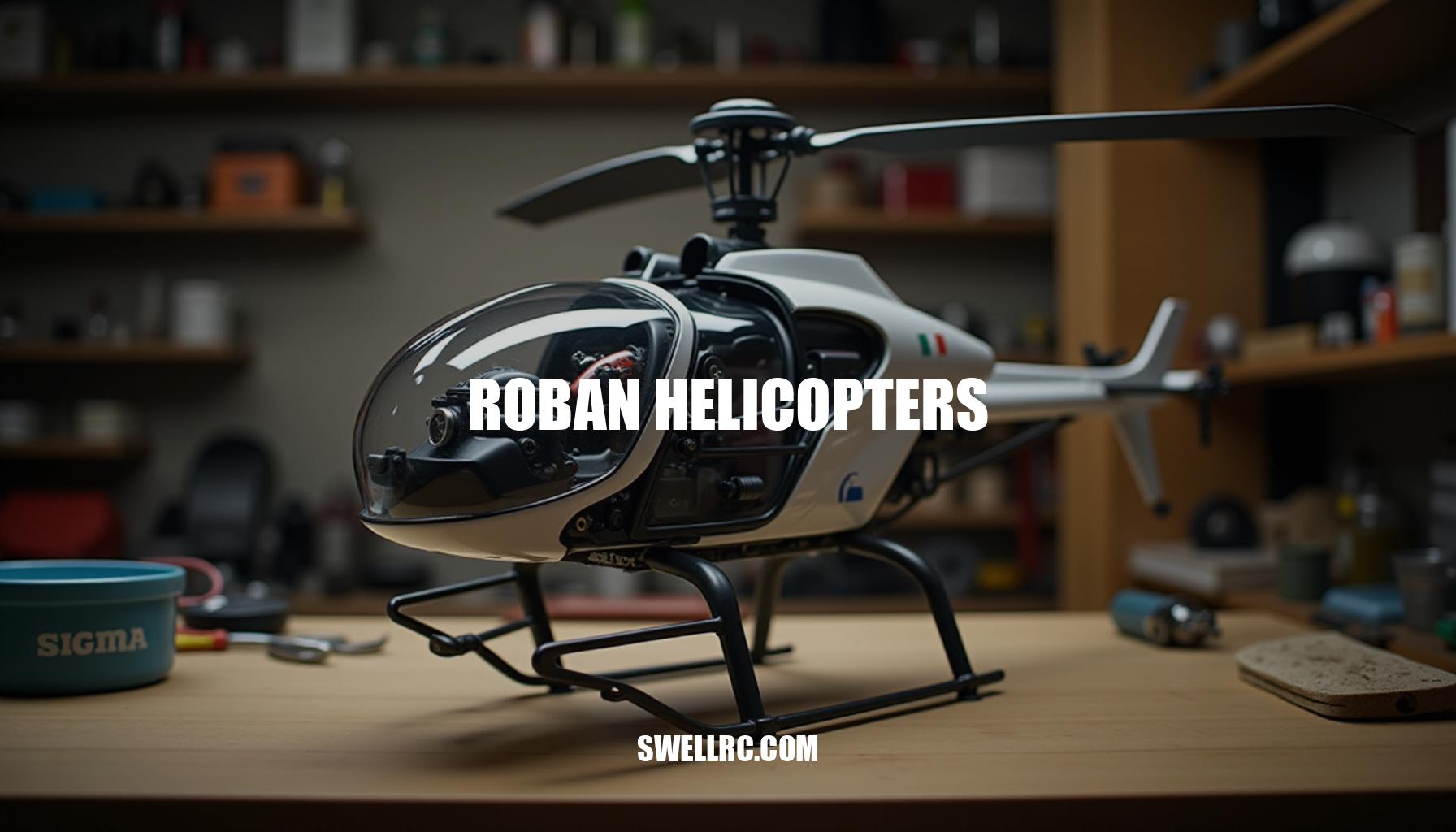
Roban Helicopters: Expertly Crafted Scale RC Aircraft for Immersive Flight Experiences

The first time I watched a Roban Black Hawk spool up at my club, I couldn’t believe how lifelike the rotor mechanics looked. The retracts tucked in with a confident snap, the light kit glowed like a full-scale preflight, and the multi-blade head had that deep, authoritative whoop I usually only hear at air shows. That moment sent me down a weeks-long rabbit hole—balancing rotor blades, studying fuselage layups, and comparing scale mechanics—to see if Roban truly lived up to its reputation for realism and precision.
If you’re new to their lineup, the Roban RC helicopter series at https://www.swellrc.com/roban-rc-heli/ is a great launch point. In this guide, I’ll share what I’ve learned about Roban’s engineering, how these scale RC aircraft fly, how they stack up against other marquee brands, and the setup and maintenance habits that keep them performing like the museum-quality models they resemble. Whether you’re passionate about collective pitch control or just starting to explore model helicopters, the Roban scale models offer unparalleled realism and precision that make them stand out in the world of RC helicopters.
Engineering Excellence — What Makes Roban Helicopters Unique
Roban’s secret sauce begins with Roban engineering that centers on their superior fiberglass fuselage and innovative scale systems. These fuselages are notably thick, rigid, and cleanly finished, with panel lines, rivets, and door seams molded rather than simply painted, enhancing authenticity. Internally, the design includes well-thought-out mounting points, stiff frames, and organized wiring and lighting provisions, showcasing meticulous attention to detail.
Their advanced multi-blade rotor head system integrates seamlessly with flybarless controllers, maintaining scale aesthetics without compromising flight stability. Roban’s RC helicopter mechanics are engineered for realistic head speeds and deliver smooth torque, making them ideal for pilots who prefer carving graceful patterns over aggressive 3D maneuvers. This balance is particularly notable when compared to complex twin-rotor models such as the Boeing CH-47 Chinook RC Helicopter, where Roban prioritizes fidelity and serviceability.
In comparison to stalwart models like the Vario Robinson R22 RC Helicopter, the philosophical divergence is clear: Vario emphasizes industrial modularity, while Roban leans into immersive, ready-to-admire realism. This philosophy shines across their mini model lineup and features.
| Model | Size | Power Setup | Key Features | Realism Rating |
|---|---|---|---|---|
| EC135 | 700–800 | Electric 12S | Detailed interior, retractable landing gear | 9/10 |
| UH-60 Black Hawk | 800 | Electric 12S (turbine-compatible builds available) | Robust landing gear, multi-blade rotor head | 9/10 |
| Bell 407 | 700 | Electric 6S–12S | Clear canopy highlighting cockpit detail | 8.5/10 |
| CH-47 Chinook | Large scale | Twin-rotor complex system | Lighting and extensive scale details | 9.5/10 |
For enthusiasts focused on the cutting edge of turbine RC helicopter capabilities, models like the Black Hawk provide a robust platform for both electric and turbine-based setups. Overall, Roban’s blend of high-grade fiberglass fuselage engineering, refined rotor head system innovation, and specialized RC helicopter mechanics offer unmatched scale realism that captivates pilots and collectors alike.
Scale Realism Meets Performance — Flight Experience and Tuning
The first lift-off in calm air is addictive: a low head speed hum, blades thumping in that unmistakable scale cadence, and a presence that stops everyone on the flight line. Out of the box, Roban mechanics reward smooth, deliberate inputs that truly embody the essence of scale RC aircraft. Proper flight tuning is essential to unlock the full potential of your model.
If you optimize rotor speed, tune your flybarless unit, and carefully balance blades, the airframe tracks like it’s on rails, delivering unparalleled realism and control. For a next-level immersion, I’ve enjoyed cruising from a pilot’s-eye view; FPV setups like those featured at SwellRC FPV RC Helicopter add an exciting new layer of realism that enhances your flying experience. And if you love big twins, you’ll appreciate the commanding presence of a large twin-rotor model—for inspiration, check out the Large Scale Chinook RC Helicopter, a true icon in scale rotorcraft.
Here are my quick setup tips to master rotor speed optimization, collective pitch control, and other crucial aspects of flight tuning:
- Choose a scale head speed: 1200–1600 RPM on 700–800 size helicopters typically feels just right for authentic scale flight characteristics.
- Set moderate pitch: Approximately ±8 degrees balances smoothness with authoritative collective pitch control.
- Add 20–30% expo on cyclic inputs: Start conservatively on agility settings in the flybarless (FBL) unit to maintain stability.
- Balance blades meticulously: Check dampers and ensure tail belt or torque tube alignment to eliminate vibrations and improve handling.
- Adjust center of gravity slightly forward: This improves hover steadiness and overall control responsiveness.
- Program a gentle throttle curve and soft start: Before first flight, test retractable landing gear and lighting systems to avoid in-flight surprises.
- Log battery pack temperatures and mAh consumed: Use this data to refine your flight timer and optimize head speed settings for endurance and performance.
Comparing Roban to Competitors — Honest Impressions After Testing
When it comes to scale RC aircraft, choosing the right brand depends on what you prioritize—be it visual aesthetics, durability, or cost versus value. Flying them back-to-back reveals distinct strengths across brands, helping clarify which suits your flying style and expectations.
| Brand | Specialty | Realism Level | Price Range | Key Features |
|---|---|---|---|---|
| Roban | Scale fidelity with exquisite aesthetics | Very High | Mid-to-High Premium | Stout fuselages, detailed interiors, multi-blade authenticity |
| SAB Goblin | 3D aerobatics and aggressive power-to-weight | Low | Mid-to-High | Minimalist frames, speed, durability in hard maneuvers |
| Vario | Premium modular platform for custom scale builds | Very High | Premium | Vast customization, ideal for large turbine builds |
| Toy/Novelty (e.g., VAT19 Air Combat RC Helicopter) | Casual fun and play | Low | Budget | Simple design, not focused on scale realism |
This brand comparison highlights how Roban leads in scale authenticity and detail, making it perfect for enthusiasts who value visual aesthetics and realism. SAB Goblin, conversely, emphasizes durability and performance for aggressive aerobatics, offering great cost versus value for thrill-seekers. Vario stands out for those wanting bespoke, high-end scale projects with expansive modular options.
Meanwhile, toy-grade options like the VAT19 Air Combat RC Helicopter cater to beginners or casual flyers prioritizing affordability and fun over fidelity. Understanding these nuances will help you select the ideal scale RC aircraft that matches your flying goals and budget.
Maintenance, Setup & Longevity Tips
My biggest lesson in mastering remote control flight is that small adjustments compound into big results. For example, a quarter-turn on blade grip tension tamed a hover bobble I’d chased for days. When working on helicopter kits, it’s crucial to keep the electronics isolated from vibration and treat the fuselage as a showpiece that remains field-ready practical.
Modern RC helicopter remote control systems—such as the radios and accessories available at SwellRC—pair seamlessly with flybarless units; just take your time with endpoints, throttle calibration, and failsafe setup. For history-rich inspiration and parts ideas, I often look back at iconic models like the RC Bell 47 found at SwellRC’s Bell 47 collection. Proper maintenance routines are essential for reliable flight and longevity.
Here’s the care checklist I follow to keep my helicopters in peak condition, from assembly to ongoing upkeep:
- Before every flight: check all fasteners with paint marks; verify link directions, retracts, and light function.
- After every flight: inspect landing gear, skids, and servo horns; feel bearings for heat or roughness.
- Every 10 flights: re-balance blades and verify head speed; check tail belt or torque tube lash for wear.
- Every 25–50 flights: replace dampers and tail bearings as needed; refresh threadlocker on critical bolts.
- Electronics: ensure ESC cooling and clean airflow; review log data for current spikes to prevent failures.
- Batteries: store at proper voltage, avoid hot packs, and rotate sets to equalize wear and extend life.
Attention to these details, including careful balancing of rotors and methodical assembly, elevates the flight experience and keeps your helicopter kits performing flawlessly season after season.
Choosing the Right Roban Helicopter for You
Your ideal Roban helicopter depends largely on your experience level, the flying site conditions, and how much build complexity excites you. For beginners, especially those familiar with collective-pitch helicopters but new to scale models, the best Roban helicopter for beginners often falls within the 600 600-700-size range with simpler fixed gear. These models offer excellent flight stability and are easier to transport to various flying sites.
| Category | Size & Features | Skill Level | Build Complexity | Use-Case | Cost Considerations |
|---|---|---|---|---|---|
| Training up to Scale | 600 600-700, single-rotor, fixed gear |
Emerging scale pilot | Low | Confidence building, field portability |
Moderate; budget-friendly for beginners |
| Immersive Scale | 700 600-800, retracts, full lighting |
Intermediate | Medium | Showcase flights, events |
Higher; advanced components raise cost |
| Big Presence | 800-size, twin-rotor projects | Advanced | High | Feature model for scale competitions, FPV cameraship |
Significant; cost increases with complexity |
Intermediate pilots looking to level up can explore models with retractable landing gear, advanced lighting, and bigger 12S power systems that add realism and improve flight stability. Advanced experts who thrive on engineering challenges tend to gravitate toward 800-size or twin-rotor projects, which demand greater build complexity but reward with commanding scale presence.
If a tandem rotor presence tops your wish list, consider ideas like the impressive RC Chinook Helicopter, which offers unique flight dynamics and an iconic silhouette.
From my personal “learned the hard way” story: I started with a heavy 800 build long before I dialed in my scale head speeds. The result? I had to re-gear and shed weight extensively to achieve the flight feel and stability I wanted.
This underscored the importance of understanding build complexity and cost considerations early in the process.
Conclusion — Why I Keep Coming Back to Roban
Every time I lift a Roban into a stable hover and watch the sun play across the panel lines, I’m reminded why I fell in love with scale RC aircraft in the first place. Roban engineering stands out with its blend of quality—stout composite fuselages, refined mechanics, and thoughtfully packaged scale details—that delivers an immersive flying experience feeling authentic from the bench to the air.
After weeks of tuning, testing, and comparing, I trust these RC helicopter airframes to make every flight look and sound like the real thing. The world of radio-controlled aviation is endless, and that’s exactly the fun: there’s always a new setup to explore, a better balance to find, and another model to master.
For me, Roban has truly become the benchmark of how immersive and rewarding scale RC aircraft flying can be.
Frequently Asked Questions
- What makes Roban helicopters stand out from other RC helicopters?
Their super-scale execution. Roban emphasizes composite fiberglass fuselages with molded panel lines and rivets, detailed interiors, lighting, retracts, and multi-blade rotor heads. The mechanics are tuned for stable, realistic head speeds, so they look and fly like the full-scale machines they’re modeled after. - Are Roban scale helicopters suitable for beginners?
They’re suitable for pilots who already have basic collective-pitch experience. As a first-ever CP model, they’re not ideal due to build complexity and weight. Start with a simpler trainer, then choose a smaller Roban single-rotor model with fixed gear before moving to larger, retract-equipped builds. - How realistic are Roban helicopter designs?
Very. You’ll find molded surface detail, scale doors, cockpit components, optional pilots, lighting systems, and multi-blade heads. Flown at scale head speeds, they look convincingly full-size both in the air and on the ground. - What’s included in a Roban helicopter kit?
Typically: a fiberglass scale fuselage, mechanics, scale parts (doors, windows, and often interior elements), landing gear or retracts, and a lighting harness. You usually add the electronics—motor, ESC, servos, flybarless controller, batteries, and radio—unless you choose an ARF package that specifies included components. - How do you maintain a Roban helicopter for long-term performance?
Use threadlocker on critical fasteners, balance blades regularly, track vibrations with careful bearing and damper maintenance, keep ESC and motor cooling clear, verify retracts and lights before each flight, and store LiPos at proper voltage. A maintenance log helps catch trends before they become issues. - Which Roban models are best for FPV flying?
Models with spacious, clear canopies and cockpit detail—like EC135 and Bell 407—make camera placement easy and immersive. For cinematic stability, larger 700–800-size airframes and twin-rotor projects are excellent, provided you isolate the camera from vibration and keep head speed in the scale range. - How do Roban helicopters compare to brands like SAB Goblin or Vario?
Roban prioritizes scale realism and display-worthy fuselages; SAB Goblin prioritizes raw 3D performance and durability under aggressive maneuvers; Vario offers premium, highly modular platforms well-suited to custom and turbine projects. Choose based on whether you value scale presence, aerobatic prowess, or bespoke engineering flexibility.