The Ultimate Guide to Remote Control Drift Cars

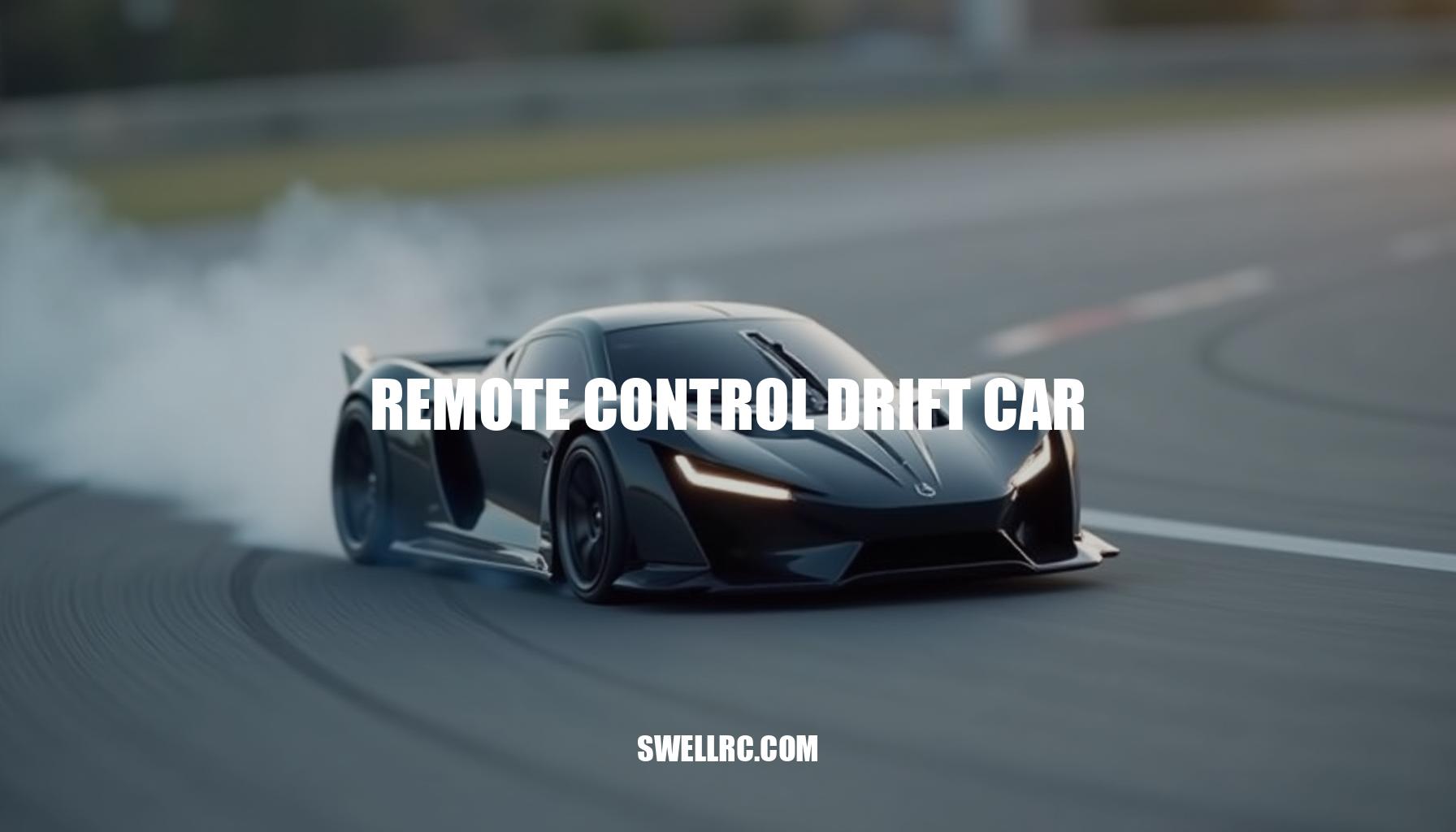
The first time I watched a remote control drift car float sideways through a corner under a halo of tire squeal, I was hooked. Unlike traditional RC cars that chase maximum grip and lap times, RC drift cars celebrate controlled oversteer, throttle balance, and style. From driveway practice sessions to polished track layouts, the thrill is learning to paint lines with the rear end.
The scene now spans everything from palm-sized small RC drift cars to ultra-compact platforms inspired by the 1/76 RC drift car scale, and wild builds like Hoonigan RC drift cars with eye-catching liveries. If you’re exploring the culture of hobby RC racing, check out the outrageous Hoonigan RC drift car vibes and a curated guide to genuinely cheap RC drift cars at Swell RC to find your perfect starting point. Electric RC vehicles bring this thrilling motorsport to life with speed and style, making the world of electric RC cars a playground for drift enthusiasts everywhere.
What Exactly Is a Remote Control Drift Car? (And Why It’s So Addictive)
A remote control drift car is a purpose-tuned RC vehicle engineered specifically for drifting with precision and flair. Unlike standard RC vehicles, RC drift cars use low-grip tires and a carefully balanced weight distribution to achieve and maintain the perfect slip angle as they slide through corners. The secret to mastering this art lies in the delicate harmony of throttle control and counter-steer, allowing the rear end to break traction without spinning out uncontrollably.
- Weight transfer: This dynamic shift plays a crucial role in initiating and sustaining drifts, making each turn feel fluid and controlled.
- Throttle control: Precise modulation of acceleration helps maintain the slide angle and speed.
- Counter-steer: Steering against the turn direction to balance the car and maintain the drift.
The exhilarating combination of physics and skill has propelled hobby RC racing drifting into a thriving niche. It rewards not just speed but also a refined feel, repetitiveness in practice, and the development of personal style—transforming every maneuver into a unique expression of control and creativity.
The Core Components: Chassis, Motors, Tires, and Steering
Under the body shell, the RC drift chassis serves as the foundation for performance. Different chassis layouts, such as motor location and battery placement, play a crucial role in how weight shifts during mid-slide maneuvers. When it comes to power, brushed vs brushless motors present distinct characteristics: brushed motors are simpler and cheaper, while brushless motors offer more power and greater efficiency.
Adjusting the gear ratio and throttle curve directly influences how the car breaks traction and maintains control.
Tire choice is vital, with most enthusiasts opting for hard compounds or dedicated RC tires for drifting that reduce grip and increase predictability on the track. Steering angle and ackermann geometry, combined with a smooth servo and precise radio endpoints, determine how quickly you can flick the car into a counter-steer. Every tweak to these components affects drift angle, transition speed, and throttle response, allowing drivers to fine-tune their RC drift cars for optimal performance.
- RC Drift Chassis: Foundation influencing handling and balance.
- Brushed vs Brushless Motors: Power and efficiency trade-offs.
- Gear Ratio: Controls traction break and acceleration.
- RC Tires for Drifting: Hard compounds for better slide control.
- Steering Angle & Ackermann: Precise steering response and flick control.
- Radio Endpoints: Fine-tuning servo limits for smooth counter-steering.
Drive Layouts Compared: RWD vs AWD
Two common drift drive systems dominate the world of RC drifting: rear-wheel drive RC drift cars and AWD RC drift models. Each offers unique drift characteristics that cater to different skill levels and preferences.
| Drive System | Stability | Angle Potential | Learning Curve | Ideal for | Tuning Focus |
|---|---|---|---|---|---|
| Rear-Wheel Drive (RWD) | Moderate (requires finesse) | High (better style and angle) | Steeper (demands smooth hands) | Experienced drivers seeking authentic drift | Weight transfer, throttle control, suspension setup |
| All-Wheel Drive (AWD) | High (more stability) | Moderate | Gentle (easier entries and corner linking) | Beginners or tighter track environments | Tire grip, suspension tuning for smoother handling |
Rear-wheel drive RC drift cars feel the most authentic, demanding finesse with throttle and weight transfer; they reward smooth hands and a well-tuned setup. Expect RWD to shine in style and angle potential. On the other hand, AWD RC drift setups offer more stability and easier drift entries, making them great for beginners or when navigating tighter tracks.
Choosing between these systems depends on your learning curve and track surface; then, focus on tuning your tires and suspension to perfectly match your RC drift style.
Gyros: The Hidden Hero of Smooth Drifts
A quality RC gyro stabilizer plays a crucial role in enhancing yaw control by making precise steering corrections. This technology helps you maintain a consistent angle without battling constant twitchiness, ensuring smoother driving performance. Unlike devices that drift for you, a gyro stabilizer effectively filters out noise to keep your inputs clean, which is especially beneficial on bumpy or glossy surfaces.
However, optimizing your gyro gain is essential for achieving the right balance. If the gain is set too high, the car can feel robotic and unresponsive; too low, and the system becomes twitchy and hard to manage. Therefore, finding that sweet spot is key to maximizing RC drift stability.
Here are some setup tips to help you fine-tune your RC gyro stabilizer:
- Start with a moderate gain setting and test on a flat surface.
- Gradually adjust gain while observing how the vehicle responds to steering inputs.
- Focus on sensitivity when driving on uneven or slick terrain to avoid jitter.
- Refer to your vehicle’s manual for any specific calibration requirements.
For a comprehensive overview, including detailed gyro options and advanced setup advice, check out this guide to RC car gyros.
Future-Forward Control and Wild Variants
RC drifting rewards experimentation, pushing enthusiasts to innovate beyond traditional setups. Some builders explore innovative RC control platforms and inputs, creating fresh sensations on the track. For instance, anti-gravity RC cars redefine traction and surface interaction, enabling slides that challenge conventional physics.
Alternatively, the hand control remote car shifts how drivers modulate throttle and steering, using intuitive gestures for a more immersive experience.
Whether you prefer the reliability of classic radio systems like the pistol-grip or venture into experimental controls, the ultimate goal remains consistent: translating your intent into fluid, predictable slides. Below is a comparison highlighting key control methods:
| Control Method | Throttle Modulation | Steering Input | Key Features |
|---|---|---|---|
| Classic Pistol-Grip Radio | Trigger-based, incremental | Wheel-based, precise | Widely used, reliable |
| Anti-Gravity RC Systems | Advanced traction control | Surface-adaptive | Redefines surface physics |
| Hand Control Remote Cars | Gesture-based, intuitive | Motion-sensor driven | Enhanced user immersion |
Incorporating such innovative techniques in throttle modulation and steering input can significantly elevate your RC drifting experience. Experimenting with these platforms opens new avenues for mastering fluid slides and customizing your driving style.
How to Control an RC Drift Car Like a Pro
When learning how to drift with an RC car, it’s crucial to start with sane settings to gradually build your skills. Begin by softening the throttle sensitivity to reduce sudden bursts of power, which helps maintain control while drifting. Next, widen the steering expo endpoints gradually, allowing smoother and more predictable steering inputs.
Equally important is achieving the right weight balance, so the rear breaks loose in a controlled manner, enhancing your drifting precision.
Practicing on the best surface for RC drifting is essential. Opt for smooth concrete or polished epoxy, surfaces where the car slides rather than grips firmly, providing the ideal conditions to refine your drifting technique.
Don’t overlook your radio setup: a universal RC car remote control with fine endpoint, expo, and rate adjustments can dramatically improve your consistency and response time. For more details on radio setup, check out this universal RC car remote control guide.
- Soften throttle punch to control speed.
- Gradually widen steering endpoints and expo.
- Balance the car’s weight to break traction predictably.
- Practice on smooth surfaces for optimal sliding.
- Use a radio with fine adjustments for better control.
New to the craft? This primer on how to control an RC car will accelerate your learning curve and help you master drifting fundamentals quickly.
Step-by-Step Practice Drills
To develop a comprehensive practice plan for drifting, incorporating a variety of drift training exercises is essential for building consistency and control. Start with Figure 8s, focusing on smooth transitions and maintaining consistent counter-steer throughout the maneuver. Next, master circle control by holding a steady angle around a cone without altering your radius, which helps improve your ability to maintain a line.
Pendulum flicks are excellent for practicing precise weight transfer timing before entry, a critical skill in any drift setup.
To enhance precision, set up tape markers at strategic clipping points, allowing you to visually measure and repeat your accuracy. Incorporating a speed ladder drill, where you incrementally increase your entry speed while maintaining the same line, challenges your control at higher velocities. Finally, experiment with different surface choices such as switching from cement to polished tile or painted floors after cement mastery, which will refine your throttle touch and adaptability across varying conditions.
Quick Troubleshooting for Common Drift Issues
When encountering common drifting issues, effective drift troubleshooting involves fine-tuning multiple components such as the tire compound, throttle curve, and suspension tuning. For example:
- Car snaps and spins out: Reduce rear grip by opting for harder tires, soften the throttle response through adjusting the throttle curve, and lower the gyro gain slightly to improve stability.
- Can’t initiate slide: Increase rear bias for better traction, use lower-grip tires to make sliding easier, and add a touch of front toe-out in the toe settings to assist in launching the drift.
- Wobbly at angle: Check wheel balance to avoid vibrations, increase gyro gain by a notch to stabilize the car’s yaw, and firm up the front suspension to enhance control.
- Unstable transitions: Utilize a smooth throttle curve to avoid abrupt power changes, add a bit of rear toe-in for better rear-end stability, and reduce steering speed for more controlled inputs.
- Understeer mid-corner: Soften front springs during suspension tuning, increase front tire grip by choosing softer compounds, and raise front ride height slightly to improve front-end responsiveness.
By systematically adjusting these elements, drivers can tackle common issues and enhance overall drift performance.
Choosing the Perfect Remote Control Drift Car
When selecting the best remote control drift cars for beginners, it’s essential to focus on core components that ensure a rewarding experience. Start with a solid RC drift chassis features that offers rigidity and durability. Complement this with reliable electronics that guarantee consistent performance, and select tire options specifically designed for drifting to optimize grip and sliding control.
Incorporating a tunable gyro stabilization system dramatically enhances handling by maintaining stability during drifts.
One critical decision is choosing between AWD vs RWD. Beginners often prefer AWD models due to their enhanced stability, making them forgiving during learning phases. Conversely, style-focused drivers usually gravitate toward RWD setups for more authentic drift characteristics and greater control during slides.
Don’t overlook parts availability and adjustability features such as camber, toe, and ackermann angles, which allow customization to match your driving style and improve performance. Ensuring body compatibility with various aftermarket shells also adds to personalization options.
| Feature | Benefit |
|---|---|
| RC Drift Chassis | Provides a stable foundation for smooth drifting |
| Gyro Stabilization | Improves handling by counteracting oversteer |
| Tire Options | Optimizes grip for drifting control |
| AWD vs RWD | Balances between stability and drift authenticity |
For those interested in exploring extremes of torque and ground clearance, browsing remote control monster trucks is insightful and can enhance understanding across RC categories. Additionally, a well-set-up small RC drift car illustrates how even compact builds can punch above their weight when properly configured.
Price Ranges and What You Get at Each Level
When exploring the world of RC drift cars, understanding the budget guide is crucial to match your investment with your commitment level. For those seeking cheap RC drift cars under $100, options typically include toy-grade or minimal-upgrade kits. These are perfect for testing the waters but come with limited adjustability and tuning potential.
Moving up to the $100–$300 range, you’ll find hobby-grade starters that offer decent radios and swappable tires, providing a nice balance between affordability and customization. These kits excel in tuning potential, making them ideal for beginners eager to improve their skills. For enthusiasts ready to invest more, $300+ kits offer premium rollers equipped with high-end electronics, brushless motors, and extensive tuning options.
Such setups deliver the best long-term value and performance for serious hobbyists.
| Price Range | Type | Features | Ideal For |
|---|---|---|---|
| Under $100 | Toy Grade | Minimal upgrades, limited tuning potential | Testing waters, casual use |
| $100–$300 | Hobby Grade | Decent radios, swappable tires, tunable | Beginners aiming for growth |
| $300+ | Premium Hobby Grade | High-end electronics, brushless motors, deep tuning options | Enthusiasts seeking long-term value |
Remember, the distinction between hobby grade vs toy grade is fundamental when considering tuning potential and overall value. A well-tuned midrange setup can outperform a poorly set high-end kit—so dialing in your RC drift car is everything for maximizing your driving experience.
Maintenance That Keeps the Slide Alive
Regular maintenance is essential to keep your drift car performing at its peak. Begin with thorough motor cleaning and drivetrain tension checks, as dust and hair buildup can add unwanted drag that reduces consistency. Ensure you conduct routine tire checks on your drift tires, watching for flat spots; timely drift tire replacement is key to maintaining smooth control.
Additionally, keep your bearings well-maintained by applying quality bearing lube to reduce friction and wear. Don’t overlook battery care: store batteries at the proper voltage, avoid over-discharging them, and keep all connectors tight to ensure reliable power delivery. When all components are clean, lubricated, and properly tensioned, your car responds with a feeling so cohesive it’s almost telepathic when tackling angles.
Top 5 Upgrades That Actually Improve Drift Control
When aiming to enhance your RC vehicle’s handling, focusing on targeted performance upgrades is essential. Start by selecting better tire compounds that are matched to your driving surface, ensuring optimal grip and control. Next, invest in a programmable ESC tuning setup to shape throttle curves precisely, giving you smoother acceleration and better power delivery.
A strong, fast steering servo is crucial for crisp counter-steer responses, dramatically improving maneuverability. Complement this with a quality RC gyro stabilizer featuring adjustable gain to maintain stability during aggressive driving. Finally, choose a radio system with fine-tunable radio endpoints, expo, and rates, allowing for meticulous control adjustments.
Always upgrade intentionally, making each change serve a clear handling goal to get the best performance from your upgrades.
Make It Yours: Bodies, Lights, and Scale Details
Half the fun of your ride is in the customization. Choose body shells that perfectly match your unique style—whether it’s iconic JDM aesthetics, sleek euro hatches, or powerful muscle legends. Enhance your build with body kits that elevate the look and feel to the next level.
To keep clean lines and easy modularity, add magnet mounts, allowing seamless assembly and disassembly.
Illuminate your night sessions with vibrant LED lighting, turning heads even in low-light conditions.
Don’t forget the finer touches; incorporating authentic scale details such as mirrors, wipers, and exhausts adds realism and depth to your model. This level of personalization transforms every clean link into your unmistakable signature on the road.
- Choose from JDM, euro hatch, or muscle legend body shells
- Install custom body kits for enhanced style
- Use magnet mounts for a clean, modular setup
- Add LED lighting for night-time visibility
- Include scale details like mirrors, wipers, and exhausts
- Express your personalization to make your model truly unique
Conclusion – Why RC Drifting Keeps Growing
RC drifting sits at the unique intersection of technique and art, where every session is a step towards mastery. Engaging with the RC drift community means embracing a journey fueled by curiosity and dedication. Through countless driveway sessions, tarmac experiments, and late-night setup tweaks, I’ve learned that true progression comes from changing one variable at a time, feeling the difference, and repeating the process.
Innovation continues to drive the hobby forward, shrinking scales and expanding possibilities. The emergence of micro RC platforms like the 1/76 RC drift car offers a glimpse into where the craft is heading, blending precision with accessibility. These tiny machines challenge and inspire enthusiasts to refine their skills on a smaller scale without losing the essence of the drift.
For those committed to the long-term hobby, the blend of technique and art transforms simple drifting into a true craft. Dive in, join the community, and chase that perfect, effortless slide that defines the spirit of RC drifting.
- RC drift community: Connect, learn, and grow with fellow enthusiasts.
- Innovation: Experience cutting-edge advancements pushing the limits.
- Micro RC: Explore the compact and exciting world of smaller scale drifting.
- Long-term hobby: Build skills and memories that last a lifetime.
- Progression: Master drifting step-by-step through continuous practice.
- Technique and art: Embrace the blend of precision and creativity.
- 1/76 RC drift car: Discover the future of micro drifting platforms.
Frequently Asked Questions
- How does a remote control drift car work?
It uses low-grip tires, tuned weight balance, and precise steering to maintain a controlled slide. You modulate throttle to set wheel speed versus surface grip and counter-steer to hold angle, often aided by a gyro that smooths steering corrections. - What is the best RC drift car for beginners?
A hobby-grade AWD drift car with a reliable radio, adjustable suspension, and basic gyro support is ideal. AWD is more forgiving while you learn throttle timing, transitions, and counter-steer. - Can you drift any remote control car?
Not well. Most RC cars are built for grip. You can force slides with hard tires and setup changes, but a purpose-built drift chassis with proper geometry, tires, and a gyro delivers far better control and consistency. - What’s the difference between RC drift cars and RC race cars?
Race cars maximize grip and lap times; drift cars prioritize controllable oversteer, style, and precision at angle. That means different tires, geometry, and power delivery, plus tuning for smooth transitions rather than peak cornering grip. - How can I make my RC car drift better?
Match tire compound to your surface, tune throttle curves, adjust suspension (toe, camber, spring rates), set gyro gain correctly, and practice drills like figure 8s and clipping-point runs to build muscle memory. - Are RC drift cars worth buying for casual hobbyists?
Yes. They’re engaging at slow to moderate speeds, fun on modest spaces like driveways or garages, and offer deep customization without needing a large track. Start with a midrange kit and upgrade as your skills grow.