Maximizing Long Range Remote Control Boat Performance

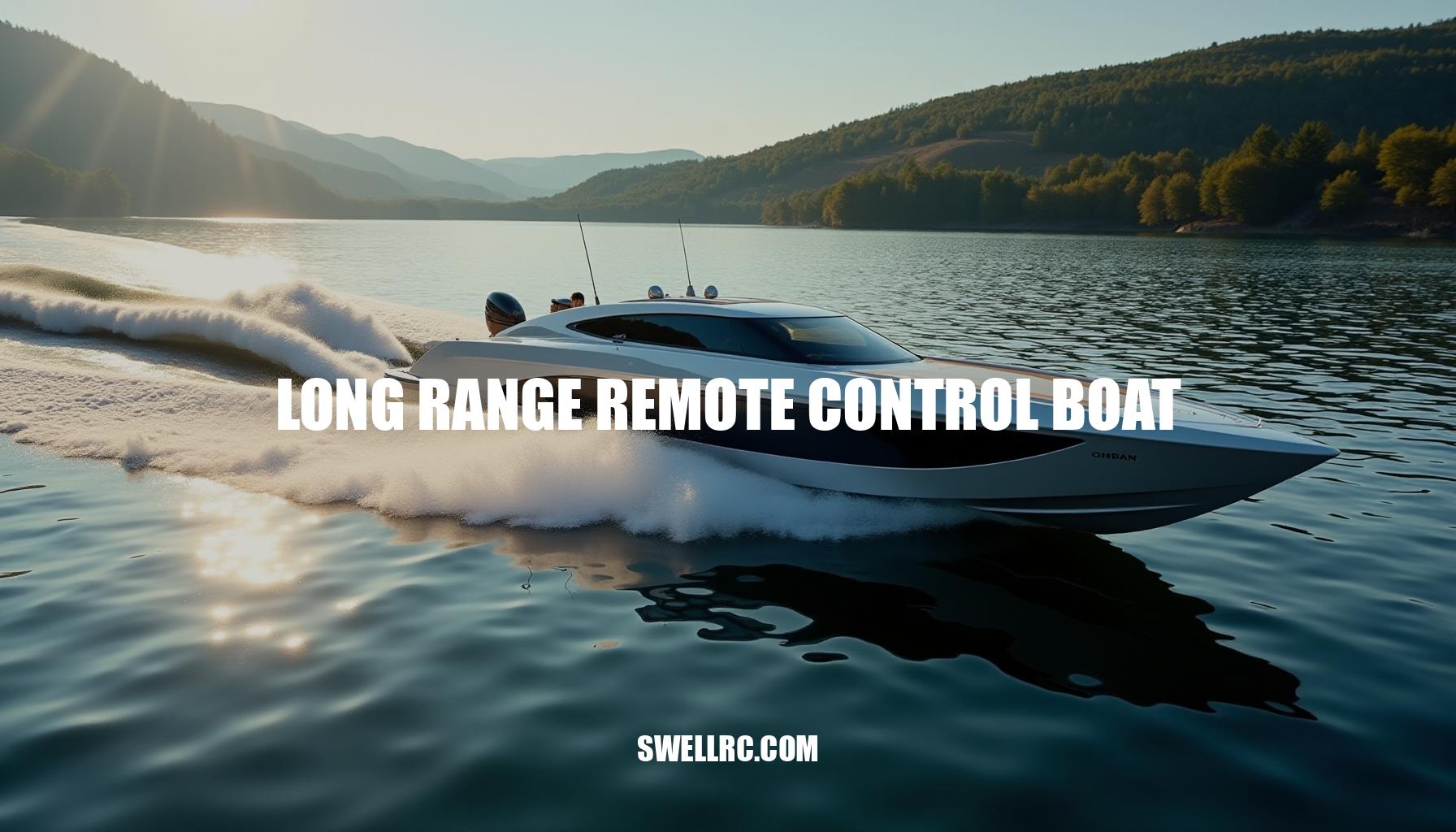
I fell down the long range RC boating rabbit hole the first time I watched a sleek catamaran slice across an empty lake and keep responding far beyond where I expected the signal to hold. I never expected a 2.4GHz transmitter to perform this smoothly over open water! That curiosity turned into weeks of testing—walking shorelines, logging distances, swapping receivers, and learning that the true limitation isn’t raw power—it’s signal consistency and setup discipline.
In this guide, I’ll share what actually matters for distance in the world of RC boats and remote control watercraft: radios, antennas, receivers, batteries, hulls, and how weather and water conspire with (or against) your range.
You’ll see real-world insights, model examples, upgrade paths, and a few hidden gems—so you can pick smarter, rig cleaner, and boat farther with confidence. Whether you’re aiming to maximize your transmitter range with a long range remote control boat or looking to optimize your 2.4GHz remote setup, this deep dive into the radio control hobby will equip you with everything needed to elevate your experience on the water.
Understanding the Technology: How Long Range Remote Control Boats Really Work
Long distance performance in electric RC boats hinges on a chain that’s only as strong as its weakest link: from 2.4GHz remote frequency choice, antenna placement, and long-range signal receiver sensitivity, to the power system’s efficiency and the hull’s design.
Key factors explained simply:
- Frequency bands: Most models use 2.4GHz remote frequencies for low latency and resistance to noise, ideal for line-of-sight communication over water but limited in penetrating obstacles. While 5GHz exists, it’s rare and typically more prone to interference on water. Lower frequencies can deliver farther range but are uncommon in mainstream marine radios.
- Antennas: Keeping transmitter and receiver antennas clear of your body and above the waterline enhances signal integrity. Avoid aiming the transmitter antenna directly at the boat (the “null” area); instead, angle it for optimal pattern coverage. Using diversity receivers with two antennas significantly improves maintaining a clean link during turns.
- Receiver quality: High-sensitivity, telemetry-capable long-range signal receivers combined with robust fail-safes greatly enhance practical control distances.
- Motor and ESC efficiency: Efficient brushless RC motors draw fewer amps at cruising speeds, preserving voltage and preventing brownouts that could disrupt your control signal.
- Batteries and BEC: Healthy LiPo batteries with adequate C-rating keep the receiver and servos stable. A reliable BEC is crucial to avoid power-related reboots during high load.
- Hull construction: A stable, low-drag, waterproof RC hull allows efficient cruising, reducing current draw and heat buildup, which supports predictable control over longer distances.
- Environmental factors: Wind chop, cold temperatures affecting LiPo performance, nearby marina Wi-Fi, and other 2.4GHz interference sources can diminish effective range. Smooth water and clean line-of-sight maximize transmitter range.
For a refined example of a high-performance setup, the Aquacraft UL-1 Superior is a classic benchmark showcasing how efficient hull design, balanced power systems, and precise control maximize speed and range.
| Aspect | Short-range setup | Long-range-oriented setup |
|---|---|---|
| Frequency use | Basic 2.4GHz | 2.4GHz with careful channel selection and minimal interference |
| Transmitter power/quality | Entry-level radio | Mid/high-tier radio with stable RF output |
| Antenna strategy | Single, poorly oriented | Diversity receiver, elevated/angled antennas |
| Receiver sensitivity | Standard | High-sensitivity, telemetry-capable |
| Power system | Brushed/inefficient | Brushless RC motor, efficient prop, reliable BEC |
| Typical range (LOS) | 100–300 m | 500–1000+ m (conditions and legality dependent) |
Choosing the Right Boat: What Sets the Best Long Range Models Apart
When searching for the best long range RC boat for beginners, it’s essential to focus on a balanced combination of radio reliability, hull efficiency, and power endurance. A dependable transmitter range begins with selecting boats compatible with reliable 2.4GHz transmitters and diversity receivers, ensuring stable control over distances. Equally important is having easy access to route and elevate receiver antennas above the waterline to maintain strong signals, especially in marine environments.
Opt for waterproof RC hull designs featuring sealed decks, proper gaskets, and corrosion-resistant hardware to protect sensitive components from water damage.
Efficiency in power is crucial; pairing a sensible prop with a brushless motor keeps amp draw manageable, stabilizing your signal electronics and extending your LiPo battery pack life. Hull stability should match your typical environment: deep-V hulls handle chop effectively, while catamarans excel in speed and tracking, both important for long-range marine RC models. Remember, cruising at 60–75% throttle often doubles your electric RC boat’s usable runtime by optimizing the speed versus range tradeoff.
Maintenance is also a key factor—boats with easy access to electronic speed controllers, receivers, and servos simplify serviceability and parts replacement.
Considering these features, here’s a quick buyer’s checklist to guide your purchase:
- Reliable 2.4GHz radio/receiver with diversity
- Accessible, elevated antenna routing above the waterline
- Brushless motor plus efficient propeller and healthy LiPo battery pack
- Sealed electronics bay and rust-resistant hardware
- Hull shape appropriate for your water conditions (pond, lake, coastal bay)
- Clear line-of-sight launch and recovery plan
For practical examples, consider marine RC models like the Blue Streak RC Boat, which offers a nimble platform ideal for learning antenna routing and battery management without building complexity. The HJ808 RC Boat provides a compact, approachable option great for pond-to-lake transitions and testing true line-of-sight limits, while the Toyabi RC Boat T03 is an excellent entry point for exploring brushless efficiency and extended runtimes.
Pro tip: Larger hulls often track straighter in chop, carry bigger batteries, and allow mounting antenna tubes higher for cleaner reception. Exploring large scale RC boats for sale can reveal how size advantages can enhance your long-range electric RC boat experience.
Boosting Range and Performance: Upgrades, Mods, and Transmitter Tweaks That Actually Work
If your boat already runs well, targeted radio and power upgrades can extend real-world range dramatically, making your long distance RC racing setup much more reliable and enjoyable. Upgrading boat transmitter range involves proven upgrade paths that enhance signal strength and power efficiency. These include:
- Move to a higher-quality transmitter/receiver combo with diversity and solid RF output; you can start by checking out this roundup of the best RC transmitter for boats to find suitable models.
- Install a diversity receiver and route both antennas differently—one vertical, one at 45°—which reduces polarization dropouts and improves transmitter range performance.
- Elevate the receiver and antenna tubes while keeping carbon fiber or metal components away from the antenna tips to minimize interference during antenna tuning.
- Optimize power by right-sizing the propeller to drop current draw by 10–20% at cruise speeds, stabilizing voltage and avoiding brownouts caused by voltage sag in your LiPo battery pack.
- Ensure ESC/BEC reliability with a quality BEC output or an external BEC to provide consistent power to the receiver, crucial for stable long distance RC operation.
For those utilizing brushless RC motors, these power and range optimizations not only improve performance but also extend the effective transmitter range. Here’s a step-by-step test protocol to validate your upgrades:
- Conduct a baseline run at a familiar lake, logging distance with phone GPS or telemetry, throttle percentage, and pack voltage.
- Perform a shoreline “walk-away test” with the boat armed on a stand; carefully observe range and any failsafe triggers.
- Re-route antennas and repeat tests from multiple orientations (transmitter vertical, angled, horizontal) to monitor effects of antenna tuning.
- Swap propellers to reduce current draw while testing voltage stability and dropout frequency.
- Introduce small waves and wind to mimic real conditions, verifying the stability and reliability of your system under stress.
Keep these safety and reliability notes in mind: waterproof seals and cable glands prevent corrosion-driven failures; monitor ESC and motor temperatures after prop changes since high temps cause voltage sag that diminishes transmitter range; and secure rudder and strut alignment with thread locker to improve tracking and conserve battery energy.
When discussing reliability, Seaducer RC Boats (https://www.swellrc.com/seaducer-rc-boats/) are a benchmark for consistent handling and smart setups. Additionally, pairing an RC truck with an RC boat (https://www.swellrc.com/rc-truck-with-rc-boat/) has proven surprisingly handy for scouting shoreline obstacles and shuttling spare packs during long test days, further enhancing your long distance RC racing experience.
Unique Models Worth Exploring: Hidden Gems in Long Range RC Boating
When exploring the world of marine RC models, a few standout options showcase that speed isn’t the only factor that defines a great remote control boat experience. Emphasizing creative hull designs and efficient performance, these models excel in long-distance maneuvers, proving that transmitter range and low power consumption can often trump pure velocity in real water scenarios.
- Remote control galleon ship (Swell RC review): This historically inspired electric RC boat impresses with its wonderful stability at modest speeds. Its smooth glide across choppy water is remarkable, making signal management easier and ensuring consistent transmitter range performance for newer pilots.
- Gizmovine RC Boat T03 (Swell RC overview): Compact yet efficient, this long range remote control boat is beginner-friendly with predictable tracking capabilities. Its design encourages learning important skills like antenna placement and throttle discipline, crucial for mastering electric RC boat operation.
These picks demonstrate that a balance of creative hull designs, stable performance, and thoughtful power management lead to superior experience in long range remote control boat outings, rather than focusing solely on being the fastest on the water.
Real-World Testing Insights: What My Experiments on Open Water Revealed
I conducted extensive range tests for remote control watercraft across three distinct environments: a tree-lined pond, an open lake, and a breezy coastal bay. The open lake offered the cleanest line-of-sight, resulting in consistently the longest transmitter range. In contrast, the pond presented challenges such as signal interference caused by multipath reflections and intermittent fades near trees.
The coastal bay added environmental stressors like wind chop and salt spray, putting waterproofing and antenna stability to the test.
Key observations from these tests include:
- Antenna alignment beats raw power. Simply angling the transmitter antenna and elevating the long-range signal receiver antennas improved control distances by hundreds of meters.
- Voltage sag equals range sag. Battery life plays a crucial role as packs warm and sag under load, sometimes causing receivers to brown out—propeller adjustments help maintain stable electronics.
- Interference is situational. Marinas densely packed with Wi-Fi networks reduced usable range more significantly than isolated lakes.
| Environment | Setup | Expected Range (m) | Actual Range (my tests, m) |
|---|---|---|---|
| Open lake | Stock radio, basic receiver | 300–500 | ~420 before minor fades |
| Open lake | Upgraded tx + diversity rx | 700–1200 | ~900 stable |
| Tree-lined pond | Upgraded tx + diversity rx | 400–800 | ~350–500, fades near trees |
| Coastal bay (windy) | Upgraded tx + diversity rx | 600–1000 | ~600–700, chop-dependent |
After dozens of test passes, it became clear why signal alignment beats merely increasing transmitter power: remote control watercraft experience yaw and roll, and without diversity and elevation, the link can slip into dead zones caused by angle fluctuations and signal interference. These insights help optimize effective transmitter range and improve overall control reliability in real-world conditions.
Conclusion: Why the Long Range RC Boat Hobby Keeps Growing
From the first surprising long-distance pass to meticulous antenna tweaks, the radio control hobby of long range remote control boats truly blends tech, tuning, and adventure. The community continuously innovates—developing better radios, smarter hulls, and safer power systems—and every upgrade session is an opportunity to learn something new.
Key takeaways for maximizing transmitter range and performance in the electric RC boat scene include:
- Range: Achieving clean line-of-sight and well-oriented antennas is more crucial than simply boosting transmitter power, ensuring clear signals over extended distances.
- Setup: Utilizing diversity receivers, mounting antennas at elevated positions, and employing efficient brushless systems help stabilize control and improve responsiveness.
- Modifications: Choosing the right propeller for efficiency, ensuring BEC (Battery Eliminator Circuit) reliability, and aggressively waterproofing components protect your investment and enhance durability.
- Enjoyment: Smooth cruising, respecting environmental conditions, and methodical testing reduce stress, helping you go farther and have more fun with your RC boats.
With a thoughtful setup and a curious mindset, any stretch of water becomes a personal proving ground in the world of long range remote control boats. I’m more excited than ever to see where the next season takes us in this dynamic and rewarding radio control hobby.
Frequently Asked Questions
- How far can a long range remote control boat travel before losing signal?
With a well-tuned 2.4GHz system, clean line-of-sight, and a quality diversity receiver, 500–1000 meters is realistic; some high-end setups can exceed 1 km in ideal conditions. Practical limits are usually visibility, battery endurance, water conditions, and local regulations—so plan conservatively and keep the boat within safe visual range. - What features give RC boats longer range?
A stable 2.4GHz transmitter, a sensitive diversity receiver, properly oriented/elevated antennas, efficient brushless power with a reliable BEC, appropriately sized props, a stable hull, and minimal RF interference. Telemetry helps you manage battery and signal health proactively. - Can I upgrade my RC boat’s transmitter for better distance?
Yes. Upgrading to a higher-quality 2.4GHz radio with a diversity-capable receiver and routing antennas above the waterline often yields the biggest gains. Pair it with an efficient prop and stable BEC. Always stay within legal power limits and maintain visual line-of-sight. - What are the best long-distance RC boats for beginners?
Beginner-friendly long-range platforms are stable deep‑V or catamarans in the 17–30 inch range with self-righting or easy recovery, brushless motors, accessible electronics bays, and room for clean antenna routing. Prioritize predictable handling and runtime over outright top speed. - How does boat size affect remote control range?
Larger boats typically allow higher antenna placement, carry bigger batteries for steadier voltage, and track straighter in chop—all of which improve practical range. The tradeoff is more drag and weight, so prop and power choices must emphasize efficiency. - Are there waterproof transmitters for long distance RC boating?
Most transmitters are not fully waterproof. Many are splash-resistant, but you’ll want a rain cover or dry bag, a lanyard, and to keep the antenna unobstructed. Avoid sealing the radio in anything that blocks RF; use purpose-made covers that leave the antenna exposed.