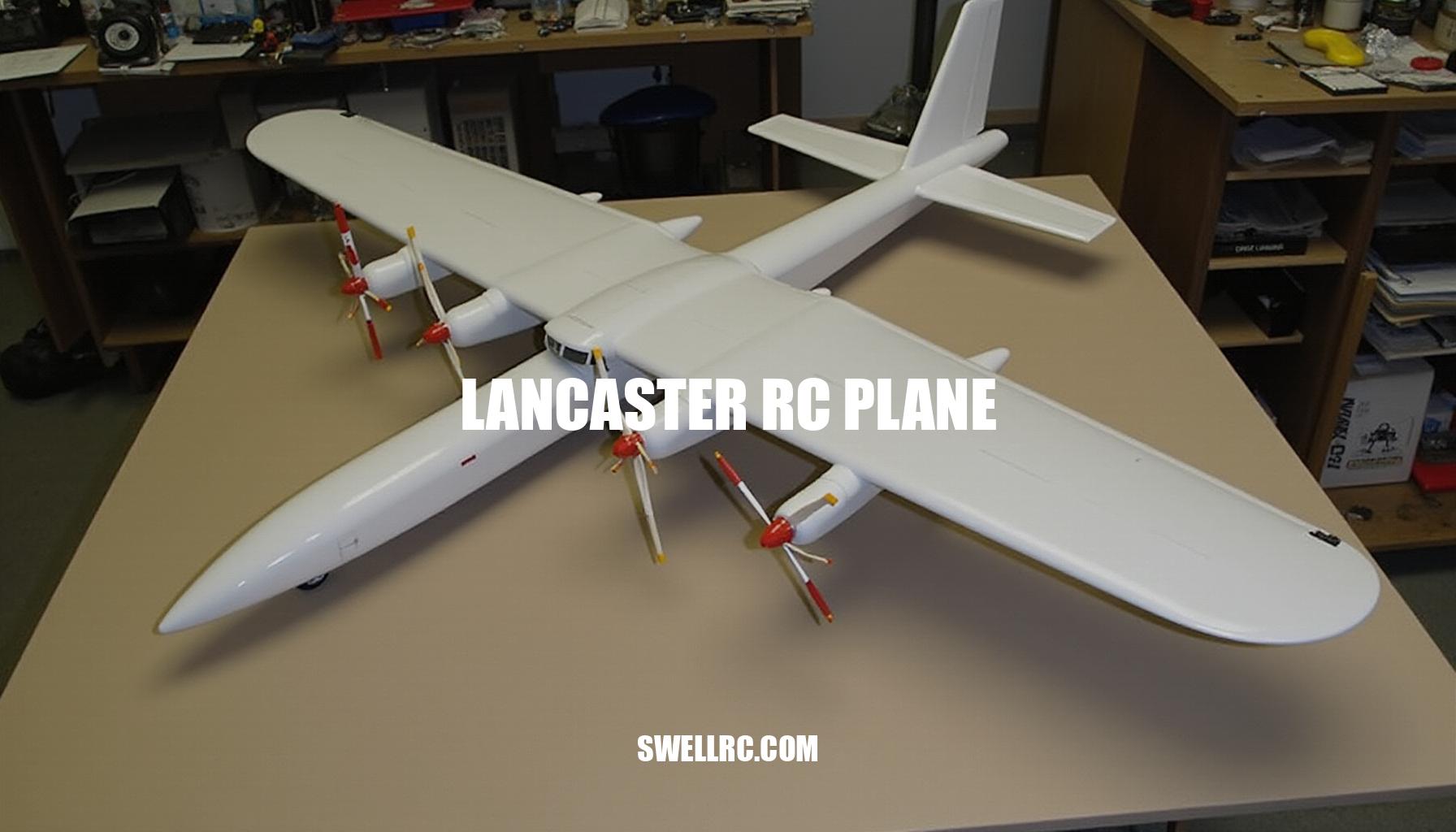
The Ultimate Guide to Building and Flying a Lancaster RC Plane

The first time I saw a Lancaster silhouette glide across a misty field at dawn, I knew I couldn’t resist trying to make this legend take flight again—in miniature form. The Avro Lancaster isn’t just another WW2 bomber; it’s a flying storybook of courage and engineering, and recreating it as an RC airplane feels like shaking hands with history. Among warbirds, the Lancaster stands out for its unmistakable four-engine presence, long high-aspect wings, and the way it seems to float on approach—majestic, deliberate, and surprisingly graceful.
If you already love large models, you know this airplane sits in the same aspirational tier as other large-scale RC planes (large-scale RC planes). In the next sections, I’ll share what weeks of tinkering, testing, and flying taught me about building, tuning, and enjoying a Lancaster RC plane—so you can choose the right kit and bring one to life with confidence. Whether you’re passionate about radio-controlled aircraft or a dedicated fan of WW2 bombers RC models, this 4-engine RC plane represents the pinnacle of the RC aviation hobby.
Embracing the challenge of the Avro Lancaster bomber model will deepen your appreciation for both the historical significance and the technical craftsmanship involved in these exceptional RC airplanes.
The Lancaster Legacy: History and Design That Inspire RC Builders
The Avro Lancaster bomber model stands out as a legendary electric warbird RC aircraft that beautifully marries WWII history with advanced aerodynamics. Its four Merlin engines, replicated as four brushless motors in the 4-engine RC plane configuration, provide reliable thrust and crucial redundancy, while the expansive wingspan enhances lift, allowing for slower, controlled flight. This design promotes stability, making it ideal for enthusiasts who appreciate RC scale modeling details such as turrets, bomb-bay doors, and crew windows.
Compared to other multi-engine RC aircraft, the Lancaster strikes a balance between transports like the Avios C-130 and larger airliners such as the Boeing 747, delivering a unique blend of build complexity and flight experience.
Here’s a quick comparison:
| Model | Typical Wingspan | Typical Power System | Build Complexity | Flight Feel |
|---|---|---|---|---|
| Lancaster (1:10–1:8) | 100–140 in | 4x brushless outrunners on 5S–6S | High | Stable, scale |
| Avios C‑130 (varies) | ~63–80 in | 4x brushless outrunners on 3S–4S | Medium | Sporty scale |
| 747 RC model (varies) | 80–120+ in | 2–4 EDFs or turbines | Very high | Fast, higher wing loading |
Whether you’re drawn to the RC scale modeling details or the historically rich lineage, the Avro Lancaster bomber model represents a pinnacle of design in multi-engine RC aircraft, offering both challenge and reward for experienced builders and pilots alike.
Building the Lancaster RC Plane: Challenges, Materials, and Techniques
Whether you prefer foam vs balsa RC planes or composite materials, building a Lancaster electric warbird RC aircraft is a rewarding challenge that demands meticulous planning. Foam (EPO/EPP) offers forgiveness and speedy finishing, ideal for beginners, whereas balsa/ply with fiberglass skins delivers authentic structure and durability prized by advanced modelers. Composites, meanwhile, reduce flex over large wingspan sections, enhancing flight performance.
In my experience working on various warbird ARF kits, the Lancaster’s four nacelles and long wingspan require keen attention to symmetry and especially four-motor wiring layout to ensure balanced thrust.
Essential RC scale modeling details and tools for this build include:
- Metric hex drivers, quality screwdrivers, and calipers for precision assembly
- Both low-temp and high-temp glues like foam-safe CA and epoxy for material compatibility
- Soldering station, heat-shrink tubing, servo tester, and wattmeter to perfect the electronics
- Balancer/CG machine, incidence meter, plus masking and painting supplies for final finish
My core assembly steps emphasize:
- Dry-fitting the airframe and marking centerlines critical for wing and tail alignment
- Installing motor mounts and test-fitting nacelles while pre-routing ESC wires and signal leads
- Soldering and labeling connectors; bench calibrating ESCs simultaneously prior to flight installation
- Installing retracts and flaps; verifying clearances and servo travel to avoid binding issues
- Setting battery locations precisely to hit recommended CG, secured with straps and anti-slip pads
- Testing prop direction and throttle synchronization on the stand before final nacelle closure
- Priming, painting, and decal application with weathering, panel lines, and turrets to boost realism
For quality kits, consider Nexa RC planes offering sizable ARFs with authentic scale touches, Aeroworks RC planes as benchmarks for build quality and hardware standards, and Leambe RC plane models that appeal to tinkerers seeking unique builds.
Common challenges include:
- Motor synchronization: Calibrate ESCs simultaneously with a servo tester, using matched firmware and timing to prevent thrust imbalance.
- Wing installation: Reinforce joiners and check dihedral symmetry meticulously with an incidence meter.
- Paint and finish: Practice mottling and exhaust staining on scrap materials first; a matte topcoat effectively conceals minor blemishes.
One personal note to highlight the importance of precision: on my second Lancaster build, gluing a nacelle just 1.5 mm off-center caused a subtle but impactful left pull during taxi. Careful re-drilling, shimming, and re-epoxying corrected it—this tiny correction made the maiden flight effortless and hands-off.
Flight Performance: Handling, Tuning, and Realism in the Air
A well-trimmed Lancaster RC plane is a gentle giant in the skies. When learning how to fly a Lancaster RC plane, expect strong slow-flight stability thanks to its generous wing, but also anticipate the plane’s momentum—plan turns wide and keep coordinated rudder inputs in the bank. Throttle management is your friend: advance smoothly and avoid whipping the nose with abrupt differential thrust changes, especially given the four-motor synchronization needed for optimal flight dynamics.
Landings are the true payoff for careful flight tuning: the full-span landing flaps offer that theatrical, steady sink that makes flying the Lancaster so rewarding. Compared to ultra-light models like a sub-250g RC plane, the Lancaster feels like a living, breathing machine—more inertia, more presence, and more planning involved before each maneuver.
My typical preflight checks and field routine revolve around transporting the model in wing sections, using quick-connect harnesses at the root, and performing a thorough preflight inspection touching every fastener and clevis. The first time all four motors hummed in unison gave me goosebumps, highlighting the importance of correctly setting up four-motor synchronization.
If you’re transitioning from high-performance composites like CARF RC planes, you’ll appreciate how the Lancaster trades raw speed for stately realism, which is reflected in the detailed performance checklist below for ideal flight tuning.
| Parameter | Recommendation |
|---|---|
| CG (Center of Gravity) | Slightly nose-heavy for the maiden flight; move aft incrementally as confidence grows. |
| Thrust Alignment | Verify zero or slight right/down as per plan to prevent yaw on throttle changes. |
| ESC Setup | Match timing and PWM; enable soft-start; confirm brake settings for scale descents. |
| Prop Selection | Use matched pairs; test pitch for climb vs. cruise amp draw. |
| Flap Mixing | Add elevator mix to prevent pitch ballooning on deployment. |
| Differential Thrust | Program mild mix for ground steering; disable in flight unless experienced. |
This checklist is essential for safe and enjoyable flights, emphasizing how detailed flight tuning and preflight checks contribute to mastering how to fly a Lancaster RC plane effectively.
Where the Lancaster RC Plane Fits in Today’s RC Scene
Even as jets and 3D aerobats dominate social feeds, warbirds still command the flightline because they make history tangible. The Lancaster sits at the heart of that appeal: an emotional connection backed by technical depth. If you enjoy classic balsa or semi-scale foam, you’ll find a lot to compare in World Models RC planes.
Collectors who like to go big will naturally gravitate to the best large-scale warbird RC airplanes and clubs with the space to fly them.
On the other side of the spectrum, modern jets like the RC F-35 scratch the speed and tech itch, but they don’t replace the Lancaster’s ritual of preflight checks, four-motor startup, and that unmistakable silhouette at sunset.
After months of researching kits, chatting at meets, and flying my own, I’m convinced the Lancaster remains a pinnacle project—ambitious yet deeply rewarding. This sentiment resonates deeply within the warbird community, where the blend of nostalgia and craftsmanship fuels the RC aviation hobby.
Market Overview of Classic RC Airplanes
| Category | Highlights | Ideal For |
|---|---|---|
| Best Large-Scale Warbird RC Airplanes | Detailed craftsmanship, realistic flight characteristics | Experienced pilots, collectors with ample space |
| Classic RC Airplanes | Balsa and semi-scale foam models, nostalgic appeal | Hobbyists valuing tradition and technical depth |
| Modern Jets | Speedy, tech-forward, minimal preflight rituals | Enthusiasts seeking adrenaline and innovation |
Whether drawn to the timeless appeal of classic warbirds or the thrill of modern jets, the warbird community remains vibrant, united by a passion that spans generations and keeps the RC aviation hobby soaring.
Conclusion: Why Building and Flying a Lancaster RC Plane Is Worth Every Minute
The Lancaster RC plane embodies RC hobby passion like no other, teaching enthusiasts patience and exceptional craftsmanship through every stage of its assembly. From the meticulous build-up of its four nacelles to mastering the quiet confidence of its landing flare, this model serves as a heartfelt warbird tribute that rewards every hour invested.
Along your journey, you’ll discover a supportive community eager to share:
- Techniques that enhance building accuracy
- Essential scale detail tips to elevate realism
- Occasional spare parts to keep your project moving
For those seeking project motivation while honoring aviation history, the Lancaster RC plane is a must-have in your hangar. It stands proudly alongside the finest warbirds and premium brands you’ve come to trust.
Build boldly, fly thoughtfully, and keep the legend alive with this iconic masterpiece.
Frequently Asked Questions
- What scale are Lancaster RC planes usually built in?
Common scales range from about 1:16–1:12 for manageable foam or light balsa builds (wingspans roughly 60–80 in) to 1:10–1:6 for serious large-scale projects (100–140+ in). Custom giant-scale examples exist but require significant transport and club field support. - How difficult is it to fly a Lancaster RC plane compared to other warbirds?
Moderate to high. It’s more complex than single‑engine warbirds due to four motors, higher inertia, and larger wings. The good news is that a properly trimmed Lancaster is very stable at low speeds. It’s best for experienced intermediate to advanced pilots with multi‑engine familiarity. - What engines or motors work best for Lancaster RC models?
Most builders now choose electric: four matched brushless outrunners sized to the model (e.g., 35–42 mm cans on 3S–5S for ~70 in spans, 42–50 mm on 5S–6S for 100–140 in spans), with props typically 10×7 to 12×8. Use matched ESCs with synchronized calibration. For nitro/gas, smaller glow engines (e.g., .15–.25) have been used on mid-sized builds, but electric simplifies synchronization, reliability, and cleanliness. - Are there ready-to-fly (RTF) Lancaster RC planes available?
True RTFs are rare. You’ll more commonly find ARF or PNP formats that still require assembly, radio setup, and power-system selection. Occasionally, limited-run foam PNPs appear, but most Lancasters are projects where you’ll do meaningful setup work. - How detailed can you make a Lancaster RC bomber, and what are the common modifications?
Extremely detailed if you want: rotating or static turrets, functional bomb-bay doors, retracts and sequenced gear doors, navigation and landing lights, scale propellers, and even sound modules. Cosmetic scale touches include rivet decals, panel lines, weathering, exhaust staining, and cockpit crews. Many builders 3D-print antennas, gun barrels, and interior detail parts. - Where can enthusiasts find large-scale Lancaster RC plane kits or ARFs?
Look to specialty RC retailers, scale warbird manufacturers, and community forums or swap meets. Search for four‑engine warbird categories, ask in scale builder groups, and attend big warbird events to see who’s currently producing kits and which ARFs are in stock.