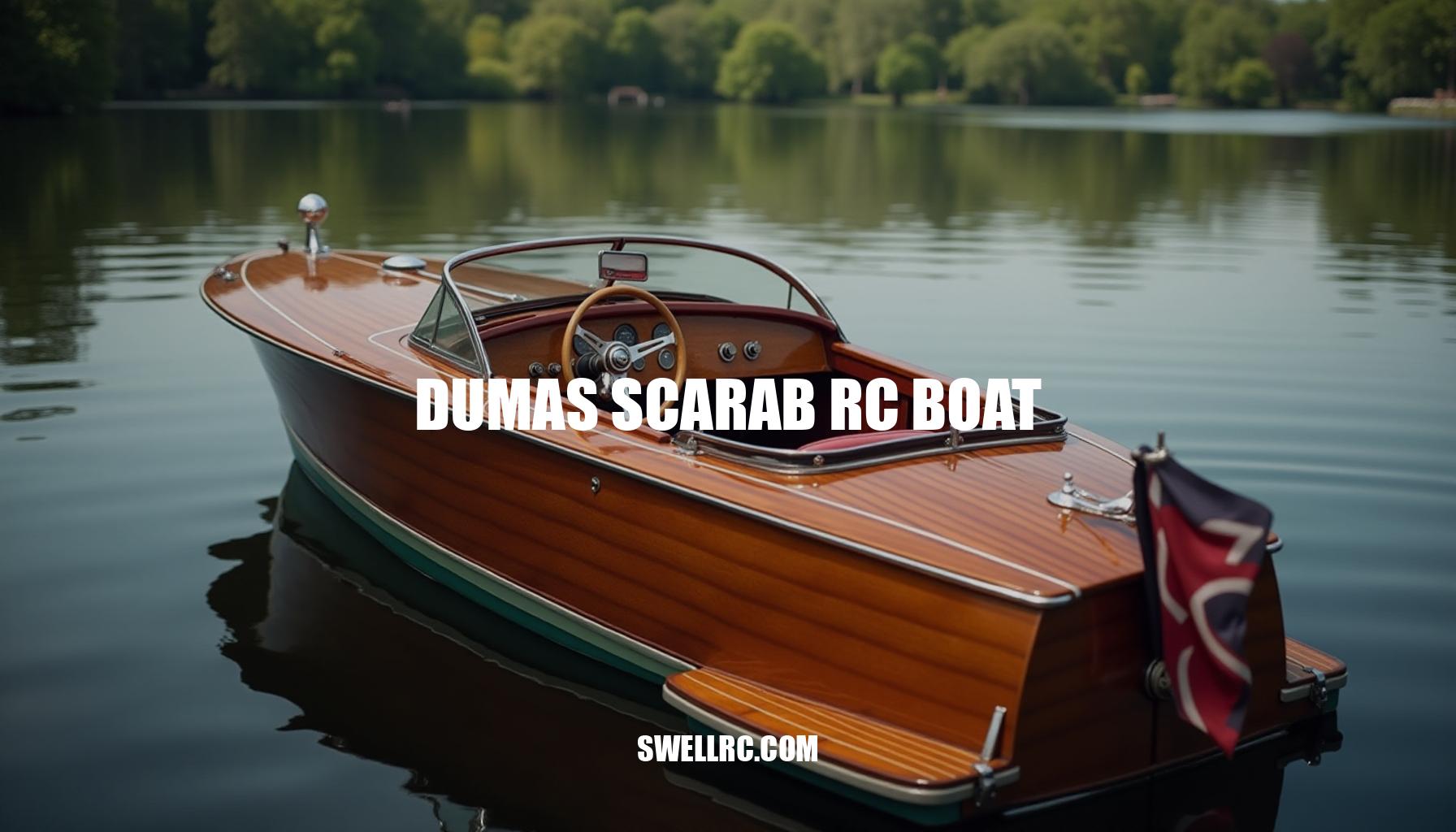
Dumas Scarab RC Boat: A Timeless Classic for Enthusiasts

I still remember the hush over the pond the first time I saw a Dumas Scarab slice through the morning glass—deepV hull knifing clean, rooster tail glittering, and that unmistakable offshore silhouette. That moment sent me down a rabbit hole: tracking kits, poring over build logs, testing setups, and talking with longtime racers who cut their teeth on Dumas boats. The deeper I went, the clearer it became: the Scarab isn’t just another model—it’s a benchmark that shaped how we think about scale offshore RC boats.
Dumas’s heritage in RC boats is as influential as it is enduring; their kits balanced craftsmanship with real performance, which is why so many of us still chase, build, and restore them today.
If you’re new to this world, exploring the broader lineage of Dumas RC boats is a great start: https://www.swellrc.com/dumas-rc-boats/.
The Scarab’s legacy bridges nostalgia and engineering: it pulled cues from fullscale offshore racers and packaged them for hobbyists who wanted more than shelf appeal. In the sections below, I’ll show you why the Scarab stands out—its design story, how to build or revive one, and how it stacks up against modern alternatives. Whether you’re into vintage RC boats or keen on remote control watercraft, understanding the Dumas Scarab 38 and other Dumas model boat kits will deepen your appreciation of this timeless hobby.
The Story Behind Dumas Scarab – Legacy Meets Engineering
Dumas earned its reputation by giving hobbyists buildable performance—kits that taught technique and rewarded careful setup. Among their most recognized offshore designs, the Dumas Scarab 38 brought scale looks and serious water manners in a deep‑V hull that still feels relevant in today’s offshore racing boats scene.
Design inspiration: The Scarab line nods to the glamorous, go‑fast offshore scene—lean, low, and meant to run when the water isn’t perfectly flat. Dumas translated that into a fiberglass RC boat hull with wood structure that handled power while staying serviceable for tinkerers.
Materials and construction: Most Scarab kits combined a fiberglass RC boat hull with plywood/balsa internals, a removable radio tray, and hardware suited for either nitro or later electric conversions. That hybrid approach is why these boats lasted—and why they’re still excellent restoration candidates. For enthusiasts seeking to explore more, classic Dumas boat plans and similar Dumas model boats can be found online, reflecting the rich lineage of these buildable offshore racing kits.
If you’re mapping the broader family and contemporaries, check out Dumas’s classic kit catalog lineage and compare kindred offshore vibes, such as the 45 Cigarette profile or purpose‑tuned racers like Seaducer‑style hulls.
Key specs at a glance (typical ranges vary by kit version and build):
| Specification | Details |
|---|---|
| Model | Dumas Scarab (often referred to as Scarab 38 in hobby circles) |
| Hull Type | Deep‑V fiberglass RC boat hulls with wood substructure |
| Length | Approximately 36–40 in (varies by kit/version) |
| Beam | Approximately 10–12 in |
| All‑up Weight | Build‑dependent; commonly 6–10 lb (2.7–4.5 kg) |
| Power Options | Nitro (.21–.45 class) or modern brushless (36–40 mm inrunner) |
| Drive | Strut/shaft with surface‑piercing prop; trim tabs recommended |
| Top Speed Potential | ~25–45+ mph depending on power and prop selection |
| Skill Level | Intermediate build; intermediate/advanced setup and driving |
Building or Restoring a Dumas Scarab – The Real Challenge and Reward
After tackling a couple of Scarab projects—one scratchy basket case from a swap meet and one partial kit—my main takeaway is this: patience is power. The boat rewards methodical prep, straight alignments, and smart weight management.
Here is a practical restoration roadmap, perfect for anyone wondering how to restore vintage RC boats efficiently:
- Assess and inventory: Log every part meticulously. Examine the fiberglass RC boat hulls for stress cracks, loose stringers, and delamination.
- Hull repairs: Sand to clean the glass surface; reinforce with 4–6 oz fiberglass cloth and marine epoxy where needed. Fair with lightweight filler and carefully seal edges for durability.
- Hardware alignment: Establish a straight shaft line; set the strut neutral or slightly positive. Dry-fit components like rudder, trim tabs, and turn fins for perfect function.
- Radio tray and mounts: Seal wood parts with epoxy; add captive nuts to improve serviceability. Place the ESC and receiver high and dry to avoid moisture issues.
- Power and cooling: For brushless systems, plumb dual water pickups for ESC and motor cooling. For nitro engines, ensure solid fuel tank mounts with proper vibration isolation.
- Balance and trim: Target the center of gravity roughly 28–33% forward of the transom along the keel. Adjust pack placement and add minimal ballast as necessary for optimal performance.
- Finish: Apply primer, then paint, followed by a clear coat. Keep the hull bottom perfectly straight—performance hinges on the last 2 feet of the hull.
Since many Dumas boat plans and variants become hard to find, bookmark this invaluable resource for locating discontinued models, instructions, and community breadcrumbs: https://www.swellrc.com/discontinued-dumas-boats/.
If you desire a quick runner while your Scarab is on the bench, consider these modern inspirations:
- Gizmovine RC Boat T03: A ready-to-run budget option that scratches the speed itch. Check it out at https://www.swellrc.com/gizmovine-rc-boat-t03/.
- Aquacraft UL-1 Superior: For higher performance cues and electric vs nitro RC boats setup ideas, study the Aquacraft UL-1 Superior hydro package: https://www.swellrc.com/aquacraft-ul-1-superior/.
Here’s a helpful comparison table for your build path choices, highlighting the pros, cons, and time/budget considerations when dealing with model boat kits or ready-built options:
| Option | Pros | Cons | Budget/Time |
|---|---|---|---|
| DIY restore an original Scarab | Authenticity, tuning freedom, pride of craft | Time-intensive, sourcing parts, steeper learning curve | Moderate–high / Weeks to months |
| Buy a finished Scarab | Quick to water, often proven setup | Less personalization, unknown build quality without teardown | Higher upfront / Days |
| Build modern RTR as a stand-in | Immediate fun, parts availability | Lacks the Scarab’s scale aura | Low–moderate / Same-day run |
Performance and Power – What Makes the Scarab Roar
Setting up the Dumas Scarab RC boat properly is key to achieving a planted and confident ride, especially in light chop—an environment where its deep-V hull truly shines. When considering the best motor setup for a Scarab, I experimented with both electric and nitro configurations, each offering distinct advantages in performance and tuning strategies.
For those wondering how fast is the Dumas Scarab RC boat, it largely depends on the setup and tuning applied. In my experience, tuning two different builds—one for brushless torque and another for the authentic nitro sound and scale feel—demonstrates the versatility of this boat.
Here’s a concise breakdown comparing electric vs nitro RC boats in a Scarab context:
- Electric: Offers clean, consistent power curves with easy tuning via propellers and timing adjustments. Water-cooling is an essential component to manage temperatures effectively.
- Nitro: Provides the classic engine soundtrack and greater scale authenticity but requires longer refueling intervals, meticulous needle tuning, and diligent vibration control.
Regarding performance tuning and power recommendations:
| Power Type | Recommended Specs | Notes |
|---|---|---|
| Nitro | .21–.28 class engines | Balanced running; W-09 range engines like those at Max Power W-09 offer context and performance benchmarks. |
| Electric | 36–40 mm inrunner motor, 4S to 6S LiPo, 120–150 A ESC | Start with conservative timing to control temps and power delivery. |
In practice, tuning the Scarab involves careful consideration of propeller selection. Start with 2-blade metal props that are sharpened and balanced to optimize performance without overheating. Transitioning to 3-blade props should only occur once temperature and current draws are verified safe.
Additional tuning notes from on-water testing include:
- Brushless build: Eased in with a small 2-blade prop to monitor temperatures; at full throttle, the boat tracked flatter than expected, necessitating neutral trim tabs and a slightly positive strut angle. Increasing prop pitch improved midrange thrust without causing heat spikes.
- Nitro build: A slight right rudder trim combined with gradually lowered trim tabs addressed porpoising effectively, resulting in a stable and smooth lane at speed.
Key aspects to monitor during setup and maintenance:
- Propellers: Begin with 2-blade metal props, ensuring they are sharpened and balanced. Only move to 3-blade props after confirming healthy temps and amp draws.
- Strut and tabs: Keep the strut angle between neutral to +1°, and adjust tabs evenly before lowering incrementally by 1/16-turns to reduce hopping sensations.
- Center of gravity: Position the CG roughly 28–33% from the transom along the keel line, shifting packs or the fuel tank for fine-tuning balance.
- Cooling and temps: For electric setups, maintain ESC temperatures under 60–70°C and ensure the motor remains cool to the touch post-run. For nitro setups, monitor head temperature and plug color for early signs of running issues.
- Maintenance: Re-grease the flex shaft after every session, verify collet tightness, and ensure all fasteners are secured with threadlock to prevent loosening due to vibration.
For further reference and to understand speed benchmarks and setup ideas, exploring comparable models such as the compact Darter King RC Boat or accessible ready-to-run options like the Toyabi RC Boat T03 can provide valuable insights.
Modern Alternatives and Collectible Value
Why chase a Scarab in 2025? Two reasons: the way it runs, and the way it makes you feel. Scale offshore lines never go out of style, and a well‑sorted Scarab still turns heads at any pond.
Collector insights:
- Availability: Original kits and built hulls surface in waves—estate sales, club forums, and auction sites. Condition and completeness drive price more than anything, reflecting the market scarcity of vintage RC boats.
- Value drivers: Clean fiberglass, straight hardware alignment, intact canopy, period‑correct decals, and tidy radio trays are key factors for collectible RC boats.
- Upgrades that help value (when tasteful): Modern brushless/ESC in a reversible install, refreshed finish, and quality running hardware enhance performance without compromising originality.
Legacy vs modern efficiency:
| Legacy Appeal | Modern Efficiency |
|---|---|
| The Scarab’s deep‑V hull and scale deck deliver presence few modern RTRs match, making it a standout among vintage RC boats. | Today’s RTR models offer faster speeds per dollar and are easier to service, but often lack the workshop narrative and collector charm that Scarab enthusiasts cherish. |
Community exchanges: Join local clubs, vintage RC social groups, and swap meets; these community exchanges are the best places to find honest runners and the small parts you’ll inevitably need for your Dumas model boat kits.
If the Scarab sparks something in you, exploring the broader Dumas lineage can reveal siblings worth chasing next, from classic runabouts to other offshore silhouettes, enriching your collection of collectible RC boats.
Conclusion – Keeping the Spirit of the Scarab Alive
Every time I bring a Scarab back to life, I’m reminded why this hobby endures: the craft, the patience, and that perfect moment when hull, prop, and water harmonize. The Dumas Scarab, celebrated among Dumas boats, blends scale offshore heritage with real performance, teaching fundamentals essential for any fast electric or nitro build—especially those exploring the nuances of RC boats.
- The Dumas Scarab blends scale offshore heritage with real performance.
- Restoration is doable with methodical hull work, alignment, and balance. This is key when following reliable restoration tips to maintain the deep-V hull shape that’s critical for speed and stability.
- Both nitro and brushless power the Scarab well—tune for temps and tracking. Understanding the trade-offs of electric vs nitro setups helps optimize performance during your builds.
- Today’s RTRs are great fun, but a Scarab connects you to RC’s golden era. The classic silhouette and handling characteristics of the Scarab keep the deep-V setup tradition alive within the RC community.
If this stirred your curiosity, chase a project, trade notes with your local club, and keep experimenting. That’s how the Scarab spirit stays fast and alive—embracing the rich history of RC boats and the rewarding process of patiently restoring and fine-tuning your vessel.
Frequently Asked Questions
- What makes the Dumas Scarab RC boat special compared to other models?
It couples an authentic offshore deep‑V silhouette with a fiberglass‑and‑wood build that actually runs hard. You get scale presence, tunable performance, and a kit that teaches real setup skills—rare in a world of quick RTRs. - Is the Dumas Scarab boat kit still in production?
Most Scarab variants are no longer in regular production and are considered discontinued. Your best bet is secondary markets and reference hubs for legacy Dumas kits. - How hard is it to build or restore a Dumas Scarab?
Intermediate. The fiberglass hull and wood internals are straightforward if you work methodically, but alignment, waterproofing, and balance demand care. Expect a few weekends for a tidy restoration if parts are on hand. - What are the best replacements for discontinued Dumas kits?
Seek modern RTRs for seat‑time and study classic offshore hulls for inspiration. While no model replaces the Scarab’s aura, plenty of current deep‑V boats deliver speed and parts support while you hunt a vintage hull. - Are there modern RC boats that match the performance of the Scarab?
Yes. Many brushless RTR deep‑Vs will outrun a stock Scarab on a dollar‑per‑mph basis. What they don’t replicate is the Scarab’s build journey and collectible appeal—two things that keep enthusiasts chasing the original.