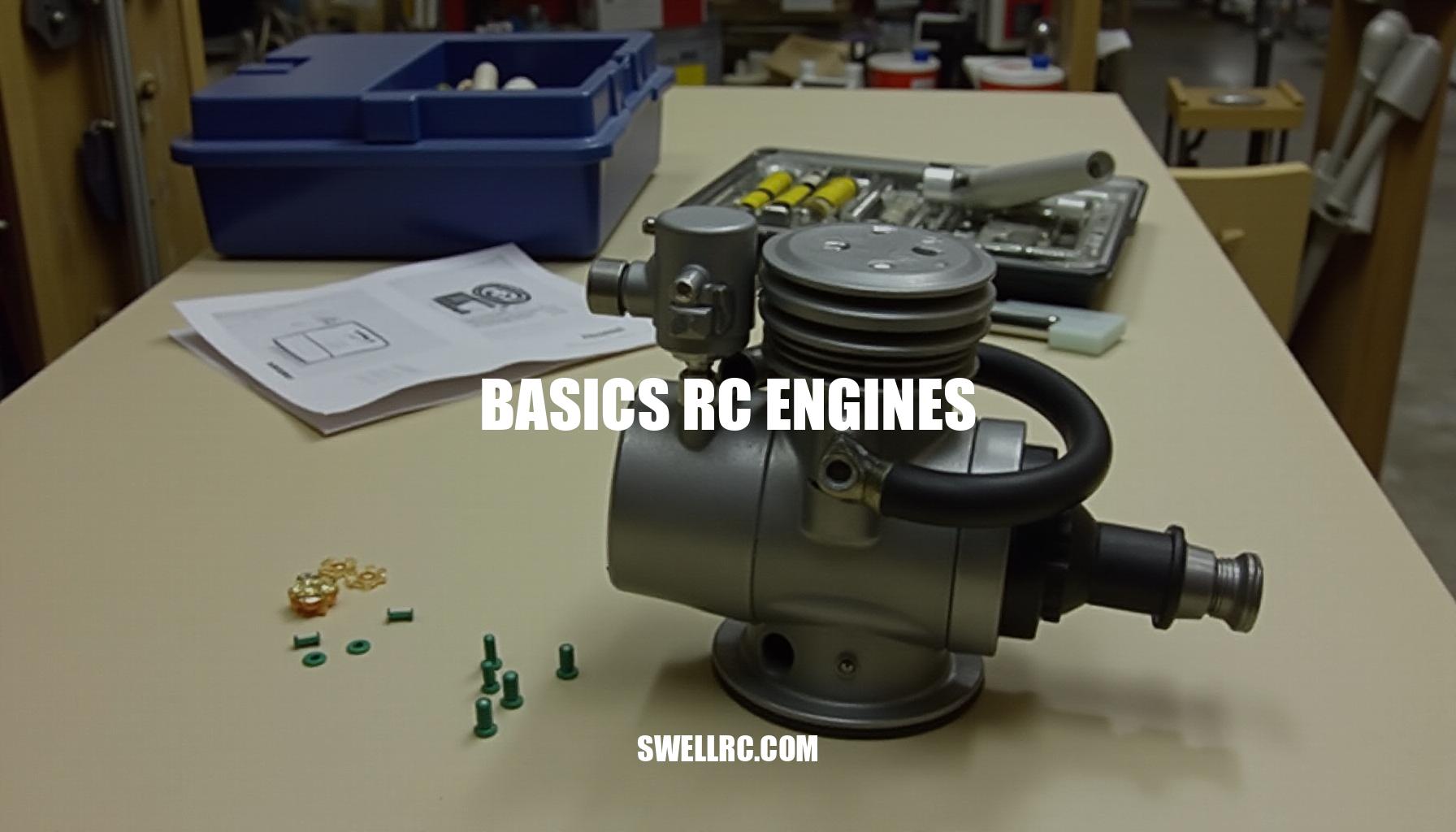
The Basics of RC Engines: A Comprehensive Guide

When I first took apart my old RC plane engine on a cluttered workbench, I realized these tiny powerplants mirror the same internal-combustion magic found in full-size engines—only scaled, simplified, and optimized for fun. RC engines, at their core, are compact internal combustion engines that burn fuel, create expanding gases, and convert that energy into rotational power to spin a propeller, a drivetrain, or a jet-like turbine wheel. Whether you’re just starting or looking to deepen your knowledge, understanding the basics of RC engines is key to mastering your RC vehicles.
In this beginner RC engine guide, we’ll explore everything from engine displacement and the role of the glow plug to the differences between nitro and gasoline engines. We’ll also discuss how to choose between 2-stroke and 4-stroke designs, the essentials of routine maintenance, tuning techniques, and practical tips drawn from hands-on experiments. By the end of this journey into the fascinating world of RC engines, you’ll have a clear foundation and know exactly where to dig deeper to optimize your RC experience.
Section One: How RC Engines Work – The Miniature Mechanics of Power
Understanding how an RC engine works can be as thrilling as watching a tiny powerhouse come to life right in your hands. Think of it as a miniature version of the big engines that power cars and planes—drawing in air and fuel, igniting them, and transforming that energy into motion.
At its core, an RC engine functions through several key steps:
- Air–fuel mixture: A carburetor carefully meters fuel into the incoming air, creating a precise blend known as the air-fuel mixture. The richness of this mix—how much fuel is mixed with air—directly affects both the engine’s power output and operating temperature, much like mixing the right ratios to bake a perfect cake.
- Glow plug ignition: Instead of a traditional spark plug, many nitro RC engines use a glow plug. Initially heated externally, this plug ignites the compressed mixture. Once the engine is running, the combustion process keeps the plug hot enough to sustain continuous ignition—imagine it as a tiny glowing torch inside the engine.
- Combustion and exhaust: When the air-fuel mixture burns, it expands rapidly, pushing the piston down inside the cylinder. This push turns the crankshaft, creating rotational motion. Meanwhile, exhausted gases exit through the tuned muffler, ready for the next cycle.
Think of this as a rhythmic dance happening hundreds of times per minute.
- Power to motion: This crankshaft rotation is then transferred to a propeller, a set of gears, or a clutch connected to the wheels—bringing your model to life with real movement.
Now, when deciding between a 2-stroke vs 4-stroke RC engine, it helps to understand their fundamental differences:
| Feature | 2-Stroke Engine | 4-Stroke Engine |
|---|---|---|
| Firing Frequency | Every crankshaft revolution | Every other crankshaft revolution |
| Power-to-Weight Ratio | Higher (more power, lighter) | Lower |
| Sound | Distinctive raspy note | Smoother, more scale-like |
| Fuel Efficiency | Less efficient | Better fuel economy |
| Torque Delivery | Less broad torque | Broader torque curve |
Imagine a 2-stroke engine as a sprinter—delivering bursts of power with every revolution, perfect for when you want aggressive acceleration and light weight. Meanwhile, a 4-stroke engine behaves more like a marathon runner, delivering power smoothly and efficiently over time.
Visually, picture a small cylinder housing a piston connected directly to a crankshaft that spins as the piston moves. On one side, a carburetor feeds the air-fuel mix; on the top, a glow plug sits embedded in the cylinder head; and an exhaust pipe with a tuned muffler expels spent gases. This setup mirrors a full-size car engine’s working principle but simplified and compact.
If you’re passionate about flying, your engine choice dramatically affects how your model behaves in the air. You can explore common layouts, engine sizes, and their effects on performance at RC model airplane engines. For a deeper dive into the nuances between these engine types, especially 4-stroke variants, check out 4-stroke RC airplane engines.
By mastering concepts like carburetor tuning, understanding the exhaust cycle, and considering factors such as engine displacement, you’ll gain both the technical edge and the excitement to get the most out of your RC adventures.
Section Two: Types of RC Engines – Nitro, Gasoline & More
When exploring RC engines, understanding the differences between nitro engines, gasoline-powered options, and electric setups is crucial to choose what best fits your style and needs. Nitro (glow) engines run on a blend of methanol, nitromethane, and oil, delivering a high-revving, snappy throttle response that’s exhilarating for spirited aerobatics in planes or punchy acceleration in cars. However, they require medium to high maintenance, including needle tuning and applying after-run oil to prolong engine life.
In contrast, gasoline gas engines use a mixture of pump gas and 2-stroke oil, offering strong torque and longer runtimes ideal for larger-scale vehicles and extended flying sessions. Maintenance is moderate, focusing on tasks such as spark plug replacement and diaphragm carburetor servicing, making gasoline engines well-suited for big planes, giant models, and boats that demand endurance.
Electric power, though not the primary focus here, provides another alternative. Powered by LiPo batteries, electric motors deliver instant torque and operate quietly with very low maintenance, making them excellent for beginners and flying in noise-sensitive environments.
| Power Type | Fuel/Energy | Power Feel | Maintenance | Ideal Use |
|---|---|---|---|---|
| Nitro | Methanol + Nitromethane + Oil | High RPM, Snappy Throttle | Medium–High (needle tuning, after-run oil) | Cars with punchy acceleration; planes/helis for aerobatics |
| Gasoline | Pump Gas + 2-stroke Oil | Strong Torque, Longer Runtimes | Medium (spark plug, diaphragm carb service) | Large-scale cars, big planes/giants, endurance boats |
| Electric (context) | LiPo Battery | Instant Torque, Low Noise | Low (mainly batteries/ESC) | All categories, especially beginner-friendly & quiet fields |
So what’s the difference between nitro and gas RC engines beyond fuel mixture? Nitro engines offer lively throttle responses and are thrilling for short, dynamic flights, whereas gasoline engines excel in endurance and deliver consistent torque for longer, more relaxed sessions. After alternating between nitro and gas planes myself, I found nitro’s responsiveness shines in aerobatics, while gas engines suit extended flights with fewer refuels.
For deeper dives into these fuel types and their performance within the realm of RC airplane engines, resources like RC plane nitro engine and RC plane gas engine provide excellent information. Additionally, the gasoline-powered RC engines overview and the RC airplane engines hub offer comprehensive insights into the nuances of these powerplants.
Section Three: Special Applications – From Cars to Boats
Engine choices in RC vehicles are carefully adapted to their specific applications, significantly influencing power delivery and throttle response. For RC cars, factors like chassis weight, gearing, and tire grip shape how the engine feels. Compact 2-stroke engines are common, prized for their punch and top speed; you can explore various engine layouts at RC car engine.
Tuning is crucial here—if you’re chasing crisp throttle and optimal temperatures, the guide on how to tune a nitro RC car engine offers invaluable insights.
RC boats face a different challenge: water imposes a continuous and variable load on the propeller, making steady torque delivery essential. While most RC boats use nitro or gas 2-strokes, some advanced builders experiment with exotic setups like turbines—check out the RC boat turbine engine for an intriguing alternative. Cooling is typically managed via water jackets, which is unique compared to other vehicles.
For RC planes, power-to-weight ratio and smooth throttle linearity dominate performance considerations. Both nitro and gas engines are popular, each favored depending on the airframe size and flight style. Unlike cars and boats, planes require careful prop pitch and diameter matching to the engine’s power band, ensuring efficient thrust and fuel reliability even during varied flight attitudes.
For enthusiasts wanting ruggedness and extended running times on ground vehicles, gas-powered setups are highly valued; see gas-powered RC cars to explore these robust options.
Here’s a quick comparison highlighting what stands out across these RC applications:
- Cars: Experience repeated acceleration and braking cycles; managing heat within enclosed bodies and clutch tuning are critical.
- Boats: Engines endure continuous load conditions; water jacket cooling is essential, and selecting the right propeller dramatically affects performance.
- Planes: Weight sensitivity is paramount; propeller pitch and diameter must align precisely with the engine’s power curve; fuel delivery reliability is critical during diverse flight attitudes.
Understanding these application differences helps in selecting and tuning the right engine, be it optimizing an RC car engine for agility, choosing advanced propulsion like the RC boat turbine engine, or balancing power and weight in RC planes. To deepen your expertise on tuning RC engines and matching power delivery for each application, explore the linked resources and elevate your RC experience.
Section Four: Maintenance and Tuning – Keeping Your Engine at Peak Performance
As an enthusiast dedicated to how to maintain an RC engine effectively, I’ve cultivated a practical and reliable maintenance routine focused on boosting reliability, longevity, and overall confidence in my setups. Authentic fuel selection and storage form the cornerstone: for nitro engines, I always opt for fresh, sealed fuel, keeping it out of direct sunlight and gently shaking it before use to re-homogenize the oils. Gas-powered models require accurate mixing with quality 2-stroke oil, stored in clearly labeled containers, while stale fuel is promptly refreshed.
My core maintenance loop, performed diligently after each session, covers vital aspects:
- Clean: I brush off dust particles and wipe away any oil residues, carefully ensuring the cooling fins remain free of debris for optimal heat dissipation.
- Inspect: Fuel lines get checked for cracks or leaks, muffler bolts are verified tight, and I examine the carburetor base for any air leaks that could affect performance.
- Lubricate: For nitro engines, I apply after-run oil to prevent internal corrosion, gently rotating the crankshaft for thorough coverage.
- Filter care: The air filter’s foam is either cleaned or replaced; a dirty filter can cause rich/lean swings impacting engine tuning.
- Spark/glow health: Glow plugs are replaced if tired, and gas engines get their spark plug gap and overall condition checked to maintain ignition reliability.
When it comes to carburetor tuning, especially for nitro glow engines, I start rich to allow the engine to warm up thoroughly.
Then, I lean the high-speed needle in tiny increments until achieving robust top-end power without overheating. For the low-speed needle, the aim is a crisp launch without bogging, adjusting the idle stop screw to maintain a steady tick-over. Key indicators of improper tuning include excessive smoke and sputter, signaling a too-rich mixture, or surging and overheating that point to a too-lean setup.
Through my field notes, I’ve learned the importance of changing one setting at a time while logging ambient conditions to isolate variable impacts.
For troubleshooting an RC engine that won’t start or runs inconsistently, I follow quick diagnostics:
- Check the glow igniter or spark plug for proper function.
- Prime the fuel line to ensure fuel delivery.
- Verify engine compression and inspect for air leaks.
- If the engine cuts out at wide-open throttle (WOT), I slightly richen the high-speed needle and confirm the fuel tank venting is not blocked.
- For inconsistent idle, I revisit low-speed needle settings, fuel clunk position, and air filter cleanliness.
Regular, small adjustments based on sound, temperature, and throttle response keep my engines happy and predictable. Integrating thorough cleaning and lubrication, systematic inspection steps, and refined jet adjustments ensures that every run feels smooth and every engine responds with precision.
Conclusion: My Takeaway After Diving Deep into the Basics of RC Engines
Delving into the best RC engine for beginners means appreciating the nuances across all RC engine types recap—from the spirited nitro vs gas debate to understanding 2-stroke vs 4-stroke dynamics. This knowledge transforms your approach from mere trial and error to a purposeful journey of discovery. Remember, hands-on experimentation is your greatest teacher in this RC hobby learning adventure.
Here are key takeaways to guide your path:
- Choose an engine that matches your environment and goals.
- Make incremental tweaks—change only one variable at a time.
- Keep detailed notes to track what works and what doesn’t.
- Engage all senses: listen to the engine, feel its response, and observe changes closely.
- Embrace the process as a partnership between you and your machine.
By actively applying what you’ve absorbed, you’ll develop an intuitive connection with your RC engine, turning every build and tuning session into a rewarding experience.
So gear up, experiment boldly, and enjoy the thrill of chasing that perfect pull!
Frequently Asked Questions
- What are the main types of RC engines?
Nitro (glow) engines that burn a methanol/nitromethane/oil blend, gasoline 2-strokes that run pump gas mixed with oil, and (for context) electric power systems. Within combustion types, you’ll also find 2-stroke and 4-stroke variants. - How do nitro RC engines differ from gas engines?
Nitro engines use a methanol/nitromethane/oil fuel, rely on a glow plug, rev very high, and need more frequent needle tuning. Gas engines use gasoline with 2-stroke oil, have a spark plug, offer broad torque and longer runtimes, and typically require less frequent tuning. - How do you break in a new RC engine?
Run rich for initial tanks to keep temps down, use short gentle throttle bursts, allow cool-downs between runs, and gradually lean the mixture as temps stabilize and throttle response improves. Always follow the manufacturer’s procedure. - What maintenance does an RC engine require?
Regular cleaning, air-filter service, checking fuel lines and fasteners, after-run oil for nitro, spark or glow plug inspection, and periodic carburetor tuning to match weather and load. - Is a 4-stroke RC engine better than a 2-stroke one?
It depends on your goals. 4-strokes sound more scale-like, sip fuel, and have smooth torque. 2-strokes are lighter for their power, simpler, and often deliver higher RPM—great for aggressive performance. - Can you tune RC car and plane engines the same way?
The core needle-tuning principles are the same, but load and airflow differ. Cars may need more attention to cooling and clutch engagement; planes prioritize consistent power across the prop’s operating range. - What fuel is used for RC engines?
Nitro engines use a methanol/nitromethane/castor or synthetic oil blend. Gas engines use pump gasoline mixed with 2-stroke oil at the recommended ratio. Electric models use LiPo batteries instead of liquid fuel.