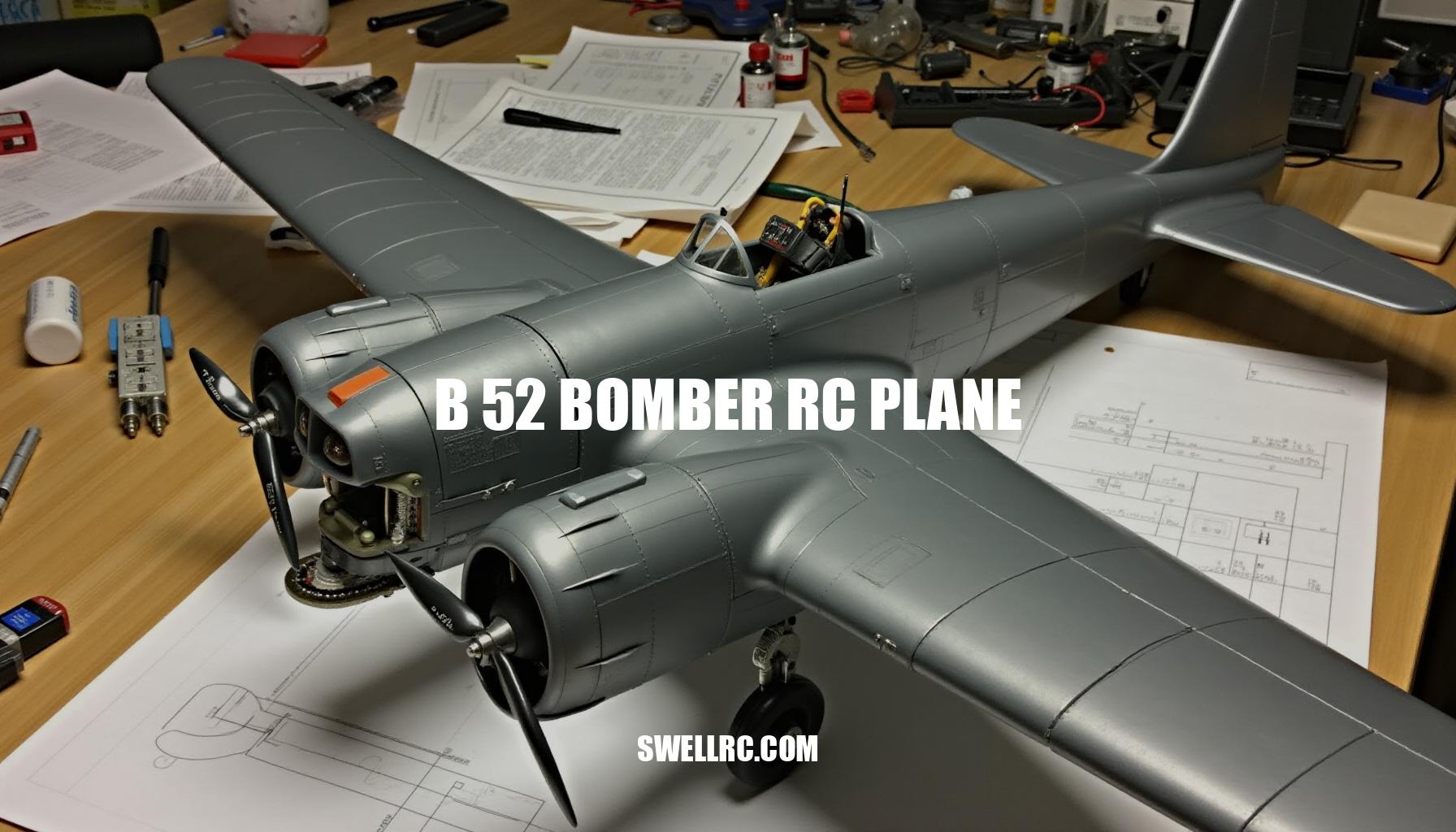
Building the Ultimate B-52 Bomber RC Plane: Tips and Tricks

I still remember the first time I saw an 8-motor B-52 RC arc skyward at a club fly-in—the soft howl of the fans ramping up, that mile-wide wingspan carving a steady line into the wind, and the crowd going quiet during rotation. I went home obsessed. A week later my notes were full of nacelle wiring diagrams, CG math, and landing gear sketches.
The B-52 Stratofortress model—an icon of long-range endurance in full scale—has become a crown jewel for RC builders who love engineering puzzles and serene, ultra-stable flight. This large-scale RC planes project is a perfect example of combining challenge and beauty in the RC aircraft world. In this guide, I’ll share what I learned testing setups, studying flight mechanics, and comparing kit quality so you can skip the guesswork and enjoy the magic of a correctly built, correctly flown RC bomber plane.
We’ll dig into design choices, materials, wiring strategies for eight motors, flight stabilization, bomb-bay payload options, and buying recommendations. If you’re drawn to giants like I am, you’ll also appreciate how the military RC bomber fits into the broader niche of scale RC plane enthusiasts and remote control airplanes aficionados (see large-scale RC planes). Whether you’re controlling an eight-engine RC aircraft or admiring the precise detail of a scale RC plane, the B-52 Stratofortress model stands as a timeless testament to the thrilling fusion of engineering and passion in remote control aviation.
Understanding the Majestic Design of the B-52 Bomber RC Plane
The 8-engine RC aircraft such as the B-52 present unique challenges and opportunities in RC plane construction materials and design. Their electric ducted fans (EDF) or small outrunners require a carefully planned propulsion layout and power distribution system to ensure balanced thrust and stable flight. The structure features long, high-aspect wings that generate efficient lift at moderate speeds.
In RC builds, a slight dihedral and modest washout at the tips help to control tip-stall tendencies, while a strong spar system—commonly a carbon tube or laminated spruce—maintains wing rigidity.
RC plane construction materials vary based on desired performance and build complexity. An EPO foam body offers a forgiving platform that’s quick to repair, ideal for beginners and park flyers. Composite hybrids of fiberglass, balsa, and other materials provide superior stiffness and paint-ready surfaces but come with increased build time and skill demand.
For large wingspans, foam cores reinforced with carbon fiber strike a balance between lightness and strength.
Power distribution is key in multi-engine setups. Using matched motor/ESC combos, identical prop/fan sizes, and identical-length harnesses helps balance performance across the eight units. Isolating the ESC BECs—enabling only a primary BEC—delivers clean and reliable power.
Batteries typically are split into parallel packs to maintain wing balance and optimize current flow.
Modern flight control systems incorporate stabilization gyros to dampen gusts and assist during rotation and landings. Flaperons provide effective control surfaces, while a crow function is optional but beneficial given compatible wing and radio setups. Wiring should be tidy, labeled, and well-organized to simplify troubleshooting and maintain reliability.
| Specification | Typical Range/Value |
|---|---|
| Wingspan | 1.8 – 4.5 meters |
| Powerplant | 8x EDFs or 8x small outrunners |
| All-Up Weight (AUW) | 3 – 18+ kg (varies with materials and detail) |
| Battery Voltage | 6S – 12S total system voltage, often split across packs |
| Flight Time | 4–8 min (EDF), 7–12 min (props) with efficient throttle use |
| Landing Gear Systems | Tricycle retracts; reinforced mains and steering nose gear |
Note that multi-engine designs like the C-130 share similar current-distribution and redundancy challenges, making them a useful mental model when planning your B-52 RC aircraft build.
Building and Customizing: My Deep Dive into the Craft
When diving into the world of RC bomber plane building, I’ve experimented extensively with both EPO foam vs balsa and wood/composite hybrids. Foam builds are fantastic for getting airborne quickly, offering a straightforward path to flying. In contrast, wood/composite structures allow you to pursue museum-grade surface details and achieve crisp paint lines, a must for serious scale enthusiasts.
For those wanting to master light, straight frameworks before committing to giant bombers, glider-style wood techniques are invaluable — check out resources like glider balsa kits for inspiration.
The kit landscape for B-52 models primarily revolves around ARF or plans/scratch builds, with RTF options being quite rare due to the complexity involved. Even when opting for ARF versions, sourcing essentials like motors, ESCs, retracts, and electronics separately is typically necessary.
Among the assembly challenges I solved along the way, here are some key insights that can help streamline your build:
- Wiring sanity: Employ ESC wiring best practices by color-coding harnesses, labeling each ESC lead, and maintaining a mirror-image layout on left and right sides to keep things organized.
- ESC/BEC discipline: Use a single BEC to power the bus and disable others, preventing voltage conflicts that could damage components.
- Cooling: Design discreet inlets and outlets to facilitate effective EDF ESC cooling; always validate with a temperature probe during testing.
- Retract mounts: Reinforce these with plywood plates and triangle stock for durability, and apply threadlock on all metal fasteners to ensure long-term stability.
- Paint and weathering: For foam surfaces, apply a light primer. Composites benefit from wet-sanding the primer to achieve a glass-smooth finish. Using airbrushed panel lines and subtle soot effects around nacelles brings the B-52 to life with authentic scale vibes.
Balancing an 8-motor bomber requires methodical steps to ensure performance and safety, especially in complex multi-engine RC setups:
| Step | Action |
|---|---|
| 1 | Match sets: Purchase eight identical motors, ESCs, and fans; conduct bench tests to record Kv and amperage for consistency. |
| 2 | Thrust alignment: Shim nacelles to make thrust lines parallel and equal, essential for straight flight. |
| 3 | Power rails: Split battery packs left and right with equal cable lengths; designate one master BEC for power regulation. |
| 4 | CG targeting: Aim for a center of gravity at 25–30% mean aerodynamic chord (MAC); adjust forward by 2–3 mm if control feels twitchy, ensuring stable maneuverability. |
| 5 | Amp draw: Conduct full-throttle tests on restraints; confirm total current stays within the pack’s C-rating for safety. |
| 6 | Vibration check: Gradually spin up motor pairs, then quads, then all eight to identify and fix any nacelle buzzing before flight. |
| 7 | Radio setup: Implement throttle curve smoothing and 20–30% expo on elevator and aileron controls to ease into flight responsiveness. |
The true joy of RC plane customization lies in personal expression. I experimented with three different gray schemes before settling on a slightly weathered Cold War look. Under sunlight, the subtle panel line washes and nacelle soot convincingly sell the scale authenticity of the B-52, enhancing its presence both on the ground and in the air.
Flight Testing – Where Engineering Meets Adrenaline
Takeoff runs with a B-52 RC feel ceremonial—fans spool in unison, the wing loads smoothly, and when the mains lift, you feel the whole build pay off. Stabilizing eight motors isn’t scary if you prepare: match thrust, use a gyro for effective B-52 RC flight stabilization tips, and keep initial rotations gentle.
Comparative practice: If you’re new to complex setups like an EDF configuration, log hours on advanced but simpler airframes first; agile types like an EDF delta or modern UAV can sharpen your thumbs (see F-35 EDF setup and MQ-9 Reaper UAV).
Challenges I met and how I solved them:
- Asymmetric thrust: A single weak ESC calibration caused yaw. Fix: recalibrate all eight ESCs and re-check RPM to ensure balance.
- Wind energy: High-aspect wings demand smooth inputs for better wind resistance.
Fly a slightly higher approach speed in gusts.
- Battery mass: Use gradual throttle increments, avoid repeated full-power bursts, and let the wing efficiently carry you.
My go-to tips for smooth, longer flights include careful use of flight modes, flaps, throttle curves, and energy management—key areas for all EDF setups and gyro stabilization routines.
| Troubleshooting Symptom | Likely Cause | Recommended Fix |
|---|---|---|
| Pulls left on roll | Nacelle alignment or motor output mismatch; wheel bearing wear | Inspect & realign nacelles, verify motor outputs, check/replace bearings |
| Short flight time | Excessive weight or inefficient prop/fans | Re-evaluate all-up weight, upgrade battery capacity or optimize propeller/fan setup |
| Tip-bobbing on final approach | Improper CG or low approach speed | Add 2–3 mm forward CG, slightly increase approach speed |
| Bounce on touchdown | Excessive sink rate, stiff tires/struts | Reduce sink rate, lower tire pressure or fit softer struts |
| Brownouts or servo jitter | Power/servo line interference or inadequate BEC | Separate power and servo lines; use a single robust BEC feeding the bus |
Additional detailed tips include:
- Flight modes: Start with “Maiden” mode featuring conservative gyro gain and limited control throws; progress to “Cruise” with mild expo; use “Approach” mode with flaps deployed and slight elevator compensation.
- Flaps setpoints: 12–18° for takeoff, and 22–30° for landing; add 2–4% down-elevator as required to maintain trim.
- Throttle curves: Soften throttle response in the first half of the throttle range for finer low-speed control and enhanced battery management.
- Energy management: Always keep 20–25% reserve capacity in your packs to ensure safe margin for landing.
In summary, employing precise gyro stabilization, fine-tuning throttle curves, understanding wind resistance characteristics, and diligent RC aircraft troubleshooting will make your B-52 RC flights smooth, controlled, and enjoyable every time.
How the B-52 Stacks Up Against Other Bombers and Giants
Context matters, and the B-52’s presence is singular — nothing else says strategic like eight nacelles under that endless wing. When comparing RC bomber plane history and scale realism, consider the following iconic models and key features that highlight their unique qualities:
- Lancaster RC bomber: Featuring four props and a big wing, this classic warbird exudes strong scale realism with forgiving setup demands compared to an eight-motor jet. For enthusiasts seeking a blend of historic charm and manageable complexity, it remains a top choice (see Lancaster RC Plane).
- Boeing 747 RC: Another impressive long-range giant boasting four engines and a stately cruise speed. This multi-engine RC aircraft delivers outstanding civil aviation lines and high-fidelity civil scale showcase, being perfect for fans of commercial aviation (see Boeing 747 RC Plane).
- Bomb-bay realism: Many builders integrate safe payload drop systems to deploy parachute streamers or candy drops during club field events. It’s essential to prioritize club field safety by adhering to laws and rules. For insights into mechanisms and best practices, explore RC Bomber Plane Dropping Bombs.
Here’s a quick comparison snapshot utilizing key data points like engine count comparison and typical wingspans, contextualizing each model’s complexity and presence on the field:
| Model | Engines | Typical Wingspan | Complexity | Scale Vibe |
|---|---|---|---|---|
| B-52 | 8 engines | 1.8 – 4.5 m | High | Supreme presence, strategic silhouette |
| Lancaster | 4 engines | ~1.6 – 3.5 m | Medium-high | Classic warbird vibe |
| Boeing 747 | 4 engines | ~2.0 – 5.0 m | High | Civil scale showcase |
Bottom line: The B-52 demands more power-system discipline than most other multi-engine RC aircraft. In exchange, it delivers unmatched silhouette, iconic engine sound, and a sky-dominating charisma rarely matched in RC bomber plane history or scale realism. Whether you’re a fan of classic warbirds or civil giants, understanding engine count comparison, payload drop systems, and club field safety will ensure your RC flights captivate both the crowd and your piloting skills.
Buying, Budgeting, and Kit Recommendations
When considering the best B-52 bomber RC plane kits for your next big project, understanding the RTF vs ARF vs kit pathways is crucial. While Ready-to-Fly (RTF) models are the fastest to get airborne, they are rare for B-52s due to the complexity and scale involved. Most enthusiasts prefer Almost-Ready-to-Fly (ARF) kits or full scratch builds, as these offer a balance between customization and build time.
Let’s outline these options with a rough price guide, which can help tremendously in budgeting RC builds and sourcing suitable large RC electronics, transmitters and batteries for your plane. Investing in quality components—matched motors, ESCs, and high-capacity batteries—is essential for multi-engine reliability and performance.
| Build Type | Wing Span | Approximate Total Cost | Key Considerations |
|---|---|---|---|
| Small EDF B-52 | 1.8–2.2 m | $600–$1,400 | Good for entry-level large jets; easier electronics setup; single fan or multi-fan configurations. |
| Mid/Large B-52 (Multi-engine ARF) | 2.5–3.5 m | $1,800–$4,500+ | Requires 8 matched motors/ESCs, reliable retracts; intermediate to advanced skills needed. |
| Museum-scale B-52 | 3.5 m+ | $5,000–$10,000+ | Composite materials, top-tier gear, custom cockpit details; expert-level project. |
For large RC electronics, a minimum of 8 matched motors/ESCs is standard for B-52 scale due to its eight-engine configuration, accompanied by high-C batteries to ensure sufficient thrust and runtime. Ensure your transmitter supports 10+ channels to manage complex controls such as robust retracts and gyro stabilization.
Recommendations by skill level are as follows:
- Intermediate builders should consider smaller EDF B-52s or begin with a multi-engine ARF such as a C-130-class model to hone skills before tackling a B-52.
- Advanced builders can step up to mid or large-span B-52 models reinforced with composites and equipped with effective retracts for realism and durability.
- Experts may opt for custom composite scratch builds featuring detailed cockpits, weathering effects, and redundant power systems for reliability and scale authenticity.
When shopping, browsing through big RC plane kits catalogs helps expand sourcing options and gain insight into overlapping techniques across large-scale models.
In summary, the decision between RTF, ARF, and scratch builds centers on your desired balance of time, customization, and skill level:
- RTF: Fast track to flight but limited customization, especially rare for B-52 bomber RC plane kits.
- ARF: Ideal middle ground allowing for personalization and efficient build time.
- Scratch: Offers ultimate control over every detail at the expense of significant time and expertise.
Lastly, always stay informed on regulatory requirements in your area regarding model registration, maximum weight, altitude limits, and payload restrictions to ensure safe and community-friendly flights.
Conclusion – Why the B-52 RC Plane Still Blows Me Away
After weeks of bench-testing and field time, I’m still floored by how composed a well-set B-52 feels in the air. The eight-motor hum, the dignified rotation, the long, unhurried circuits—this is RC aviation passion at its most cinematic. The lessons are evergreen: match components carefully, respect CG and structure, and let the big wing do the work.
If you’ve ever wanted a project that blends craftsmanship in RC with true flight serenity, the B-52 delivers in spades. Here are key takeaways from my experience:
- Precision in multi-engine configurations ensures smooth power delivery and balance.
- Maintaining proper balance respects the aircraft’s structure and promotes stable flight.
- Embracing the scale flight experience makes every flight a cinematic moment of RC joy.
- Continuous experimentation, such as using lighter nacelle wiring, enhances performance and reliability.
The immersive nature of this project reinforces the value of community, and I can’t wait to share and learn more within the vibrant RC community. From here, I’m itching to keep refining multi-engine setups, experimenting with lighter nacelle wiring, and perfecting my approach profiles.
See you at the field—where the horizon is wide, and the next great build is already calling.
Frequently Asked Questions
- How big can a B-52 bomber RC plane get?
Spans commonly range from 1.8–4.5 meters. Park-flyer EDF versions sit near the low end; museum-scale composite builds can exceed 4 meters with advanced retracts and multi-pack power systems. - What is the best RC model of the B-52 bomber available today?
“Best” depends on your goal. For quickest success, smaller EDF ARFs are most approachable. For realism, mid-to-large composite or hybrid builds with retracts and a gyro deliver the most authentic presence and flight feel. - How do you control eight engines in an RC setup?
Use eight matched motors/ESCs, identical fan/prop sizes, a single robust BEC feeding the receiver bus, and carefully balanced left/right battery packs. Calibrate ESCs together and verify thrust alignment to avoid asymmetry. - Are there scale kits that replicate the B-52’s bomb drop system?
Yes. Builders often integrate light, safe payload bays for streamers or candy at club demos. Always comply with local laws and field rules—stick to non-hazardous, event-approved payloads only. - What materials are best for building durable large-scale bombers?
EPO foam is quick to assemble and repair; wood/composite hybrids offer superior stiffness and finish quality. Many large spans use foam cores with carbon spars for a strong weight-to-rigidity balance. - How do RC enthusiasts modify or custom paint their B-52 models?
Common upgrades include reinforced retract mounts, improved cooling inlets, and tidy power buses. For paint, light priming, panel line shading, and subtle nacelle soot create convincing scale weathering without excessive weight.