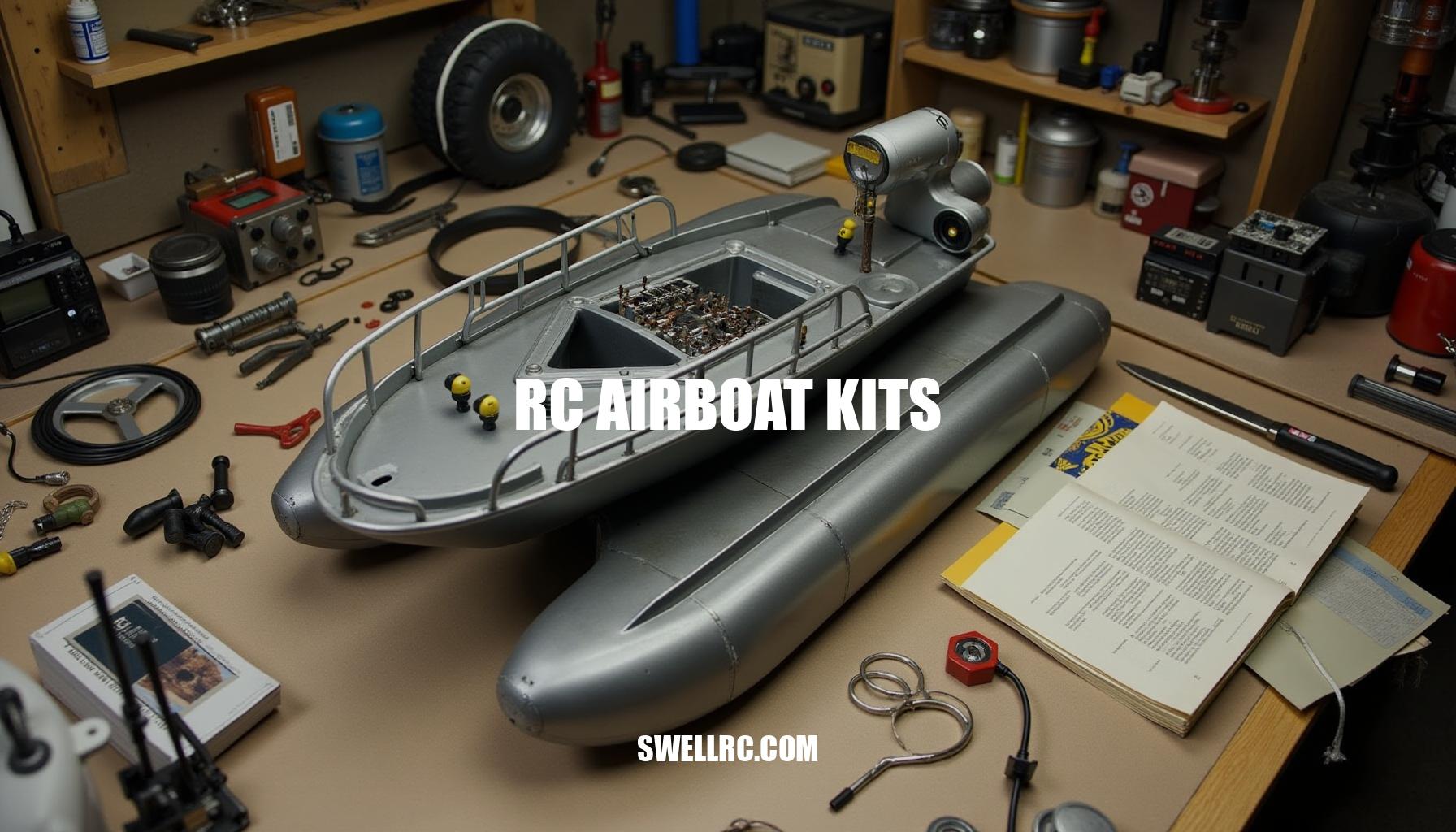
Mastering RC Airboat Kits: A Journey of Innovation and Excitement

The first time I saw an RC airboat whisper across a glassy cove without a single submerged prop, I had to know how it worked — and I couldn’t resist trying more models once I saw how these hulls skimmed over water like liquid mirrors. For those new to this fascinating segment of the remote control hobby, an RC airboat is essentially a flat or semi-V hull pushed by an air-driven prop, steered not by water rudders but by rudders in the prop wash. This design means fearless running in weeds, reeds, and even mere inches of water — a thrilling contrast to other RC boats you might know.
My journey took me from the sheer joy of unboxing RC airboat kits to tinkering with powerful brushless RC engines, dialing in waterproof servos for reliability, and mastering the subtle art of hull balancing to ensure razor-clean tracking across the water’s surface.
If speed gets your heart racing, the difference between airboats and other RC watercraft like hydroplanes or outriggers is an absolute blast to explore.
What’s coming up? Expect hands-on build tips, data-backed testing of various models, smart upgrade paths, and an honest look at how these model airboats stack up against the broader RC watercraft family. Whether you’re searching for the best RC airboat kit for beginners or you’re a seasoned veteran craving deeper technical insights, this exploration promises a blend of genuine enthusiasm, personal testing, and clear, accessible explanations to keep everyone on board.
How RC Airboats Work – The Science Behind the Skim
RC airboats operate on a fascinating principle that sets them apart from traditional electric motor boats and hydroplanes. Think of the hull as a skipping stone and the fan as the breeze that keeps it sliding across the water’s surface. Instead of using a submerged propeller, RC airboats employ an air propeller—much like those found on small airplanes—to generate thrust.
This propeller pushes air backward, propelling the boat forward, while air rudders positioned in the prop wash provide precise steering control.
The design of the RC airboat hull plays a crucial role in performance. Flat-bottom hulls offer a smooth glide over calm water, making them ideal for beginners, while semi-V hulls improve handling in choppier conditions. Proper weight distribution and center of gravity (COG) placement are essential to prevent porpoising (that unwanted bow bouncing) and to maintain a steady glide.
As these boats often run close to the surface, using marine-grade electronics like waterproof servos and ensuring the receiver and ESC are properly waterproofed is vital for consistent performance and longevity.
Control mechanisms in RC airboats are uniquely based on air rudders rather than traditional water rudders. Steering is achieved by deflecting these rudders in the airflow generated by the propeller, while throttle adjustments impact both the speed and the boat’s bow attitude. The geometry of the servo linkages matters greatly here—well-designed linkages ensure crisp, responsive turns that feel natural and fluid.
To give you an idea of typical performance ranges for hulls between 600–900 mm in calm water, here’s a handy table summarizing common motor and propeller setups alongside their typical top speeds:
| Motor/Prop Setup | Typical Top Speed Range |
|---|---|
| Brushed 550 + 2S LiPo + 7–8 in prop | ~8–12 mph |
| 2212–2216 1000–1400 kV (outrunner) + 3S + 8–9 in prop | ~12–18 mph |
| 28xx 1800–2300 kV (outrunner) + 3S + 8–10 in prop | ~16–22 mph |
| 28xx 1800–2300 kV (outrunner) + 4S + 9–10 in prop | ~22–30+ mph |
So, how do these airboats stack up against other RC watercraft? Traditional RC boat kits typically use submerged propellers paired with water rudders, giving them excellent traction and control underwater. Meanwhile, radio-controlled sailboat kits cleverly harness wind power through their keels and fins.
In contrast, airboats sit on top of the water’s surface, almost skimming it, which makes them immune to weeds and obstacles lurking just beneath. However, this also means they can be nudged around by the wind more easily compared to their submerged counterparts.
I’ll never forget the moment I saw my first build skid across the pond like a skipping stone—it was mesmerizing and instantly hooked me on the unique engineering of these craft. Every carefully tuned setup, from brushless RC engines to the balance of the hull, contributes to that thrilling sensation of effortless glide.
Safety, naturally, is essential when operating RC airboats. Because the propeller acts much like a spinning blade, always use prop guards and keep your hands clear during operation. Stable stands are crucial for working on or displaying the boat, preventing accidental tip-overs or damage.
Remember, respect for the powerful airflow generated keeps you and your model safe.
Whether you’re upgrading your brushless RC engines or waterproofing your servos inside a sleek semi-V hull, understanding the delicate balance of propulsion, hull dynamics, and control makes RC airboating not just a hobby—but an engineering marvel to appreciate.
Building and Customizing RC Airboat Kits
Assembling RC airboat kits is a rewarding hands-on project that combines precision, patience, and a bit of creativity. It starts right from unboxing and prepping your kit. I usually begin by sorting all the hardware into labeled baggies and taping a quick center of gravity (COG) target line along the hull.
Future me always says thanks for this simple step during complex builds! Before committing to permanent fixes, dry-fit the motor mount and the rudders to ensure everything aligns well — this prevents headaches down the line.
Choosing the right material for your RC airboat hull greatly influences build difficulty and performance. Here’s a quick comparison I find handy when selecting between balsa, plywood, fiberglass, and carbon-fiber composites:
| Material | Weight | Durability | Build Effort |
|---|---|---|---|
| Balsa | Ultra-light | Low–Medium | Moderate sealing skill |
| Plywood | Medium | Medium–High | Easy to moderate |
| Fiberglass | Medium | High | Moderate (great for beginners who want durability) |
| Carbon-fiber composite | Light | Very high | Advanced (costly, precise) |
Fiberglass hulls, such as those from Aeromarine Laminates, strike a great balance—they’re sturdy, repairable, and provide a solid foundation if you’re focusing on marine-grade electronics integration and waterproofing. Conversely, balsa builds are extremely light and responsive, but demand meticulous sealing to prevent water intrusion.
Waterproofing is vital in any RC building kits project to protect your electronics. I recommend using epoxy or polyurethane coatings on all seams and joints. Apply sturdy tape over seams during curing to ensure a tight seal.
Testing your hull’s waterproof integrity with a bathtub float test can save you from nasty surprises on the water. Don’t forget to treat servo leads and connectors with dielectric grease and shrink-wrap them for additional protection — these small steps go a long way in preventing corrosion and failure.
Balancing the hull correctly is crucial to stable performance. I typically position the battery pack to achieve the COG at about 25–35% of the hull length from the bow—this helps avoid the notorious porpoising effect. Align rudders precisely square to the thrust line and verify that pushrods move freely without binding; smooth control response is essential.
In one build, I struggled for hours until I properly balanced the battery pack and sealed hatch covers with an extra layer of sealant, which completely eliminated porpoising and water leaks.
When it comes to upgrades, I’ve personally had great success with proven options like Aeromarine Laminates RC boats (link), which are robust and beginner-friendly. If you lean towards light and precise builds, techniques from RC balsa glider kits (link) nicely translate over. For enhancing powertrain performance, I recommend checking out Zippkits G30 components (link), which offer punchy upgrades and smart design choices.
Finally, prioritize safety and patience during motor calibration and the first-time power checks. Always remove the propeller while setting up the ESC to prevent accidental injuries. Taking the time to test and fine-tune electronics and mechanics ensures your RC airboat delivers smooth, enjoyable runs without unexpected problems.
By incorporating these hands-on tips about hull balancing, waterproof electronics protection, and smart component upgrades, your DIY RC airboat plans will take shape reliably and perform impressively on the water. Happy building and navigating!
Performance, Testing & Fine-Tuning in Real Conditions
Embarking on the journey of testing and optimizing your RC airboat’s performance after assembly fills you with a unique blend of excitement and purpose. Beginning with the first runs, selecting calm water and marking a 50–100 meter test leg sets the stage for precise runtime testing. Utilizing GPS logging or a phone in a dry pouch helps you capture vital data.
Attentively, you observe tracking consistency, bow rise, and turning radius — each metric a clue to your airboat’s hidden potential.
Upgrading from brushed to brushless RC engines catapults performance, necessitating careful ESC calibration to deliver smooth throttle response. Experimenting with various prop diameters and pitches sharpens your craft’s agility, while lighter battery packs lead to snappier handling and better hull dynamics. Such prop selection is pivotal, making every adjustment a step closer to peak efficiency.
Tuning stability through precise hull balancing enriches control. Shifting the center of gravity by repositioning the battery pack imparts sharper or steadier turns. Adjusting rudder throw—via expo or rates—fine-tunes responsiveness, and adding small strakes or skid strips grants additional bite during cornering.
| Setup | Estimated Runtime | Typical Top Speed |
|---|---|---|
| Brushed 550 + 2S 3000 mAh | 12–16 min | ~9–12 mph |
| 2216 1400 kV + 3S 2200 mAh | 10–14 min | ~15–19 mph |
| 2830 2000 kV + 3S 2600 mAh | 8–12 min | ~18–22 mph |
| 2836 2200 kV + 4S 2600 mAh | 6–10 min | ~24–30+ mph |
My third run encapsulated the bliss of precision: nudging the battery pack 10 mm aft and trimming rudder throw by 15% unlocked a sweet spot — a thrilling 21 mph with flawless cornering. Such performance tuning is more than numbers; it’s a dance between intuition and empirical data.
Drawing from other RC hobbies enriches this experience. The adrenaline rush and realism echo my adventures with an RC offshore powerboat, while the throttle finesse honed through flying RC pattern plane kits translated into remarkably smoother turns on water.
Throughout this process, maintaining detailed logs and only adjusting one variable per test run ensures clear, repeatable insights. This disciplined approach to hull balancing, ESC calibration, and thoughtful prop selection transforms your RC airboat from a simple model into a finely tuned marvel of speed and control.
Choosing the Best RC Airboat Kit for Your Skill Level
Choosing the right RC boat kit can be a thrilling yet daunting experience for enthusiasts at all levels. Reflecting on my own journey—filled with rookie mistakes like selecting overly complex setups too soon—I’ve developed tiered recommendations to help you avoid common pitfalls and confidently pick the best RC airboat kit for beginners, intermediates, or advanced modelers.
For Beginners: Opt for a sturdy fiberglass hull that can withstand those inevitable bumps. Pre-cut hardware streamlines build complexity, while a brushed or mild 3S brushless setup balances speed capacity with reliability. Pair this with a simple radio system to keep things manageable as you learn the ropes.
Intermediate Builders: Consider semi-V hull options for improved handling and a 3S brushless power system equipped with a programmable ESC, allowing you to fine-tune performance. Modular servo and rudder mounts enhance maintainability and upgrade potential.
Advanced Enthusiasts: Look for lightweight composite hulls that optimize speed and agility. Explore 3S to 4S high-kV brushless setups for maximum power, custom rudder geometry for precision control, and telemetry systems to monitor your boat’s performance in real-time.
When evaluating kit options, weigh factors such as price range, build complexity, speed potential, parts availability, prop guard style, hatch sealing method, and the grade of waterproof servos supplied. A well-established general RC boat kit ecosystem facilitates spare parts availability and simplifies upgrades, a critical aspect for long-term satisfaction. Interestingly, diving into sport models like the Great Planes Ultra Sport—even though it’s an airplane lineage—can sharpen your setup instincts for electronics and power systems, enhancing your overall RC building kits expertise.
For streamlined decision-making, here’s a buyer’s checklist to guide your purchase:
- Budget constraints
- Water conditions you’ll run your boat in (e.g., weeds, shallow water, wind)
- Desired speed and performance needs
- Available workspace and tools for assembly and maintenance
- Electronics and components you already own
- Access to spare rudder hardware and propellers
Finally, embrace the mindset of earning your ideal setup gradually. Incremental upgrades paired with careful, documented testing foster personal growth and confidence. Celebrate each small win along the way, knowing that mastering your RC boat is a rewarding process rather than an overnight leap.
Beyond Airboats – Related RC Adventures Worth Exploring
Once you’ve tuned an airboat to dance on the edge of friction, every other RC discipline feels like a new puzzle worth solving. Building on your skills with RC boats, consider exploring adjacent niches that transfer your hard-earned lessons in COG placement, waterproofing, and smooth throttle work. For instance:
- RC hydroplane boat kits emphasize pure speed and precise line-holding, allowing you to push throttle finesse to the max.
- RC outrigger boat kits focus on minimal drag, making your understanding of balance and trim invaluable.
- Radio-controlled sailboat kits challenge your wind-reading and trim discipline skills, expanding your tactical thinking.
- RC offshore powerboat models teach wave management, where waterproofing and stability become critical.
- RC pattern plane kits offer a unique perspective on throttle finesse and balance in the air, complementing your watercraft experience.
By threading the lessons learned from airboats to these exciting categories, you deepen your engagement in the remote control hobby and broaden your expertise across a variety of platforms.
Keep notes on your setups and share your discoveries—this collaborative spirit accelerates learning and keeps the thrill alive.
Conclusion: The Joy of Mastery in RC Airboat Building
Diving into the world of RC airboat kits is a journey where innovation meets excitement. The magic happens when air-driven propulsion, meticulous hull balancing, and reliable waterproof electronics flawlessly integrate, turning a mere model into a sleek, agile machine. Through patient, incremental testing—fine-tuning throttle response and adjusting weight distribution—guesswork evolves into confident craftsmanship.
There’s a unique blend of technical mastery and pure play here: after countless hours chasing the perfect setup on custom builds, the moment an airboat lifts and skims straight and true across the water surface never loses its thrill. Watching your RC boats glide effortlessly is a celebration of both skill and passion—a tangible reward for dedication in the remote control hobby.
As you continue exploring performance tuning, don’t hesitate to document your setups and share your insights. Joining the wider community of enthusiasts not only enriches your experience but also fuels collective innovation and support. Remember, mastery in this craft isn’t a finish line—it’s a series of satisfying discoveries you get to share and build upon.
So take the helm, experiment boldly, and embrace the joyous journey of creating and commanding your very own RC airboat masterpiece.
Frequently Asked Questions
- What is an RC airboat and how does it work?
An RC airboat is a remote-controlled boat propelled by an air-driven propeller mounted above the hull. It steers with rudders in the prop’s airflow rather than a submerged rudder, letting it run in shallow, weedy water. Throttle controls speed and bow attitude, while weight balance keeps the hull skimming smoothly. - Are RC airboat kits hard to build for beginners?
They’re very approachable if you choose a sturdy hull and follow step-by-step assembly. Fiberglass hull kits with pre-cut hardware and a mild brushless or brushed setup are beginner-friendly. Focus on sealing, simple wiring, and hitting the recommended center of gravity to ensure stable first runs. - What materials are best for RC airboat hulls?
Fiberglass offers a great balance of durability and ease of repair, ideal for most builders. Balsa and plywood are light and affordable but need careful sealing. Carbon-fiber composites are light and extremely strong, suited to advanced builders seeking top performance at higher cost. - How fast can an RC airboat go compared to a hydroplane?
Typical sport airboats reach roughly 12–30+ mph depending on power and size. Hydroplanes, optimized for minimal wetted area and straight-line speed, can be faster in similar power classes. Airboats trade some top speed for weed immunity and shallow-water capability. - What are the top-rated RC airboat kits available today?
Top picks usually feature durable fiberglass hulls, well-supported hardware, and upgrade-ready motor mounts. Look for kits with clear instructions, accessible spares, and room for a 3S–4S brushless setup. Reviews that highlight easy sealing, stable tracking, and good parts fit are strong indicators. - Can I build an RC airboat from scratch?
Yes. Many hobbyists use foam, balsa, or plywood with epoxy sealing, then add a brushless motor, ESC, and air rudder assembly. Scratch builds require careful attention to hull flatness, COG placement, and waterproofing, but they’re rewarding and highly customizable. - How do RC airboats handle different water conditions?
They excel in shallow, weedy water and calm to light-wind conditions. In stronger wind or choppy water, moving the COG forward, reducing rudder throw, and using slightly heavier packs can improve tracking. Flat-bottom hulls skim best on smooth water; semi-V hulls help in small chop.