Optimizing RC Boat Motor Performance

The first time I swapped a 36 mm 2300 kv motor into my 32-inch mono, I couldn’t believe the speed gains—until the temps spiked and I realized why motor choice is everything for your Remote Control boats. In the world of Electric RC boats, the RC boat motor truly is the heart of acceleration, top speed, and precise control, directly influencing your overall RC motor performance. Whether you’re weighing Brushless vs brushed power systems, understanding kv versus torque, or figuring out the perfect sizing by hull length, every detail matters.
In this full guide, I’ll walk you through how to pair your motor with the right battery and ESC, match the propeller to unlock efficiency, and improve cooling to keep your motor running strong. Packed with real test-based tips, get ready to elevate your electric RC boat experience to the next level with confidence and enthusiasm!
Understanding RC Boat Motors: How They Make Speed
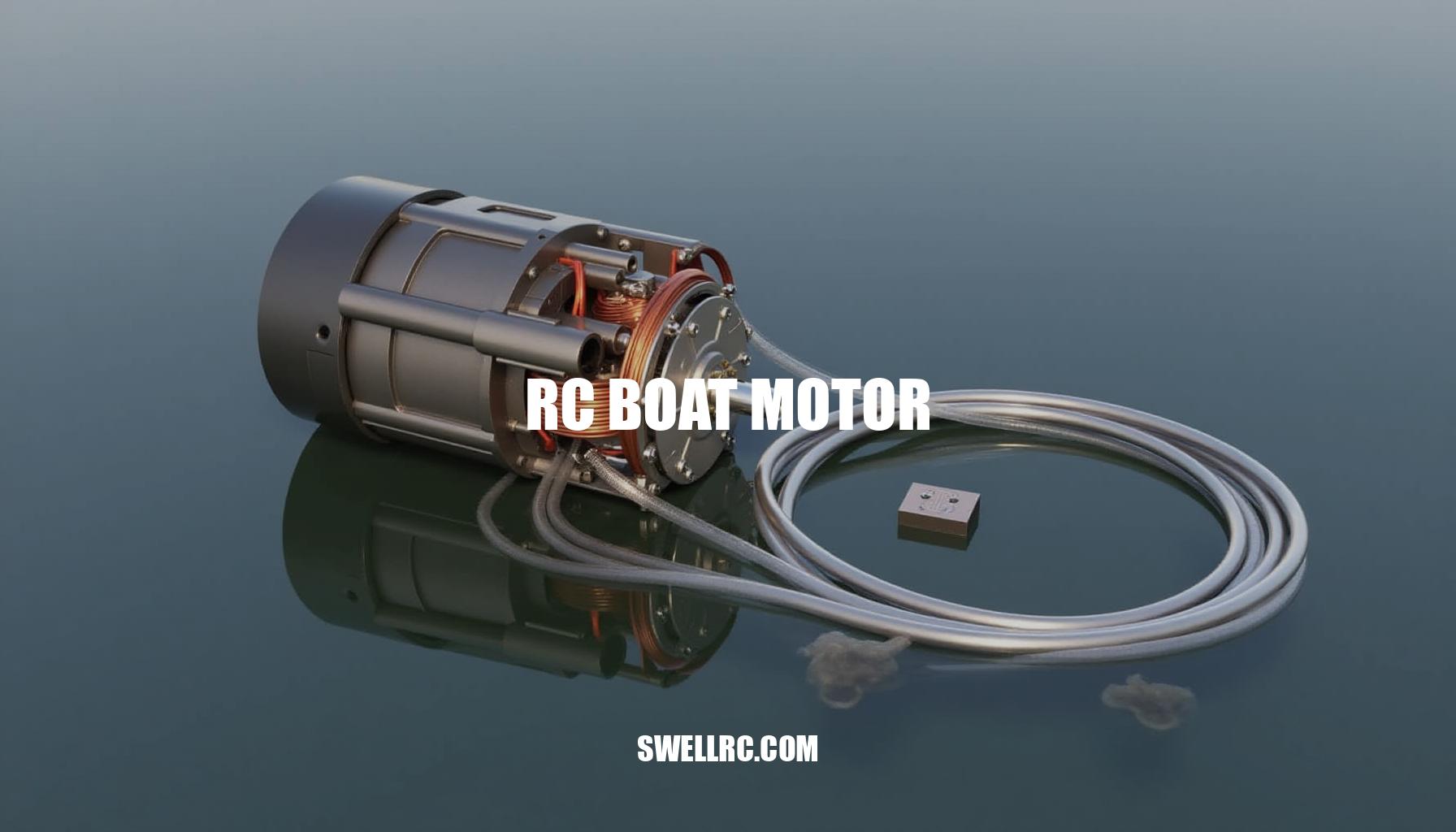
A marine brushless motor is a specialized electric motor designed for use in model boats and other RC watercraft. Understanding its anatomy helps clarify how it works efficiently in aquatic environments. The key parts include:
- Stator: The stationary part inside the motor with coils of wire.
When energized, it creates a magnetic field.
- Rotor: The rotating part attached to the motor shaft, containing strong permanent magnets that respond to the stator’s magnetic field.
- Magnets: Usually neodymium, these provide a consistent magnetic force on the rotor, enabling motion.
- Shaft: Connected to the rotor, this spins to drive the boat’s propeller.
- Bearings: Support the shaft, allowing smooth rotation with minimal friction.
To power this system, the ESC (Electronic Speed Controller) converts DC battery power into 3-phase AC current. This is crucial because brushless motors require alternating currents that change phase sequentially to keep the rotor spinning. The ESC rapidly switches the DC voltage across the stator coils in a pattern matching the rotor position, producing continuous torque.
Some important terms help describe motor performance:
- Torque is the twisting force the motor generates to turn the propeller and push water.
- RPM (revolutions per minute) indicates how fast the motor shaft spins.
- kv rating specifies the motor’s speed constant—how many RPM it turns per volt applied with no load (i.e., just spinning without resistance).
Water adds unique challenges compared to air because it is much denser.
This causes a constant torque demand from the motor to overcome water resistance and avoid prop cavitation, where bubbles form on the propeller blades, reducing efficiency and control. Therefore, torque vs RPM characteristics are critical for marine brushless motors to maintain steady propulsion under load.
For example, a 2000 kv motor powered by a 4S battery (14.8 V) might have a no-load speed of about 29,600 RPM (2000 × 14.8). However, when driving a propeller in water, the actual RPM will drop noticeably due to load (“slip”) caused by water resistance.
Marine-specific motor selections, like those featured on model boat resources such as Swell RC, highlight how different motor designs excel for particular applications—whether for detailed scale builds requiring smooth, realistic performance or sport boats demanding high speed and power.
Choosing the right kv rating and torque balance aligned with your boat’s size and prop is essential for optimum performance in RC hobby electronics.
Brushed vs Brushless: What Changes On The Water
When deciding between brushless vs brushed power systems for remote control boats, beginners and those looking to upgrade will find it’s crucial to understand the tradeoffs in efficiency, maintenance, cost, and durability. Here’s a quick comparative guide to help you choose:
| Aspect | Brushless Motors | Brushed Motors |
|---|---|---|
| Efficiency (typical range) | 80-90% | 65-75% |
| Maintenance | Nearly none (no brushes to replace) | Brush wear requires periodic replacement |
| Cost | Higher entry price | Lower upfront cost |
| Durability | Better heat tolerance, sealed bearings | More heat buildup, brushes and commutator wear |
Additional notes:
- Throttle Smoothness: Brushless motors provide smoother throttle response, ideal for precision control in remote control boats.
- Noise: Brushless setups run quieter due to the absence of brushes and commutators.
- Performance Dominance: For RC motor performance, brushless motors dominate performance builds because of their superior efficiency, responsiveness, and longevity, making them the preferred choice for serious enthusiasts.
Inboard vs Outboard Motor Layouts (and Why It Matters)
When evaluating inboard vs outboard configurations for RC boats, understanding their impact on balance and trim is essential for optimizing RC boat handling. Inboards house the motor inside the hull with a flex shaft extending below, which contributes to a lower center of gravity (CG) and improved overall stability. This setup helps maintain a balanced weight distribution but can make accessing the motor more cumbersome during maintenance.
Conversely, outboards feature an external motor pod mounted directly on the transom. Steering is accomplished by pivoting the entire unit, allowing for smoother and more responsive directional control. Outboards significantly influence weight distribution by shifting the motor mass aft, which may increase trim sensitivity on small hulls, potentially affecting planing angles and handling characteristics.
However, this also enables easier transom tuning and adjustment of boat trim.
From a maintenance standpoint, outboards simplify access to the motor since it’s externally mounted, allowing for quick inspections, cleaning, and repairs without disassembling the hull’s interior. This ease of access can be especially advantageous for those new to RC boating or who prioritize straightforward upkeep.
For readers interested in exploring various electric outboard options to better understand these dynamics, visit this outboard overview, which showcases a range of setups tailored to different performance needs.
| Feature | Inboard | Outboard |
|---|---|---|
| Motor Location | Inside hull with flex shaft | External pod on transom |
| Weight Distribution | Lower CG, balanced center | Weight aft, increased trim sensitivity |
| Steering | Rudder-based | Entire unit pivots |
| Maintenance | More complex; requires hull access | Simple; external and accessible |
| Trim and Handling | Stable, less trim sensitive | More responsive, easier tuning |
Sizing Your RC Boat Motor: Simple Rules That Work
When learning how to choose RC boat motor, establishing a clear selection framework is essential for optimal performance and longevity. Start by defining your goals: are you interested in scale cruising, sport running, or high-speed runs? Each purpose dictates different power and component requirements.
Next, estimate the watts needed by hull type and size.
Typically, light monohulls or catamarans require about 150–250 W per pound, while heavier scale models demand around 60–120 W per pound. This power-loading concept parallels familiar sizing methods used in RC airplanes, where power-to-weight ratios guide motor selection. For those seeking a conceptual parity, refer to this detailed guide on how to size electric motors for RC airplanes.
Third, consider your system voltage, or S-count.
Choose a voltage that keeps current draw reasonable since this affects battery life and heat generation. When choosing the right ESC for RC boat motor, size your Electronic Speed Controller at 20–30% above the expected maximum current to ensure reliability and prevent premature failure.
Finally, select a motor with the appropriate kv rating to match your propeller diameter and pitch along with your chosen voltage. Correct kv ensures your prop achieves the target RPM under load.
Balancing kv vs torque is crucial: higher kv motors spin faster but generally produce less torque, whereas lower kv motors offer more torque at lower RPMs.
Remember: Unlike many RC vehicles, boats operate under continuous high load. Thus, adequate cooling and headroom in your motor and ESC selection aren’t optional—they’re vital to prevent overheating and ensure consistent performance.
Quick Reference: Boat Length vs Motor & Battery Pairings
Choosing the right components for your RC boat involves balancing several factors such as boat length, motor size, and propeller specifications. Below is a compact chart designed to help you shortlist components efficiently. It covers typical motor can sizes, target kv on 3–6S batteries, propeller diameter ranges, recommended lithium polymer battery for RC boat setups, and typical ESC sizing ratings.
| Boat Length | Typical Motor Can Size | Target kv on 3–6S | Prop Diameter Range (inches) | Battery Type (LiPo, S, Capacity, C-Rating) | Typical ESC Rating (A) |
|---|---|---|---|---|---|
| 12″ – 18″ (30–45 cm) | 28xx | 2800–4000 kv | 1.5 – 2.5 | 2S–3S LiPo, 1000–1500 mAh, 40C+ | 20 – 30 A |
| 18″ – 24″ (45–60 cm) | 36xx | 2000–3200 kv | 2.5 – 3.5 | 3S–4S LiPo, 1500–2500 mAh, 45C+ | 30 – 40 A |
| 24″ – 36″ (60–90 cm) | 40xx | 1500–2600 kv | 3.5 – 5.0 | 4S–6S LiPo, 2500–4000 mAh, 50C+ | 40 – 60 A |
Notes:
- Higher kv motors paired with smaller propeller size and pitch are ideal for higher RPM with lower torque, but may increase current draw. Adjust prop size accordingly to keep current in check.
- Lower kv motors are better suited for bigger propellers that provide greater thrust but spin at lower RPM, which generally reduces current demand on the ESC.
- Always ensure lithium polymer battery for RC boat setups matches the motor’s voltage (S rating) and has enough capacity and C-rating to handle current draw safely.
- ESC sizing should be at least 20–30% higher than the motor’s max continuous current to ensure reliable operation under load.
Use this chart and notes as a guideline when selecting motor, ESC, propeller size and pitch, and lithium polymer battery for your RC boat based on its length and performance goals.
Case Studies: Getting It Right (and Wrong)
Through personal testing of various RC boat setups, several key insights have emerged regarding optimizing performance by balancing the best RC boat motor for speed with hull characteristics and prop selection. Here are three mini case studies illustrating this:
- 24–28-inch Mono Hull: Using a 28xx motor running at approximately 2200–2600 KV on a 3–4S battery paired with a small propeller revealed significant current spikes during launch. This underscores the importance of monitoring electrical load, as excessive current can damage components despite high power-to-weight ratios.
- 32–36-inch Catamaran: Equipped with a 36xx motor around 1700–2000 KV on 4–6S, testing demonstrated how subtle changes in prop pitch drastically affected current draw and motor temperatures. This highlights that propeller tuning is critical for maintaining hull balance and preventing overheating, directly impacting reliable speed and efficiency.
- 45-inch Scale Deep-V Hull: Inspired by builds like the 45-inch example at SwellRC, over-motoring this scale RC boat compromised handling and range significantly. In contrast, a purpose-tuned power setup, such as the compact racer shown at SwellRC, offers balanced power and efficiency. This demonstrates that matching hull design, power output, and prop specifications consistently outperforms simply selecting the highest KV motor.
These case studies emphasize that optimizing an RC boat’s performance is less about raw KV numbers and more about achieving harmony among power-to-weight ratio, hull balance, and scale RC boats’ design parameters.
ESC Pairing, Calibration, and Power Delivery
ESC current rating is a critical parameter that defines the maximum continuous current the Electronic Speed Controller (ESC) can handle without overheating or failure. Selecting an ESC with an appropriate current rating ensures long-term reliability and optimal performance. In addition, voltage limits specify the maximum input voltage the ESC can safely accept, which must align with the battery pack voltage to avoid damage.
Timing settings in an ESC relate to the phase alignment between the motor’s rotor position and the ESC’s output signals. Proper timing optimization leads to smoother operation, higher efficiency, and increased power, principles directly carried over from air models. Similarly, PWM frequency tuning helps minimize electrical noise and improves throttle response, highlighting the cross-discipline learnings between RC airplanes and boats, as discussed in this comparison resource.
Soft start features gradually increase motor power at launch, preventing sudden current spikes that might damage components or reduce battery life. Many modern ESCs incorporate this functionality to enhance the longevity of your RC setup.
Data logging in advanced ESCs allows users to monitor metrics like current draw, motor temperature, and RPM. This telemetry facilitates diagnostics and tuning for superior performance and safety.
When choosing a waterproof ESC for marine applications, consider the sealing quality, conformal coating, and connector types to prevent water ingress and corrosion. Additionally, ensuring the ESC’s Battery Eliminator Circuit (BEC) provides stable and adequate voltage is vital for servo reliability, avoiding jitter or loss of control during demanding maneuvers.
| Setup Checklist for ESC Installation |
|---|
|
Mastering these aspects of RC hobby electronics not only extends component life but also maximizes the performance of your RC boat motor system. Whether you’re choosing the right ESC for RC boat motor use or optimizing existing setups, integrating waterproof features and proper electronics best practices is paramount.
Cooling and Efficiency: Keep the Watts Working, Not Cooking
When designing motor cooling systems for RC boats, it’s critical to consider the implementation of water jackets and pickups, as well as the routing of coolant lines. A water jacket should envelop the motor to efficiently disperse heat. Use thermal paste between the jacket and motor can to ensure maximal thermal conductivity.
Equally important is the routing of tubing—maintain smooth bends and avoid any kinks to prevent flow restrictions. Position the outlet where it is visible to monitor the coolant flow, enabling quick detection of any blockages or flow loss, which is essential to prevent overheating in RC boat motors.
For a durable setup, target keeping the motor temperature below 80–90°C and the waterproof ESC under 70–80°C. These temperature ranges enhance longevity and maintain performance. Below is a conceptual table illustrating motor efficiency versus temperature rise under various loads, which factors in current draw, RPM, estimated efficiency, and heat increase after 3–5 minutes of operation.
It also highlights notes such as cavitation risks and propeller over-pitch conditions, both common concerns when monitoring waterproof ESC cooling in RC boat systems.
| Load (% of max) | Current (A) | RPM under load | Estimated Efficiency (%) | Temperature Rise after 3–5 min (°C) | Notes |
|---|---|---|---|---|---|
| 25% | 10 | 4500 | 85 | 10 | Normal operation |
| 50% | 20 | 4000 | 80 | 20 | Minor heating |
| 75% | 30 | 3500 | 75 | 35 | Watch for cavitation |
| 100% | 40 | 3000 | 70 | 50 | Prop over-pitch risk |
Tip: Always log temperature readings after each propeller change to correlate changes in load and motor heating, helping optimize your setup and prevent overheating in RC boat motors.
Propellers, Batteries, and Five Quick Wins
Expert efficiency tuning for your RC boat involves several critical steps to maximize performance and ensure reliability. First, prop first: adjust the propeller size and pitch in small increments, noting that increasing diameter generally causes the current to rise fastest. Next, ensure your battery CQ (capacity × C rating) meets the current demands; using a lithium polymer battery for RC boat with low internal resistance is essential to maintaining punch and reducing voltage sag.
Third, set your ESC timing conservatively initially to minimize heat buildup, then fine-tune through testing. Fourth, balance the hull fore and aft carefully for smooth re-entry when encountering chop — the strategic placement of the battery acts as your trim adjustment for optimal hull attitude. Finally, maintain detailed logs of current, voltage sag, and temperature readings in a test spreadsheet to track changes and optimize performance systematically.
While these tips cover practical tuning for the best RC boat motor for speed, be aware that extreme propulsion systems exist; they’re spectacular but specialized.
For impressive turbine-powered RC boats, check out examples at https://www.swellrc.com/rc-boat-turbine-engine/, and explore comparisons with fuel-powered alternatives at https://www.swellrc.com/top-3-gas-powered-rc-boats/.
Common Mistakes (And What I Learned Fixing Them)
When learning how to upgrade RC boat motor setups, avoiding common mistakes is key to enhancing reliability and performance. Consider this practical, save-your-budget checklist:
- Over‑kv with big props—keep an eye on current and temperatures; if readings spike, reduce kv or switch to smaller props.
- Too little ESC headroom—choose an ESC rated at least 20–30% above your measured current to prevent overheating.
- Skipping cooling checks—always verify steady water flow after every launch to maintain optimal motor temperatures.
- Long battery leads—these can cause voltage spikes; keep leads short or add capacitors to smooth power delivery.
- Soft packs with low C-rating—lead to voltage sag and excess heat; upgrading to higher C-rating packs improves endurance.
- Ignoring hull balance—adjust battery placement to correct porpoising; this is especially critical with outboard motors; refer to hull trim and fit/trim tips at swellrc.com.
- Inadequate waterproofing—grease flex shafts and seal ESC/receiver compartments to prevent water damage.
- Chasing top speed before reliability—prioritize proving a clean 3–5 minute run before pushing speed limits.
- No data logging—without monitoring temps and amps, you’re guessing; install telemetry for informed tuning.
- Mixing connectors and wire gauges—standardize connectors and wiring to reduce resistance and improve reliability.
Conclusion: Power, Precision, and Passion on the Water
Finding the perfect RC boat motor isn’t about blindly chasing the highest specs; it’s about matching your electric RC boats to their hull, battery, propeller, and personal goals—while ensuring there’s ample thermal headroom for reliable performance.
My personal journey revealed that smart RC motor performance hinges on thoughtful KV selection, right-sized props, and honest current measurements rather than just trusting the spec sheet bravado. This methodical approach ensures optimized speed and control that harmonizes with your hull setup.
For enthusiasts eager to push boundaries, I invite you to experiment carefully and aim for clean, cool laps before chasing peak numbers. This strategy not only preserves your gear but unlocks the best on-water experience.
Ready for inspiration?
Explore high-performance layouts and innovative designs like those showcased in offshore styles at SwellRC Offshore Powerboat to see what’s possible when form meets function.
Frequently Asked Questions
- What is the best type of motor for an RC boat?
For most performance and sport builds, a brushless motor is best. It’s more efficient, runs cooler, and delivers far more power per gram than brushed options, which makes it ideal for planing hulls and higher speeds. - How do I choose the right size motor for my RC boat?
Start with your hull length and weight, estimate watts per pound (about 150–250 W/lb for fast sport boats), pick a voltage that keeps current reasonable, then select kv to suit your target prop size and RPM. Give your ESC 20–30% current headroom and plan for active water cooling. - What does “kv” mean in RC motors?
Kv is the motor’s RPM per volt with no load. A 2000 kv motor on 4S (14.8 V) spins about 29,600 RPM no‑load; under load it will be lower. Higher kv favors smaller props and higher RPM; lower kv suits larger props with more torque. - How can I make my RC boat go faster?
Optimize the whole system: choose a prop that the motor can spin without overheating, raise voltage (if components support it), reduce hull drag and weight, calibrate the ESC, and use high‑quality, low‑sag LiPos. Always verify temps after each change. - Are brushless motors worth it for RC boats?
Yes. Brushless motors offer higher efficiency, power density, and lower maintenance. They run cooler and provide better throttle response—especially valuable for planing hulls and long, high‑load water runs. - What are the differences between inboard and outboard RC motors?
Inboard motors sit inside the hull and drive a flex shaft or strut, keeping center of gravity low and protected. Outboards mount externally as a self‑contained unit, steering via the entire pod; they simplify maintenance and trim but shift weight aft and require careful setup. - How do you cool an RC boat motor?
Use a water jacket around the motor with a pickup under the hull feeding a smooth, kink‑free line to the jacket and out a visible side outlet. Add ESC water plates, apply thermal paste between jacket and can, and check for steady flow after every launch. - What are common mistakes when upgrading an RC boat motor?
Over‑kv with too large a prop, undersized ESC, poor cooling or blocked lines, long battery leads without extra capacitors, low C‑rated packs causing voltage sag, ignored hull balance, and lack of data logging. Fixes include right‑sizing prop/kv, adding ESC headroom, ensuring water flow, and validating temps and amps after each change.