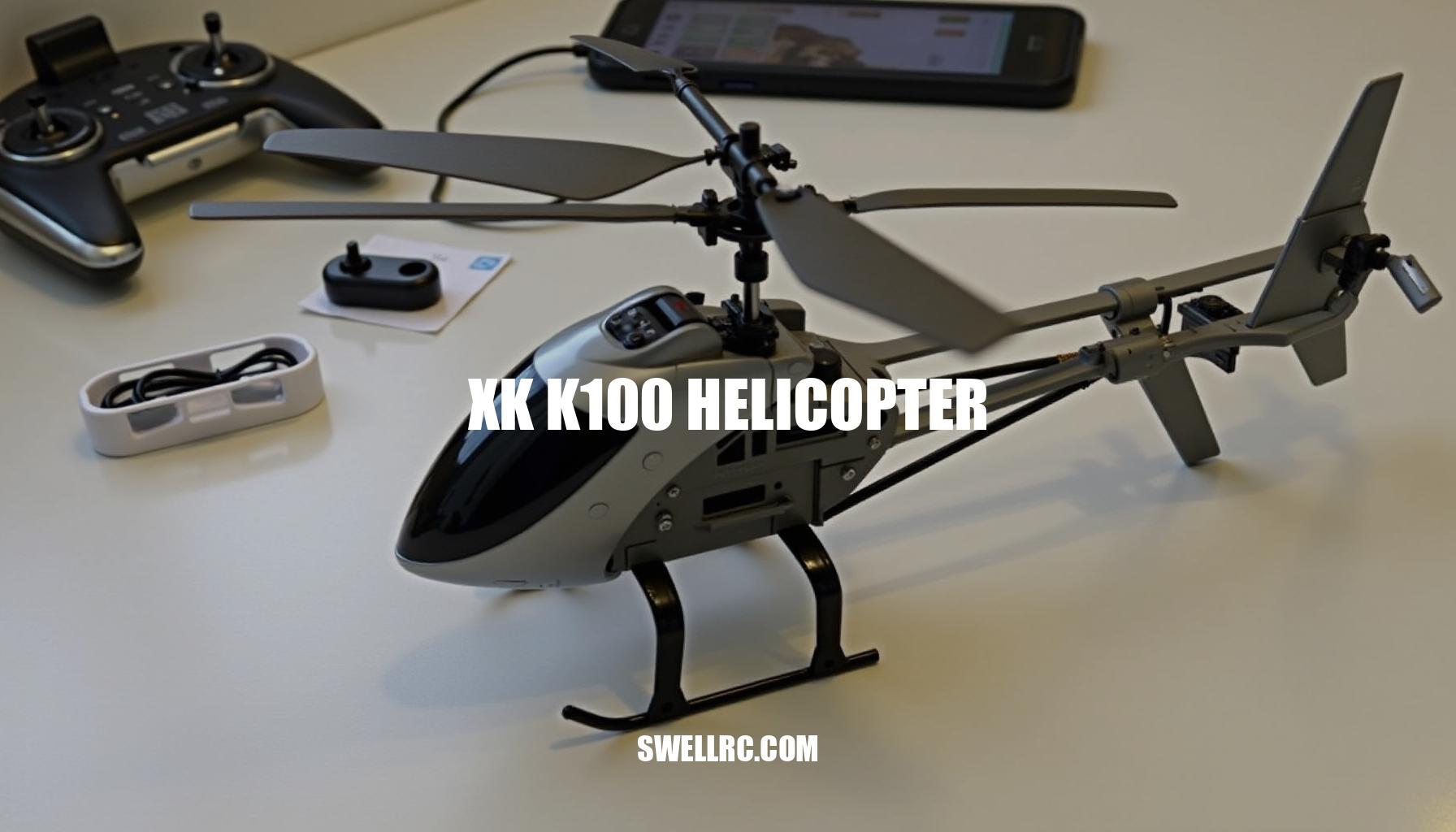
XK K100 Helicopter Review: A Beginner-Friendly Micro RC Helicopter

I first met the XK K100 helicopter on a chilly club morning after running pack after pack through a bench of micros. The chatter on the flight line kept circling back to one theme: a tiny collective-pitch heli that flies bigger than it looks. That curiosity pulled me in—and after a week of testing, the XK K100 earned a permanent spot in my micro fleet.
It’s compact, genuinely stable thanks to its 6G mode, and surprisingly capable in 3D. As a micro flybarless RC helicopter designed by XK Innovations, it feels like a breakthrough for pilots who want real collective-pitch training without the stress of a larger bird. I’ve flown its siblings too—if you know the brand from the excellent XK K110S, you’ll recognize the familiar XK DNA here, but the K100 has its own charm and value angle.
For those seeking a beginner RC helicopter, the integration of a 6-axis gyro enhances stability, making it an ideal flybarless helicopter to learn on. In comparison to other collective pitch helicopters, the K100 stands out in the micro RC helicopter comparison for its balance of performance and ease of use. Consider this part review, part field diary, with everything I learned while wringing it out indoors and in light outdoor air.
Core Features and Specifications of the XK K100
The XK K100 is a standout in the realm of collective pitch helicopters, offering an exceptional blend of ease-of-use and advanced maneuverability ideal for both beginners and progressing pilots. Its technical specifications reveal a micro 6CH flybarless collective-pitch system paired with switchable stabilization modes, including an intuitive 6-axis gyro (6G) mode for steady hovering and a true 3D mode for mastering flips and rolls. This versatility ensures a smooth user experience, facilitating skill development with a helicopter that is lightweight yet durable enough to withstand minor crashes typical in practice sessions.
| Feature | Description |
|---|---|
| Type | Micro 6CH flybarless collective-pitch (CP) helicopter |
| Stabilization | Switchable 6G (6-axis) stability and 3D (3-axis) gyro modes |
| Main/Tail Drive | Brushed main motor, brushed tail motor (simple, low-cost maintenance) |
| Rotor Diameter | ~230–245 mm (micro footprint, indoor-friendly) |
| Weight (AUW) | ~50–60 g with battery (varies by pack) |
| Battery | 1S 3.7V LiPo, ~250–350 mAh, JST‑PH 2.0 connector (typical) |
| Flight Time | ~4–7 minutes (setup and style dependent; longer in 6G cruising, shorter in 3D) |
| Range | Practical park-fly range; keep LOS, ~80–120 m depending on TX/RF noise |
| Protocol | Futaba S‑FHSS compatible; binds to XK transmitters and many multi‑protocol radios |
| Transmitter Options | XK X6/X7 series, Futaba S‑FHSS, and multi‑protocol sets (e.g., Radiomaster/Jumper) |
| Programming | Dual rates, expo, throttle/pitch curves recommended for progression |
| Materials | Tough composite frame, flexible main blades, resilient landing skids |
The integration of the XK transmitter compatibility and the flexibility to program diverse flight modes speaks directly to the thoughtful K100 specs, designed to enhance both indoor flying and outdoor park hovering.
This makes it a practical choice for pilots seeking a micro helicopter that not only performs well but also instills proper flying techniques essential for handling larger collective pitch helicopters in the future. In summary, the XK K100 marries its cutting-edge components and reliable technology with an approachable control system, making it a premier option among micro heli enthusiasts focused on advancing their piloting skills.
Flight Performance and Control Experience
On the first hover in 6G, the XK K100 flight performance locked in with a gentle, almost trainer-like stance. Nose-in and side-in felt drama-free; I could park it mid-air and concentrate on orientation. Push into forward flight and it tracks cleanly with crisp cyclic authority.
When flying in 3D mode, the character changes—still polite, but ready to flip and roll with predictable stops. Inverted holds are feasible with a brushed main rotor; just manage collective carefully and keep maneuvers tight. This is a remarkable example of flybarless helicopter handling that lends itself well to pilots stepping up from basic models.
Compared to a toy-grade coax like the Double Horse 9101, the K100 feels like a different universe—far quicker in cyclic response and infinitely more precise. When stacked against the Hero RC H911 (a zippy fixed-pitch micro), the advantage becomes clear especially when the wind picks up or when you demand nuanced collective management through aerobatics. The XK K100 flight performance owes much to its collective pitch (CP) head offering a higher performance ceiling suitable for a serious 3D stunt helicopter.
What helped me tune it for the best results:
- Expo: 20–30% on aileron/elevator in 6G to smooth hover training; back off to 10–20% in 3D for sharper control.
- Dual rates: Start around 60–70% for indoor practice; increase to 80–100% for outdoor flights to deal with varied conditions.
- Throttle curve: Gentle in 6G mode to extend flight durations; a flatter curve in 3D ensures consistent head speed for precise aerobatics.
- Pitch curve: Linear for 3D flying to maintain predictability; softened mid-stick response for 6G when still learning collective feel.
After multiple battery packs, the pros of this heli stand out:
- Rock-solid hover in 6G mode; transitioning to 3D is confidence-inspiring which shows how stable the XK K100 really is.
- Lightweight resilience: minor crashes rarely end the session, a testament to its robust build.
- True CP learning platform: usable indoors as well as in a small outdoor field, making it versatile for various flying environments.
Cons to be aware of with this brush-powered craft include:
- Brushed power limits: sustained hard 3D maneuvers are challenging; keep moves tight and efficient.
- Shorter flight times: pushing aerobatics drains battery quicker than gentle flight.
- Tail authority: while good for its class, control can fade in gusts or during high-load transitions.
Overall, for pilots curious about how stable is XK K100 and aiming to progress in flybarless helicopter handling, the K100 represents a fantastic bridge between beginner and intermediate 3D stunt helicopter flying experiences.
Build Quality, Durability, and Maintenance
I intentionally “tipped over” the K100 more than once while practicing spot landings on rough grass, and it consistently took the hit. Flexible blades and skids saved me from walk-of-shame part hunts, and the canopy shrugged off scuffs. On a low-altitude inverted bail-out, I plopped it in with negative collective a hair late—still only bent a link and kept flying after a quick check.
This experience highlights the durable RC helicopter nature of the K100, making it ideal for those who value crash resilience.
From a durability perspective, a larger collective‑pitch heli like the Wltoys V950 carries more kinetic energy—great for outdoor presence, but prangs are pricier. A scale fixed‑pitch micro like the Eachine E120 helicopter is wonderfully stable for cruising but isn’t meant for 3D abuse. The K100 sits in that sweet spot where training crashes are usually cheap and fast to fix, emphasizing its easy to repair design and strong spare parts availability.
For effective maintenance and to keep your helicopter flying reliably, I recommend the following rhythm:
- Post-flight: Check main gear mesh, feathering shaft slop, and linkages.
- Every 10–15 packs: Inspect tail motor performance, main motor brushes, and blade grips.
- Keep spares handy: main gears, main/tail blades, landing skids, a tail motor, and a couple batteries.
Below is a handy reference table of common parts and average replacement costs, underscoring the affordability and ease of repairs for the XK K100 series:
| Common Parts | Average Replacement Cost |
|---|---|
| Main blades (pair) | $3–$6 |
| Tail blade | $2–$4 |
| Main gear | $2–$4 |
| Landing skids | $4–$7 |
| Canopy | $6–$10 |
| Tail motor | $6–$10 |
| Main motor (brushed) | $8–$12 |
| 1S LiPo (250–350 mAh) | $5–$9 |
Parts availability for the XK line is generally solid through major hobby retailers and community marketplaces.
If you manage your throttle and pitch curves kindly and keep the tail clean, the airframe rewards you with low running costs and excellent longevity, making it an outstanding choice for anyone seeking a resilient and manageable durable RC helicopter.
Comparison with Similar RC Helicopters
If you’re in the market for an RC helicopter, understanding where the XK K100 stands among popular models can help guide your choice. When it comes to micro RC helicopter comparison, the K100 shines as an accessible, cost-effective trainer ideal for beginners to intermediate pilots looking to master collective pitch fundamentals without investing heavily in scale or high-performance platforms.
Consider these quick narratives to see how the K100 compares to notable alternatives:
- XK K100 vs Gartt 450L: The Gartt 450L is a robust hobbyist helicopter featuring a 3-axis Flybarless (FBL) gyro system and a powerful 6S battery setup, delivering fast and authoritative flight ideal for more advanced pilots. In contrast, the XK K100 offers the same fundamental flight dynamics at a fraction of the cost and space, making it perfect for learners who want reliable muscle memory development without risking an expensive crash budget.
- XK K100 vs Yuxiang F09 Black Hawk: The F09 prioritizes scale realism and smooth flight, with a 6-axis stability system and extended flight times. It’s a micro scale model designed mainly for assisted flying and aesthetic presence. Conversely, the K100 is built for lighter 3D maneuvers and foundational training.
- XK K100 vs Eachine E200: The E200 targets intermediate pilots craving a more capable 3D stunt helicopter experience, featuring a 3-axis FBL gyro and powerful 3S/4S battery options. The K100, with its 1S battery and switchable 6G/3D gyro system, excels as an anytime, anywhere flyer to hone your skills without stress.
For a clear view of major specs and roles, see the table below summarizing these popular models. This table aids in making one of the best RC helicopter comparisons by highlighting key specs such as size class, gyro system, battery type, flight time, and recommended skill level:
| Model | Size Class | Gyro System | Battery | Typical Flight Time | Skill Level |
|---|---|---|---|---|---|
| XK K100 | Micro CP | 6G/3D switchable | 1S 250–350 mAh | 4–7 min | Beginner to Intermediate CP |
| Gartt 450L | 450 CP | 3-axis FBL | 6S (varies by setup) | 4–6 min | Intermediate to Advanced |
| Yuxiang F09 Black Hawk | Micro scale (mostly FP/assisted) | 6-axis stability | 1S (varies) | 6–10 min | Beginner to Intermediate scale |
| Eachine E200 | Small-to-mid CP | 3-axis FBL (3D) | 3S/4S (varies) | 4–7 min | Intermediate 3D |
Ultimately, the best RC helicopter for you depends on balancing performance and control with your skill level and flying goals. For compact training and consistent daily stick time, the XK K100 is hard to beat. It offers an excellent blend of accessible flight control and durable convenience.
However, if you seek sheer speed and authoritative flying performance, upgrading to a larger platform like the Gartt 450L is advisable once your skills and budget allow.
Buying Advice and Real-World Value
If you are in the market for a beginner RC helicopter, the XK K100 is an excellent choice, offering a balance of performance and ease of use that appeals to a broad range of pilots. Here’s a breakdown to guide your buying advice:
- Best for Beginners: The K100 provides a true collective-pitch experience without harsh penalties for early mistakes, making it a superb starter CP heli.
- Ideal for Practice Flights: Intermediate pilots favor it as an indoor/outdoor trainer to refine maneuvers like orientation, funnels, and quick bail-outs.
- Value Seekers: Thanks to inexpensive spares and use of 1S batteries, the price-to-performance ratio remains highly favorable, keeping the cost-per-pack among the lowest for collective-pitch helicopters.
- Apartment/Gym Flyers: Its quiet operation and compact size make it suitable for tight spaces when weather conditions aren’t ideal for outdoor flying.
Compared to alternatives, fixed-pitch micros offer simplicity but limit skill growth, while larger CP helis boost progression after fundamentals are established. The K100 sits perfectly in the middle: it delivers authentic CP control with minimal stress on both your skills and wallet.
An important factor is spare parts availability, which is excellent for this model, so maintenance and repairs are straightforward.
For purchasing, always select reputable hobby retailers who stock spare parts on the shelf; this ensures swift replacements and avoids downtime. Leveraging resources from trusted RC helicopter websites will direct you to curated lists of reliable shops and active online communities where tuning tips and deals abound.
One memorable highlight with the K100 was achieving a smooth series of nose-in hover holds after just a week of focused micro stick time—an encouraging sign that this heli rewards consistent practice. If you’re looking for a balanced, affordable, and forgiving buying choice in the RC helicopter world, the XK K100 is a standout contender.
Conclusion: What I Learned from the XK K100 Experience
Flying the XK K100 reminded me why collective pitch helicopters are such powerful teachers. This micro RC helicopter delivers impressive flight precision, rewarding precision, forgiving small mistakes, and scaling with your ambition—from first hover to tight flips. Notably, its 6-axis gyro technology ensures stability and control, giving pilots confidence in every maneuver.
- 6G mode makes early sessions calm and productive, perfect for beginners building their foundational skills.
- 3D mode is ready when you are, allowing advanced pilots to push boundaries with agile flight maneuvers.
- Real CP mechanics packed into a micro frame provide a fast, low-cost learning experience, making this a standout in the micro RC helicopter comparison realm.
- Brushed power offers honest feedback about its limits but is ideal for compact 3D practice sessions.
- Spare parts are cheap and widely available, supporting a crash, learn, repeat approach that’s invaluable in mastering a flybarless helicopter.
After careful evaluation spanning the micro spectrum and even extending to larger platforms, I’m convinced: to maximize skill development per minute of flight, the XK K100 truly delivers.
Simply charge a few 1S packs and discover just how much this tiny heli can teach you on your flight journey.
Frequently Asked Questions
- What makes the XK K100 helicopter ideal for beginners?
Its switchable 6G stabilization makes hovering and orientation simple, while still offering true collective‑pitch control. It’s light, durable, and uses inexpensive 1S batteries and spares—perfect for learning without big repair bills. - How does the K100 compare to the XK K110S model?
Both are micro collective‑pitch helis with 6G/3D modes. The K110S generally offers stronger power and refinements, while the K100 focuses on value and gentle learning. If you want maximum punch, choose the K110S; if you want low-cost progression, the K100 shines. - Can the XK K100 perform 3D stunts?
Yes. In 3D mode (3-axis), it can flip, roll, and fly inverted. Keep maneuvers tight and efficient since the brushed main motor has limited sustained power. - What transmitter is compatible with the XK K100?
It speaks Futaba S‑FHSS. It binds to XK transmitters (X6/X7 series), Futaba S‑FHSS radios, and many multi‑protocol radios like Radiomaster or Jumper that support S‑FHSS. - How long is the flight time for the XK K100 helicopter?
Typically 4–7 minutes per pack—closer to 6–7 minutes in gentle 6G cruising, and around 4–5 minutes when flying 3D. - Is the XK K100 durable after crashes?
For its size, yes. Flexible blades, resilient skids, and low mass mean most training mishaps result in little or no damage. Common spares are inexpensive and easy to swap. - What are some similar RC helicopters to the XK K100?
For micro training: XK K110S. For scale cruising: models like the Yuxiang F09 or Eachine E120. For larger CP performance: Eachine E200 or 450-class builds such as the Gartt 450L. - Where can I buy the XK K100 with reliable after-service?
Use reputable hobby retailers that stock spares and offer support. Check curated lists of trusted shops and community hubs on established RC helicopter websites to ensure parts and service are available.