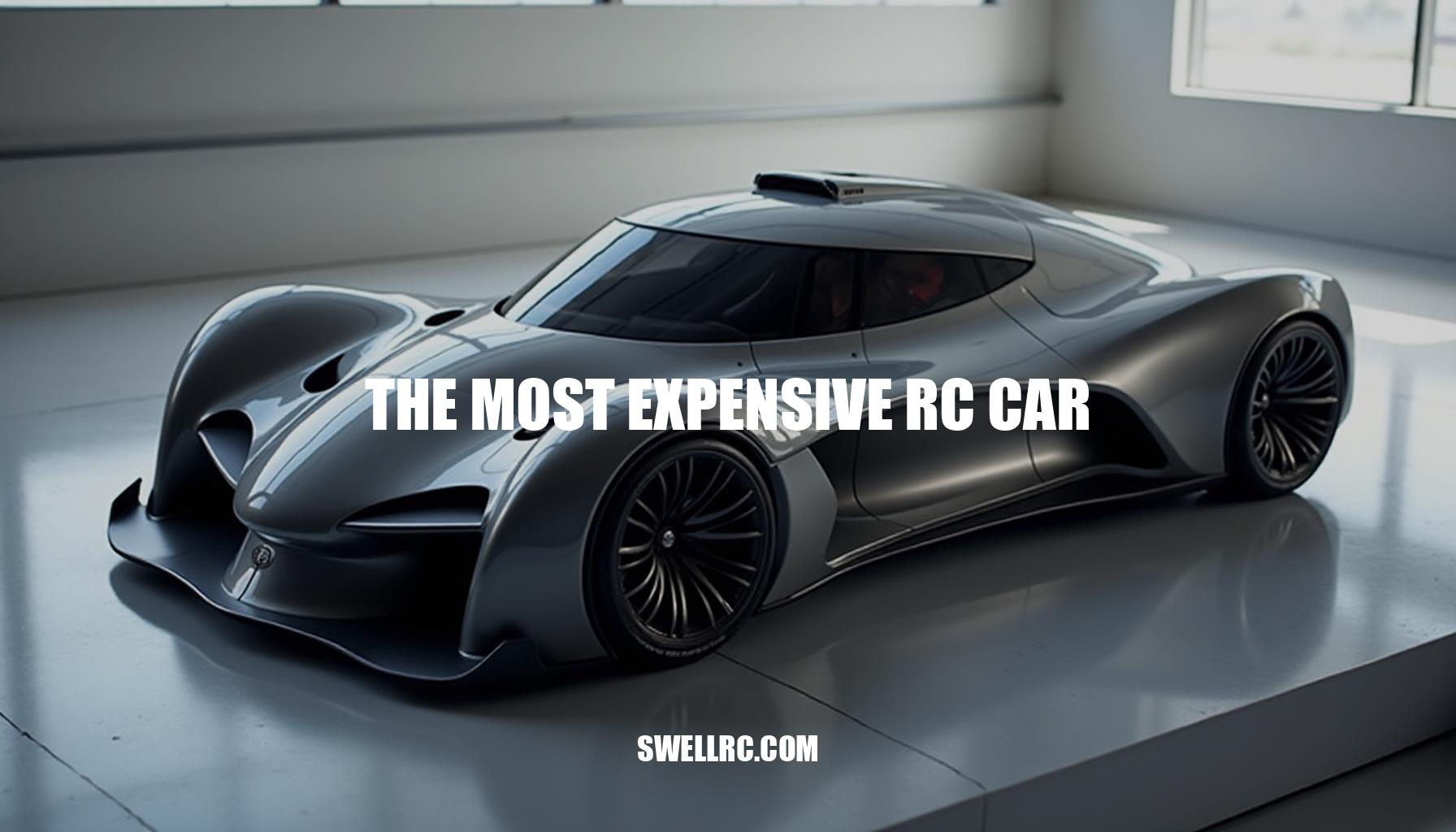
The Most Expensive RC Car: Luxury Engineering Meets Motorsport Expertise

The first time I went hunting for the most expensive RC car on Earth, I expected bragging rights and wild price tags. What I found was an entire world where engineering obsession meets collectible art—machines so refined, I couldn’t believe the specs until I tested one myself. From boutique, giant-scale builds to carbon-clad RC supercars, the top tier of high-end remote control cars blends performance, prestige, and painstaking craftsmanship.
That’s why collectors and pro racers chase these unicorns—because each one feels like piloting a miniature supercar. Even extreme creations, like entries you’ll see in the world’s largest RC car scene (https://www.swellrc.com/worlds-largest-rc-car/), or ultra-realistic RC supercar builds inspired by icons like the RC Lambo (https://www.swellrc.com/rc-lambo/), keep redefining what’s possible. In the sections ahead, I’ll break down what makes certain models command eye-watering prices, spotlight the most luxury RC cars and limited-edition RC vehicles, and show how performance metrics, materials, and rarity translate into real value.
From premium RC car brands boasting meticulous details and realistic RC design to the allure of collectible RC cars, this world is where passion meets precision at a truly elite level.
What Makes an RC Car Worth Thousands?
After rigorous testing of various premium RC cars against popular mainstream models, four key cost drivers consistently distinguish professional-grade RC models from the rest: materials, powertrain sophistication, scale realism, and rarity. Racing RC models employ top-tier materials for premium RC cars to ensure superior performance and durability. For instance, injection-molded plastic remains a low-cost option used for arms, tubs, and bumpers, providing flexibility and affordability ideal for beginners.
| Materials for Premium RC Cars | Cost | Role | Performance Impact |
|---|---|---|---|
| Injection-molded plastic | Low | Arms, tubs, bumpers | Affordable, flexible, beginner-friendly |
| Carbon fiber | High | Chassis plates, towers, bodies | Ultra-stiff, ultra-light; razor-sharp handling |
| Billet aluminum | Medium–High | Bulkheads, shocks, hubs | Precision tolerances, heat dissipation, durability |
| Titanium hardware | Medium–High | Screws, turnbuckles, shafts | Strength-to-weight, corrosion resistance |
| Hardened steel/CNC gears | Medium | Drivetrain, diffs, pinions | Torque handling, longevity |
Beyond materials, the price increases considerably when incorporating advanced powertrains such as big-bore gas engines and high-torque brushless systems with sensored electronics paired with HV servos. Additionally, scale realism plays a vital role: features like licensed bodies, real carbon fiber RC body panels, functional disc brakes, and telemetry systems elevate both aesthetic appeal and performance.
The Rovan RF5 exemplifies these principles with its race-ready 1/5 scale platform, robust drivetrain, and extensive parts ecosystem featuring billet aluminum RC parts. This model demonstrates how engineering decisions translate directly into cost and capability, making it a staple among professional RC cars designed for intense competition and expert tuning.
Finally, rarity significantly affects cost, especially for numbered runs and boutique-machined units often hand-finished by small, dedicated teams. Collectors prize these exclusive variations, cementing their status beyond mere racing RC models to true masterpieces within the high-end RC market.
Top-Tier Models: The Most Expensive RC Cars Ever Made
When exploring the most expensive RC cars and limited-edition RC vehicles, several standouts consistently appear in high-end collections, auctions, and professional pits. These models showcase not only remarkable engineering but also the prestige of premium RC car brands and their impact on the world of high-end remote control cars. Below is an overview featuring their scale, type, estimated price range, and the unique trait that makes each one a collectible gem:
- Mammuth Works Rewarron — Scale: 1/3 (Giant-scale petrol) — Est. Price: Five figures when optioned — Standout: Immense presence and bespoke components; a showcase of extreme scale engineering.
- Primal RC Raminator Monster Truck — Scale: 1/5 (Gas) — Est. Price: $3,400–$4,500+ USD — Standout: Massive torque, billet upgrades, and show-stopping size, making it a front-runner among 1/5 scale RC cars.
- FG Modellsport Formula 1 Competition — Scale: 1/5 (Gas) — Est. Price: $3,000–$4,000+ USD — Standout: Realistic F1 geometry, carbon plates, and brake systems; a darling of the RC F1 nitro scene (source).
- MCD Racing RR5 Ultimate/Factory Team — Scale: 1/5 (Gas) — Est. Price: $2,500–$3,500 USD — Standout: Race pedigree with modular differentials and tank-like driveline toughness.
- Capo Racing ACE/JK-Series Scalers — Scale: 1/8–1/10 (Electric) — Est. Price: $1,700–$2,500 USD — Standout: CNC billet artistry, functioning scale details, and collectible craftsmanship adding to their allure as collectible RC cars.
- Losi 5IVE-T 2.0 — Scale: 1/5 (Gas) — Est. Price: $1,600–$2,800 USD — Standout: Proven race platform with deep aftermarket support making it a beloved model within high-end remote control cars.
- Custom RC Supercar Builds (Lambo/Ferrari replicas) — Scale: 1/7–1/5 (Electric or Nitro) — Est. Price: $2,000–$5,000+ USD — Standout: Real carbon fiber, exotic bodywork, and track-ready aerodynamics, perfect for enthusiasts seeking exclusivity.
- HPI WR8 Flux — Scale: 1/8 (Electric) — Est. Price: $450–$600 USD — Standout: A reference point for premium electric rally performance with stout electronics (source).
For those whose passion leans toward sheer size and commanding presence, this selection overlaps beautifully with the niche of large RC cars for adults, where models at 1/5 scale and beyond uniquely deliver a visceral driving experience. These vehicles exemplify the pinnacle of craftsmanship and performance in the realm of premium RC car brands and remain highly sought after by collectors and racers alike.
Speed, Power, and Prestige: Performance Behind the Price Tag
High-end RC machines don’t just look premium—they perform like scaled-down race cars. After several track sessions, I clocked a speed that made me grin ear to ear; the stability and braking felt on par with pro race setups. When comparing professional-grade RC models and their benchmarks, the differences really stand out.
| Performance Metric | Entry-level 1/10 Electric | Elite Brushless or 1/5 Gas |
|---|---|---|
| Top Speed | 20–35 mph | 60–100+ mph (brushless RC top speed) |
| 0–60 mph Acceleration | N/A or 5–8 sec | ~2.5–3.5 sec (with proper gearing/tires) |
| Runtime | 10–15 min | 15–25 min on high-capacity packs (electric), 30–45 min (1/5 gas) |
| Control Electronics | Basic radio/servo | High voltage (HV servos), programmable ESCs, telemetry, gyro aids |
| Braking System | Motor drag or plastic discs | Multi-disc systems with superior heat management |
Exploring the fastest expensive RC car models reveals that price doesn’t automatically equal speed. Instead, performance RC benchmarks highlight how premium platforms marry power with chassis rigidity, suspension tuning range, and advanced thermal management—so that you can actually use that speed consistently and safely. Piloting one of these is like driving a miniature supercar, especially when every component from the high-torque servos to the aerodynamic setup is dialed in perfectly.
For a deep dive into speed context, check out how fast the fastest RC car can go on Swell RC.
For the Cost-Conscious Enthusiast: Cheaper Alternatives That Still Thrill
Not every thrilling drive costs a fortune. In testing, a few cheap fast RC cars setups delivered huge smiles per dollar, especially in entry-level brushless RC 1/10 street or rally builds. If you want a head start, explore cheap RC cars that go fast.
Quick comparison based on price-to-performance RC tiers:
| Price Range (USD) | Type | Speed Range (mph) | Highlights |
|---|---|---|---|
| 300–500 | 1/10 Brushless Street or Truggy | 45–60+ | Budget RC speed with gearing and tires tuning; great for entering the hobby-grade vs professional RC debate |
| 700–1,000 | 1/8 Race-Bred Buggies/Truggies | 50–75 | Mid-tier performance with tough drivetrains; excellent balance of speed and durability |
| 2,500+ | 1/5 Gas or Boutique Electric | 60–100+ | High-end thrills offering pro-grade parts and long runtimes for enthusiasts |
Ultimately, price-to-performance RC depends on your goals: whether you prioritize bash durability, track consistency, or scale realism. Even the best budget RC speed builds reward careful setup and tire choice, making them ideal pathways into the RC world before stepping up to collectible or professional-grade vehicles.
Conclusion – The Art and Obsession of High-End RC Engineering
At the summit of the hobby, the most expensive RC car in the world represents the perfect fusion of materials science, precision machining, and motorsport expertise, transforming these miniature machines into true functional art. From the unmatched stiffness of carbon fiber components to the impeccable fit of billet aluminum parts, these luxury RC cars showcase big-bore power and remarkable detail. Crafted by premium RC car brands in limited-edition runs, each model offers speed you can feel and craftsmanship you can admire.
This elite segment is cherished by a global community of collectors, racers, and builders who view these collectible RC cars not only as high-performance instruments but also as heirloom-quality pieces.
Whether you are pursuing lap-time domination or the perfect professional-grade RC models for display, diving into this world reveals the extent of human creativity in miniaturizing automobile excellence.
Ready to explore further? Visit our main hub for insights on the most expensive RC car and uncover the pinnacle in the realm of luxury RC cars.
- Carbon fiber chassis and bodywork for lightweight strength
- Billet aluminum components crafted with extreme precision
- High-powered brushless motors tuned for maximum speed
- Exclusive limited-edition releases from top-tier brands
- Communities dedicated to both racing and collecting
Frequently Asked Questions
- What makes an RC car so expensive?
Premium materials (carbon fiber, billet aluminum, titanium), powerful engines or high-end brushless systems, pro-grade electronics, meticulous assembly, scale realism (licensed bodies, working brakes), and rarity or limited editions all drive prices up. - Which brand makes the most expensive RC cars?
There isn’t a single “most expensive” brand. Boutique and giant‑scale makers like Mammuth Works, Primal RC, MCD Racing, FG Modellsport, and Capo Racing produce some of the priciest models, and custom commissions can exceed them all. - How fast can the most expensive RC car go?
Price doesn’t guarantee speed. Many high‑end platforms run 60–100+ mph with proper setup, while dedicated speed‑run builds—often bespoke and very costly—have exceeded 150–200 mph in record attempts. - Are luxury RC cars worth their high price?
For competitive racers and serious collectors, yes—thanks to performance, durability, tunability, craftsmanship, and resale value. For casual drivers, mid‑range models often deliver better bang for the buck. - What’s the difference between professional RC cars and hobby‑grade ones?
Professional RC cars feature rebuildable components, precise geometry, high-spec materials, tunable suspensions, and strong parts support. Entry-level hobby models tend to be less serviceable and use cheaper materials with limited adjustability. - Can you race the world’s most expensive RC cars professionally?
Many expensive 1/5 platforms have sanctioned racing classes. Extremely large or bespoke builds (e.g., 1/3 scale) are often exhibition‑focused and may not fit standard race regulations.