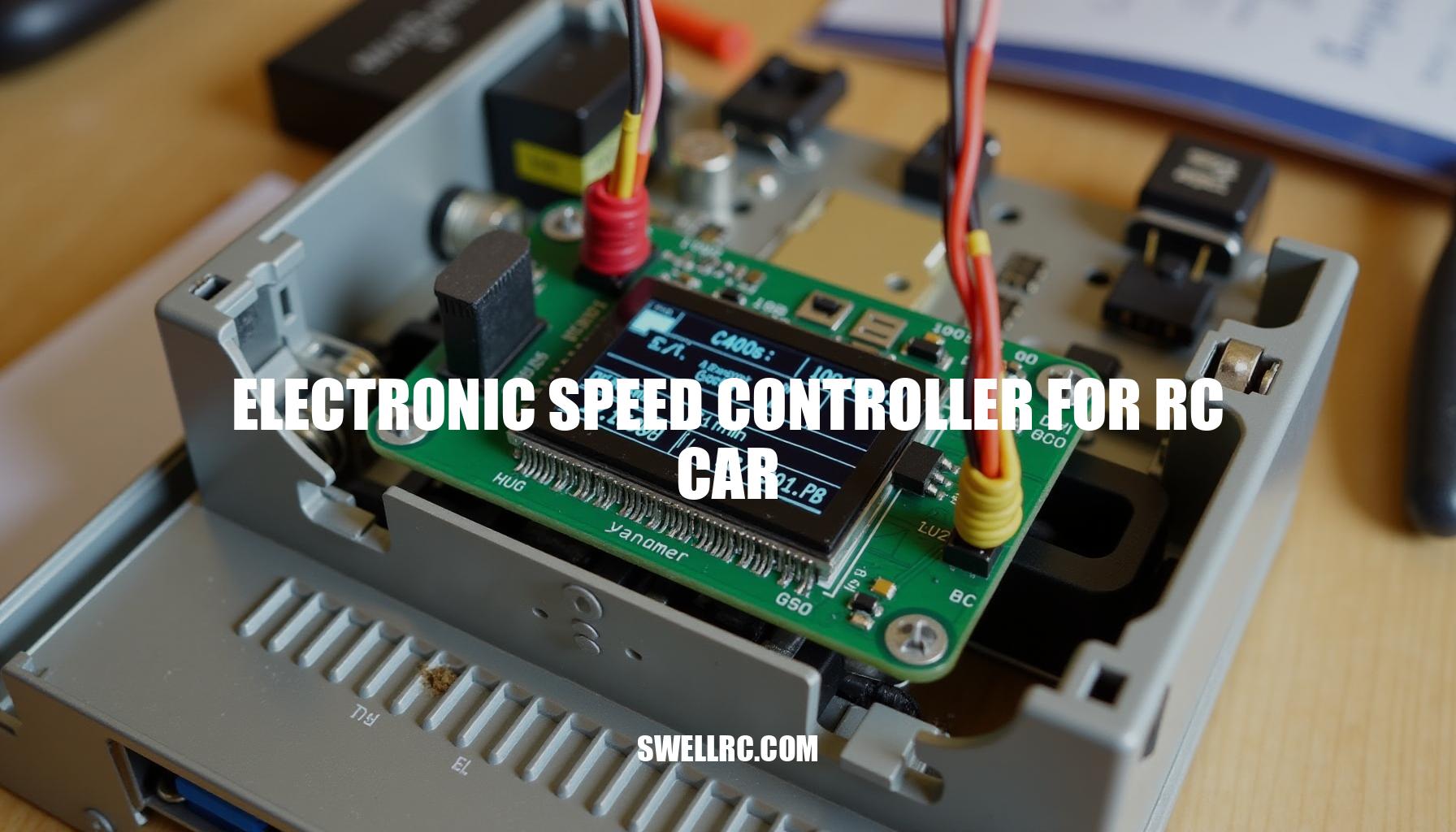
Mastering Electronic Speed Controllers for RC Cars

After burning out my first motor on a sandy parking lot, I quickly realized that the unsung hero in every fast, smooth, and reliable RC car build is the electronic speed controller (ESC). The ESC is far more than just a simple on/off switch—it precisely meters power with millisecond precision, safeguards your battery, and transforms throttle response from twitchy to predictably smooth. If you’re curious about the magic behind RC car electronics, this primer on how an electronic speed controller works (https://www.swellrc.com/how-electronic-speed-controller-works/) is a fantastic starting point.
In this ESC setup guide, I’ll share the hands-on knowledge I gained: how ESCs convert your trigger input into controlled torque, how to wire and calibrate your ESC without risking smoke, and how to unlock maximum speed and consistency through RC performance tuning. Furthermore, I’ll cover how to select the right ESC for your specific motor and battery combination and provide tips to avoid common issues like overheating, cutoff, and cogging gremlins that can ruin even the best RC car motor control system. Whether you’re a beginner or looking to refine your setup, mastering ESCs is essential for peak RC performance.
What Exactly Does an ESC Do and Why It’s the Heart of an RC Car
At its core, an ESC reads your receiver’s throttle signal and rapidly switches power to the motor using MOSFETs—delivering just the right current at just the right moment. The built-in BEC powers your receiver and servos, while capacitors smooth voltage spikes so the system stays stable under hard acceleration and braking. When comparing a brushless ESC versus a brushed unit, understanding their differences is key to selecting the ideal setup for your hobby-grade RC components.
Here’s a quick comparison between brushed vs brushless motor ESCs:
| Feature | Brushed ESC | Brushless ESC |
|---|---|---|
| Motor type | 2-wire brushed | 3-phase brushless (sensored/sensorless) |
| Efficiency | Moderate | High (cooler temps at same output) |
| Throttle feel | Smooth but limited top end | Crisp, scalable from smooth to aggressive |
| Maintenance | Brushes wear | Minimal (check bearings/wires) |
| Best use | Beginners, crawlers, budget builds | Racing, bashing, speed runs, heavy rigs |
In my street tests, a mid-range brushless ESC ran 10–15°C cooler than a comparable brushed unit while delivering noticeably stronger mid-range punch and higher top speed. For racers and speed enthusiasts using hobby-grade RC components, brushless ESCs offer superior power density and temperature stability. However, brushed ESCs still shine for those valuing simplicity and ultra-low-speed control.
If you’re choosing between them, this guide on which electronic speed controller fits your setup is very helpful in making an informed decision tailored to your RC needs.
Setting Up Your ESC Like a Pro (Even If It’s Your First Time)
Good setup beats raw specs every time, especially when working with RC cars. Follow this clean, repeatable ESC setup guide to ensure reliable performance and safety. Start with wiring and connection basics:
- Solder or securely plug the three motor leads (A/B/C) if using a brushless motor, or the two leads for brushed motors.
If you’re unsure about RC car speed controller wiring and polarity, a step-by-step tutorial like this how to connect an RC speed controller is invaluable.
- Next, plug the ESC’s signal lead into your receiver’s throttle channel (usually CH2 on most radios), making sure to match the polarity precisely.
- Connect the battery last, using proper connectors and insulated heat-shrink tubing to prevent shorts and ensure LiPo battery safety.
Once wiring is complete, perform a throttle calibration every time you adjust radio endpoints to keep your car responsive. Power on your system with the throttle fully held, wait for the confirmation tones or beeps, then set full brake followed by neutral, noting that the exact sequence can vary by ESC brand. For a more detailed walkthrough, check out how to set up an RC speed controller.
Before your first run, review this pre-run safety checklist:
- Verify that no wires are bare and solder joints are shiny, not dull.
- Ensure your gearing is suitable for your motor’s KV rating and battery cell count.
- Set your radio failsafe to neutral or brake for safety.
- Keep the wheels off the ground during the initial arming to avoid unexpected movement.
- Use a storage charge level on your battery during initial tests before fully charging it.
For those interested in fine-tuning advanced ESC parameters or using programming accessories, the comprehensive guide on how to program an ESC in an RC car explains available options and their effects thoroughly.
Fine‑Tuning and Performance Optimization: Getting That Perfect Response Curve
Factory presets are fine, but RC performance tuning truly transforms how your car launches, corners, and brakes. I use a familiar test loop—short sprints, a sweep, and a tight hairpin—to record temperatures and lap times, then change one setting at a time for maximum precision.
Here’s what to tune and why:
- Throttle curve: Linear for predictable racing; expo/soft bottom for loose dirt; aggressive for drag launches.
- Punch/current limit: Higher for punchy launches; lower to save drivetrains and temps.
- Motor timing: More timing equals more RPM and top end but generates extra heat; less timing improves efficiency and torque.
- Brake strength and drag brake: Stronger brakes for short tracks; lighter settings for high-speed stability.
- LVC (low voltage cutoff): Critical for LiPo battery safety; must be set appropriately per cell to protect your pack.
| Tuning Parameter | Performance Effect |
|---|---|
| Throttle curve | Changes low-end feel and traction off the line |
| Punch/current limit | Controls launch aggression and drivetrain stress |
| Motor timing | Trades efficiency/heat for RPM/top speed |
| Brake strength | Shortens stopping distance vs. rear stability |
| Drag brake | Improves downhill control; can increase heat on long descents |
| LVC threshold | Balances runtime vs. LiPo safety margin |
For those shopping for quality hardware, using a brushless ESC with advanced features tailored to your driving style is invaluable. Shortlists like the best RC speed controller help you match your vehicle’s needs perfectly.
Through precise throttle calibration and adjusting punch, I’ve seen a 0.4-second lap improvement on a short course just by smoothing the throttle bottom and trimming punch to reduce wheelspin exiting corners. Paying attention to these tuning parameters not only boosts your performance but also helps maintain the health of your drivetrain and batteries.
Matching Your ESC to Motor and Battery: Getting the Combo Right
The best ESC is the one that safely handles your motor’s amps and your battery’s voltage with thermal headroom. When wondering what size ESC do I need for my RC car, a good rule of thumb is to size the continuous amp rating 20–50% above your expected max draw and ensure the ESC’s voltage range matches your battery cell count (S rating). This is crucial for LiPo battery safety and reliable RC car electronics performance.
Key compatibility points include:
- Voltage: Your brushless ESC must be rated for the battery (e.g., 2–3S for sport 1/10 scale, 4–6S for heavier rigs).
- Current: The continuous rating covers long pulls; the burst rating handles brief current spikes.
- Motor KV and gearing: Higher KV or tall gearing draws more current—watch ESC temperatures closely.
- Sensored vs sensorless: Sensored ESCs offer precise launches and crawling; sensorless units provide simplicity and cost savings.
For a quick reference, here’s a table outlining example combos and suggested ESC picks to guide your choices:
| Use case | Motor/KV | Battery | Suggested ESC rating |
|---|---|---|---|
| 1/10 buggy/rally | 3650–3660 / 3500–4000KV | 2–3S LiPo | 80–120A (sensored ideal) |
| 1/10 SCT/basher | 3660–3674 / 3000–3500KV | 3–4S LiPo | 120–150A |
| 1/8 truggy/speed run | 4074–4092 / 1900–2200KV | 4–6S LiPo | 150–200A+ |
Curious about cross‑platform gear?
While ESCs are application‑specific, understanding motor behavior in planes helps you reason about KV/prop load versus gearing—a useful primer on RC electric motors for airplanes can provide valuable perspective. Personally, my most reliable combo lately has been a 120A sensored ESC paired with a 3650 3800KV motor on 3S, using modest timing and conservative gearing. This setup runs fast, stays cool, and maintains consistent performance for 10‑minute runs—highlighting the importance of paying attention to proper ESC selection in the realm of RC car electronics and LiPo battery safety.
Troubleshooting and Preventing ESC Failures
When something feels off with your RC vehicle, it usually is, and knowing how to troubleshoot overheating ESC and other common issues can save you time and frustration. Here are patterns I’ve run into—and how I fix them fast:
- Overheating: Gear down, reduce timing or punch, improve airflow, and add a fan. Check that capacitors aren’t bulged to prevent performance loss.
- Cogging or stuttering on launch: Verify the sensor cable is secure, try higher start power, and lower gearing.
For sensorless setups, increasing startup boost helps smooth the start.
- Random cutoffs: Confirm your Low Voltage Cutoff (LVC) setting and battery health. Inspect solder joints and check for brownouts caused by BEC load to maintain reliable power.
- No throttle after arming: Re-calibrate endpoints, verify neutral trim, and confirm proper receiver channel mapping to resolve throttle calibration issues effectively.
- Thermal shutdown mid-run: If your ESC is too small or the gearing is too aggressive, drop the pinion size and re-test temperatures to avoid unexpected shutdowns.
- Brake feels inconsistent: Re-program brake strength and frequency settings; inspect pads and hexes for any slippage affecting braking performance.
If you’re chasing outright speed, then also check out how to make a high-speed RC car. Just remember: every kilometer per hour you add increases heat, so test in short bursts and consistently log temperatures.
Combining these RC performance tuning tips with careful throttle calibration ensures your vehicle runs smoothly and reliably under all conditions.
Pushing Speed Limits: ESCs and Extreme RC Performance
Top speed runs taught me that ESC thermal capacity, gearing, and timing form a crucial three‑way tug‑of‑war in RC performance tuning. Increasing timing and opting for taller gears can significantly raise current spikes and heat generation in your brushless ESC, so I always ramp up these settings carefully and monitor temperatures closely after every pass to avoid thermal cutoff or damage.
Stability matters just as much as raw power when pushing the limits. An RC car gyro is an essential tool to tame twitchiness on rough surfaces and keep the car arrow‑straight, delivering more consistent high-speed runs. For context on what’s achievable at the edge of performance, check out this detailed breakdown of how fast the fastest RC car is.
Pro tip: Many racing ESCs come equipped with dedicated modes offering optimized throttle/brake frequency and timing maps. These preset configurations serve as excellent starting points before you dive into custom tuning, ensuring you maximize efficiency from your hobby-grade RC components.
Conclusion — Why Mastering Your ESC Is the Real Secret to RC Mastery
Dialing in the ESC changed everything for me: cleaner launches, cooler temps, longer runtimes, and lap‑after‑lap consistency. If you remember just three things from this ESC setup guide, make it these:
- Wire and calibrate carefully to ensure optimal connection and response.
- Size your ESC for voltage and amps with headroom to handle the demands without overheating.
- Tune one parameter at a time while watching temps, so you can pinpoint the perfect balance for your setup.
The electronic speed controller is the heartbeat of your RC. By mastering this essential component, you’ll unlock superior RC performance tuning and get the most out of your hobby-grade RC components.
Learn it, tweak it, and enjoy the payoff every time you squeeze the trigger.
Frequently Asked Questions
- What does an electronic speed controller do in an RC car?
It reads throttle signals from the receiver and rapidly switches battery power to the motor using MOSFETs, controlling speed, direction (with reverse/brake), and delivering smooth, efficient power while protecting the system with features like low‑voltage cutoff and thermal limits. - How do you wire and connect an ESC properly?
Connect motor leads (3 for brushless, 2 for brushed), plug the ESC’s signal cable into the receiver throttle channel with correct polarity, and connect the battery last. Secure solder joints, insulate connections, set failsafe, and perform throttle calibration before running. - What is the difference between brushed and brushless ESCs?
Brushed ESCs drive two‑wire brushed motors and are simple and inexpensive; brushless ESCs drive three‑phase motors (sensored or sensorless) and offer higher efficiency, power, and tuning options, making them ideal for racing and high‑performance builds. - How can I program and calibrate my ESC for better performance?
Calibrate endpoints (full throttle, full brake, neutral) after setup. Then tune parameters like throttle curve, punch, timing, brake strength, and LVC using the ESC’s programming card/app to match terrain, traction, and heat limits. - What are the signs of a bad ESC in RC cars?
Common symptoms include overheating or thermal shutdown, random cutoffs, cogging/stuttering on launch, inconsistent braking, or failure to arm. Inspect for burnt smell, swollen capacitors, or damaged wires and re‑test with known‑good components. - How do I choose the right ESC for my RC car’s motor and battery?
Match the ESC voltage rating to your battery (cell count) and choose a continuous current rating with 20–50% headroom over expected draw. Consider sensored vs sensorless, available tuning features, and cooling capacity for your vehicle’s weight and gearing. - What is the best ESC for high-speed RC racing?
Look for a high‑quality sensored brushless ESC with robust cooling, adjustable timing/boost, fine brake control, and ample current headroom. Pair it with appropriate gearing and monitor temperatures to keep performance consistent over a run. - Can one ESC be used for both cars and airplanes?
Some brushless ESCs can run both, but car ESCs include features like brakes/reverse, stronger BECs, and thermal management for stop‑and‑go loads. Airplane ESCs are optimized for continuous airflow and may lack car‑specific braking and throttle profiles.